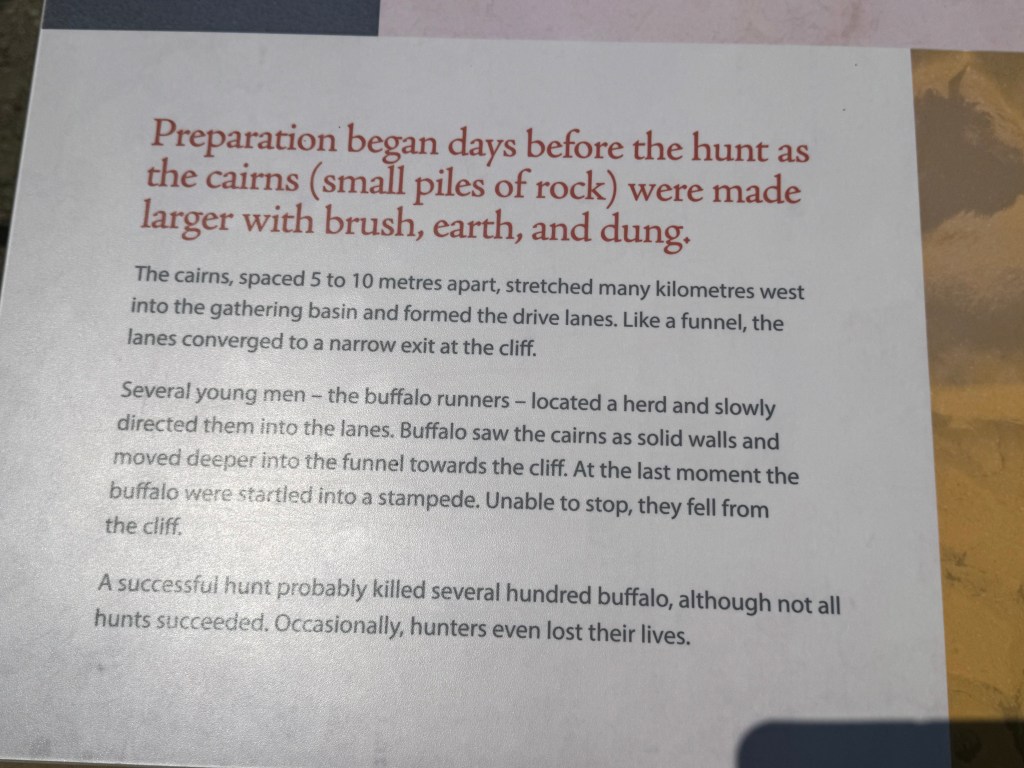
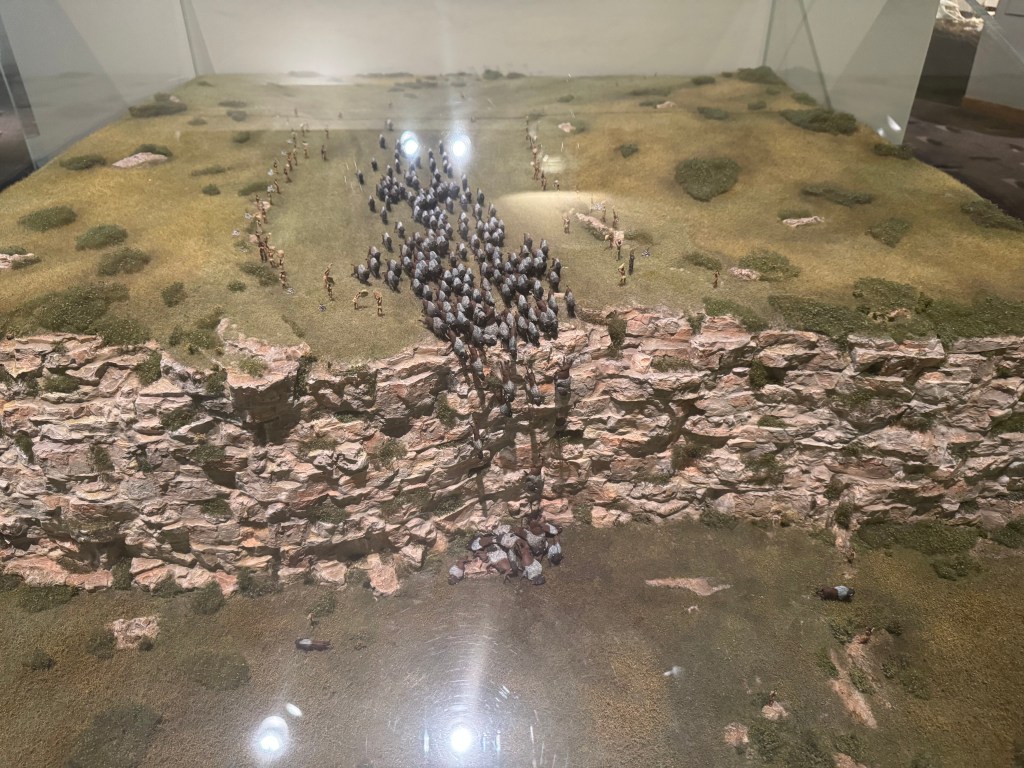
Especially interesting was a video of how the Native Americans lured, steered and scared the buffalo into a stampede and over the cliff – thousands of years before they acquired horses.
These blog posts most probably may contain history, geology, maps, facts AND fiction, science, religion, satire and hopefully a decent dose of humor.
This legally researched warning is to insure that you have received a disclaimer notice to insure that you should be cautious if entertained in any manner.
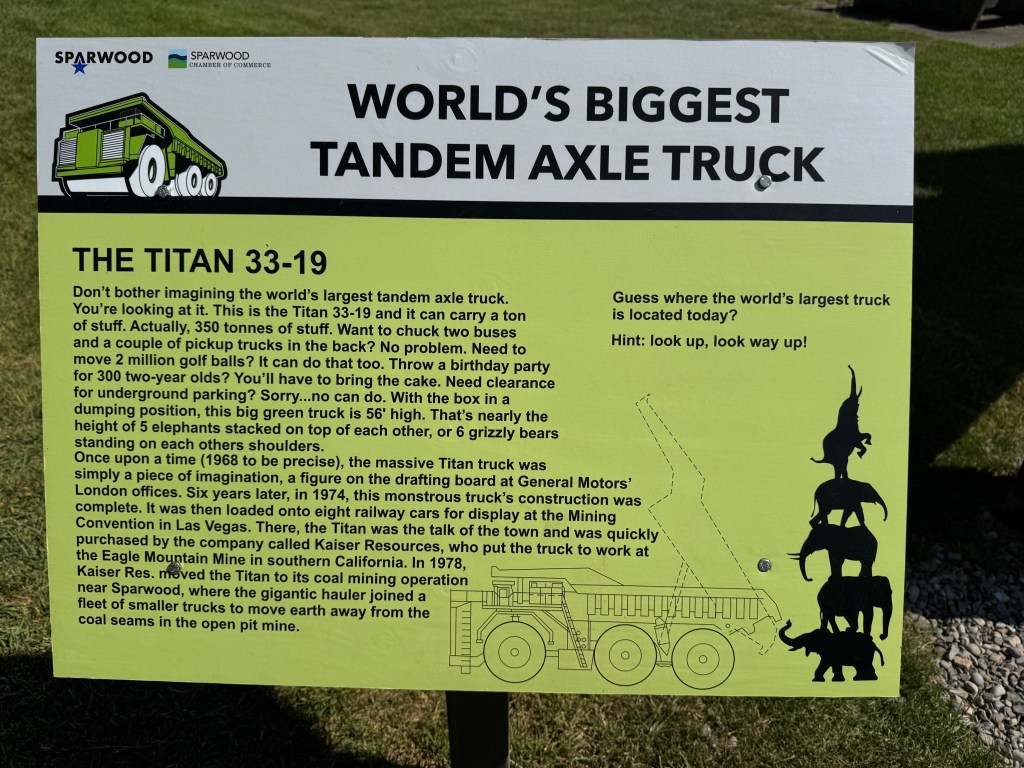
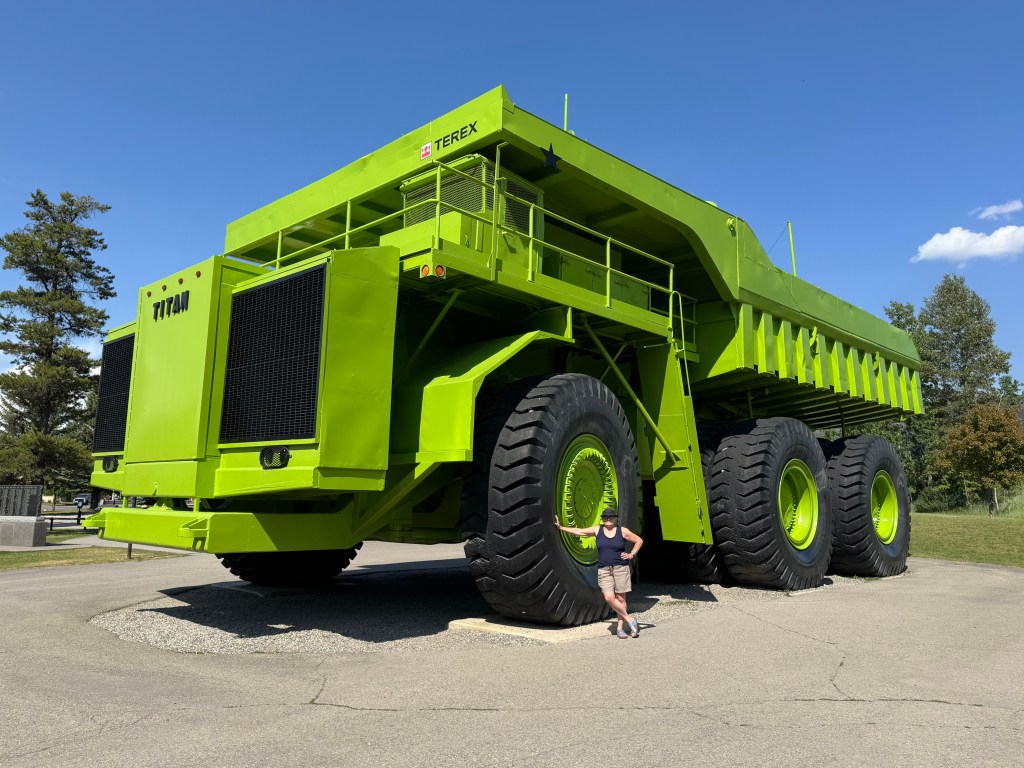
So we went to see the BIG truck, a one of a kind monster.
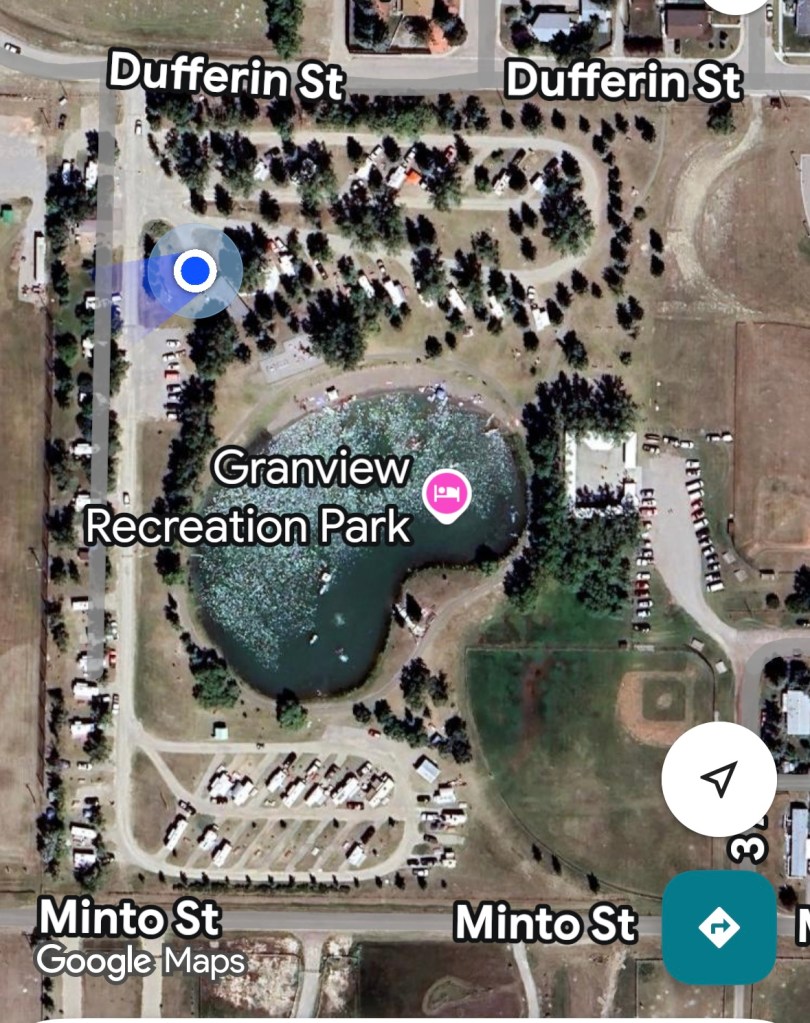
Spoke with the camp host briefly before heading out – she was friendly, about 60 and had maybe one canine tooth and a few molars -wasn’t really sure if there were 2, 3 or 4 – and inquired about what else there was to see or do in town. She smiled at me and said, “Nothing much else to see or do, honey.”
Left 9:45 AM and drove about 400 miles. Overnighting at a rest stop south of Ritzville, WA.
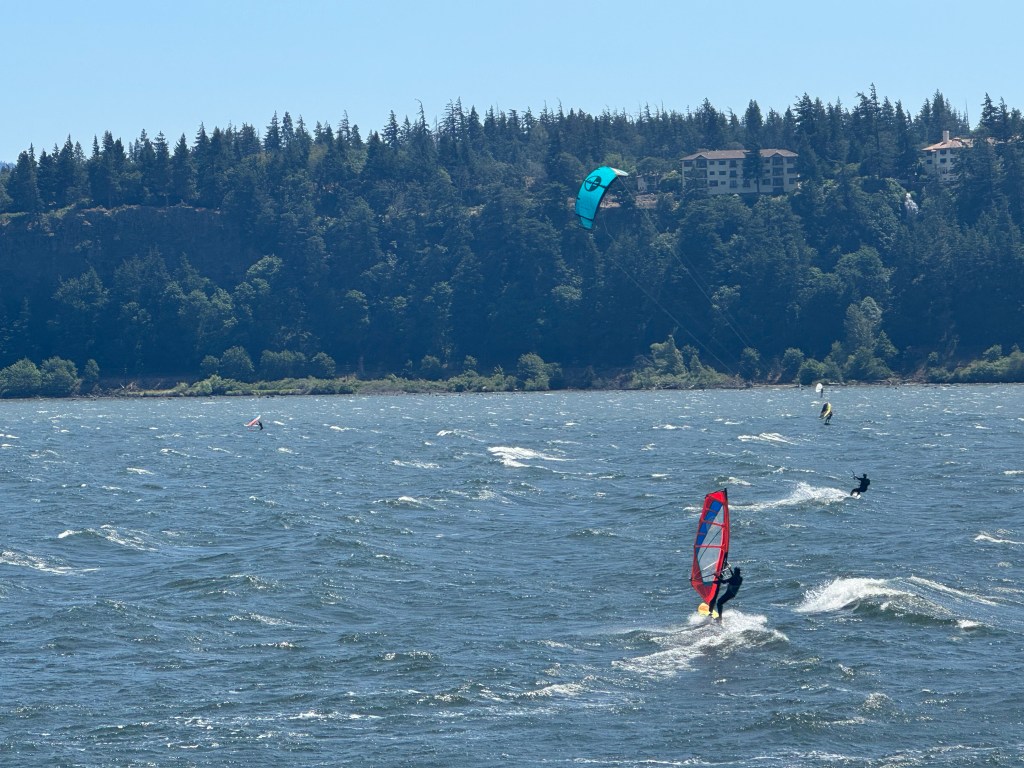
Stopped to watch hundreds of wind surfers north of Hood River, a world class windsurfing destination.
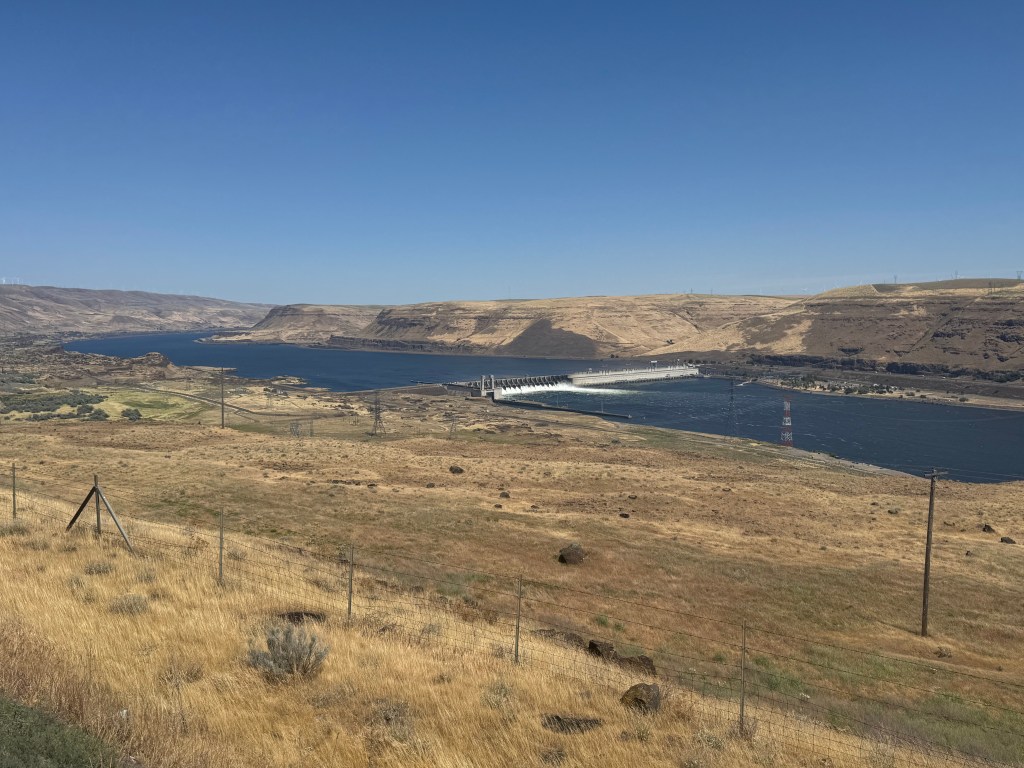
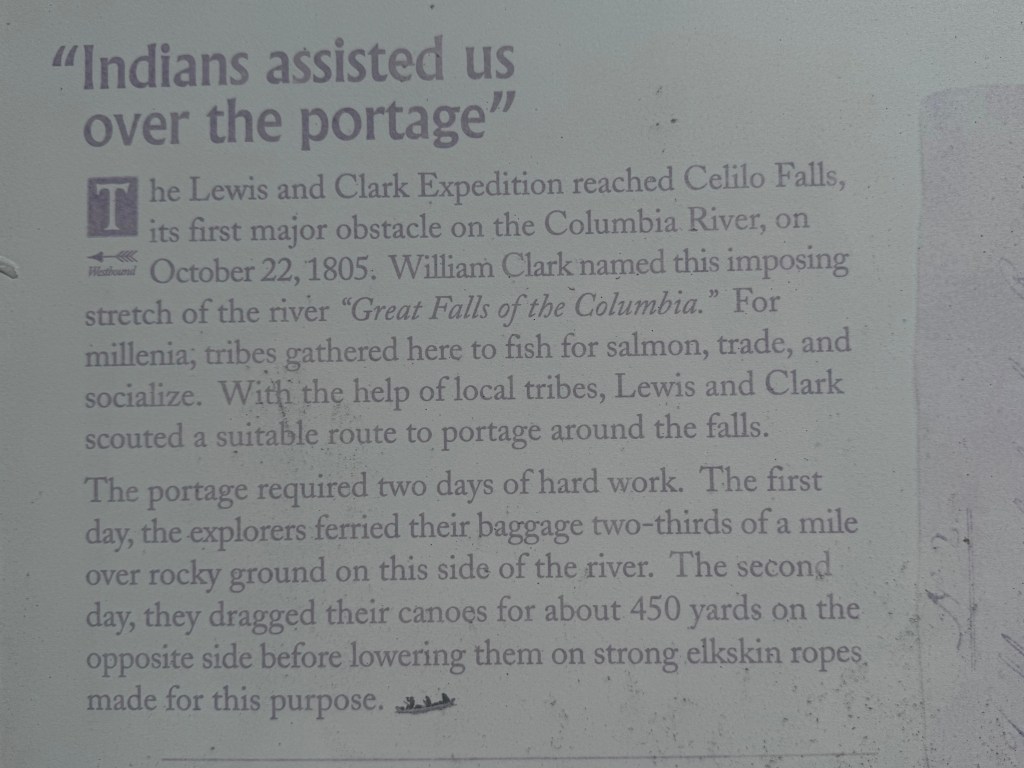
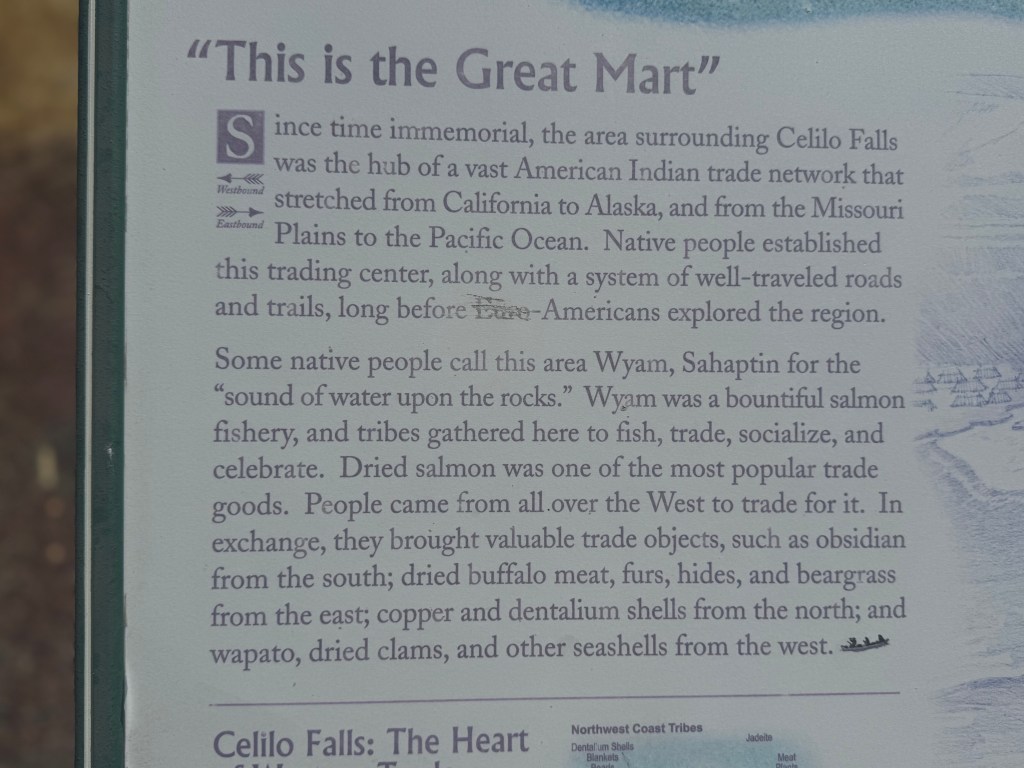
Onward to the site of the former Ceilo Falls, the centuries old Native American salmon fishing grounds, inundated by The Dalles Dam.
Across the river near Celilo were several hanging coulees that the floods created when they overcrested the Oregon hills – and poured water into the John Day River – an unusual geologic feature.
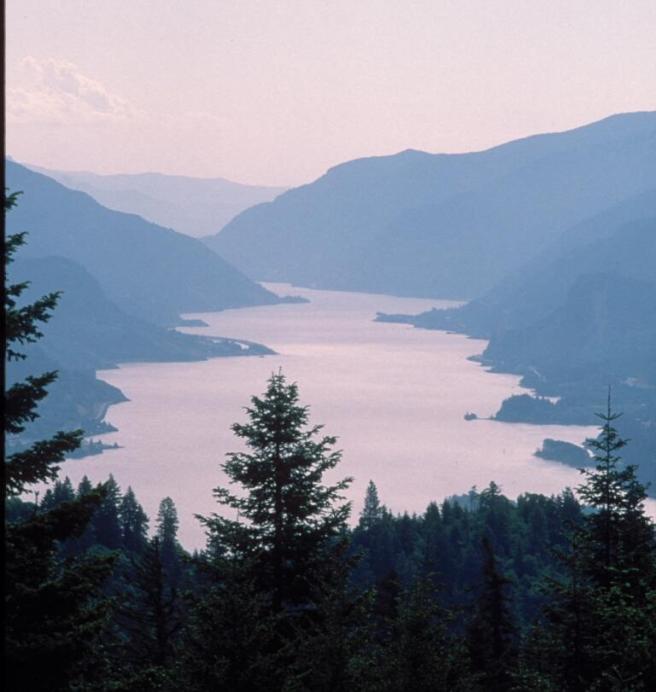
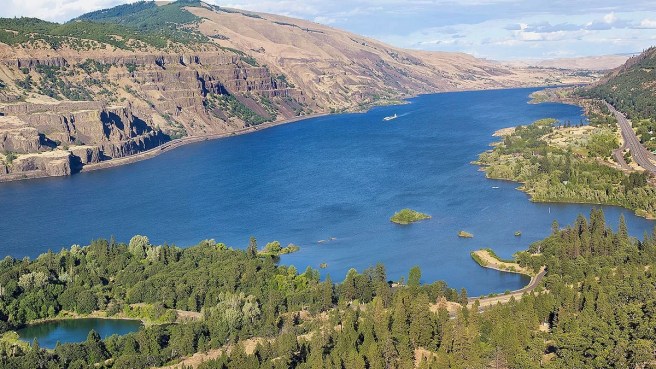
The Columbia River Gorge National Scenic Area, designated by Ronald Regan in 1986, begins just to the east of Portland, providing magnificent vistas.
The Gorge is chock full of waterfalls, which were created when the floods scoured the riverbed down hundreds of feet through the easily removed basaltic lava that covers the entire area.
When the Missoula Floods raced down the Columbia River Gorge, the wall of water was over 1000 feet high!
Below is a link to more information and stock photos of The Gorge.
For the last several days, there has been a fire just west of The Dalles, and there have been closures of the I-84 freeway on the Oregon side. We will be traveling up the Washington side on highway 14, which is two lanes and much more scenic and relaxing. I-84 can be nerve racking with all the trucks.
No worries. We have until Thursday to get to Calgary.
For those that followed my previous travels, you are aware that I often intermix information that provides a historical context about where I travel, and that will not change.
When Karen and I set out from Philomath, for the first 3 days – it is about 600 miles to the Canada border – we will be following the path of humongous Missoula Floods, which occurred at the end of the last Ice Age, only 10,000 years ago.
I became interested in this geologic phenomenon when I lived and worked for the Department of Energy in Richland, WA, at the Hanford Site – where all of the plutonium fuel for America’s nuke weapons was manufactured and now the largest Superfund site in the US. I digress, but Hanford was an extremely interesting place to work for a year and a half and it provided easy access to some unbelievably spectacular landscapes…….
I have read about half a dozen books on the Missoula floods, spent dozens of hours pouring over maps and have traveled the landscape of their multiple paths, numerous times. As much of the Columbia River drainage and eastern WA is now rock – devoid of topsoil – as a result of the floods, the results of the floods are easily observed by one that knows what to look for.
At the end of the last Ice Age, a huge ice sheet thousands of feet thick covered Canada. It scoured the Great Lakes and went as far south as Seattle and New York City. In the panhandle of Idaho, near Sandpoint and Lake Pend Oreille, the ice sheet created an ice dam across the Clark Fork River, (named by the Corps of Discovery) resulting in a giant lake – Glacial Lake Missoula – that was over 2000 feet deep and that went all the way over to Missoula, MT, and up to Glacier NP and Flathead Lake, over 200 miles away.
Just take a moment and think about a lake over 200 miles long, dozens of miles wide and over 2000 feet deep.
Then imagine the consequences of all that water being suddenly released in matter of days, racing downhill to the Pacific Ocean, about 700 miles away. Geologists believe the floods occurred approximately 100 times over about 2000 years when the glacial ice dam suddenly ruptured. About every 100 years a new ice dam was created, and lake another lake was formed…….and over and over and over.
AI Overview from a quick Google search:
The Glacial Lake Missoula floods were catastrophic events where a massive amount of water was released from a glacial lake in Montana.
The estimated volume of water released during each flood varied, but generally, it was:
Around 500-600 cubic miles of water.
This is about half the volume of modern-day Lake Michigan.
It’s also estimated to be more water than in Lake Erie and Lake Ontario combined.
The total potential energy released by each flood was immense, equivalent to 4,500 megatons of TNT.
The peak flow rate of these floods was astonishing:
Estimated at 10 times the combined flow of all the rivers on Earth.
Some estimates put the maximum flow rate at 600 million cubic feet per second.
The water velocities were incredibly high, reaching speeds of 56-100 mph.
The sheer volume and speed of the Missoula floods dramatically reshaped the landscape of the Pacific Northwest, carving out features like the Channeled Scablands, the Grand Coulee, Potholes, Dry Falls, the Columbia Gorge and contributing significantly to the agricultural richness of the Willamette Valley.
So, my followers, there was an enormous amount of water almost instantly released multiple times across eastern WA and down the Columbia River. The gravel and silt debris deposits in the Portland basin in places is over 250 feet deep and in places the silt in the Willamette Valley is over 100 feet thick.
I have read that it is believed it only took several days for each succesive lake to empty.
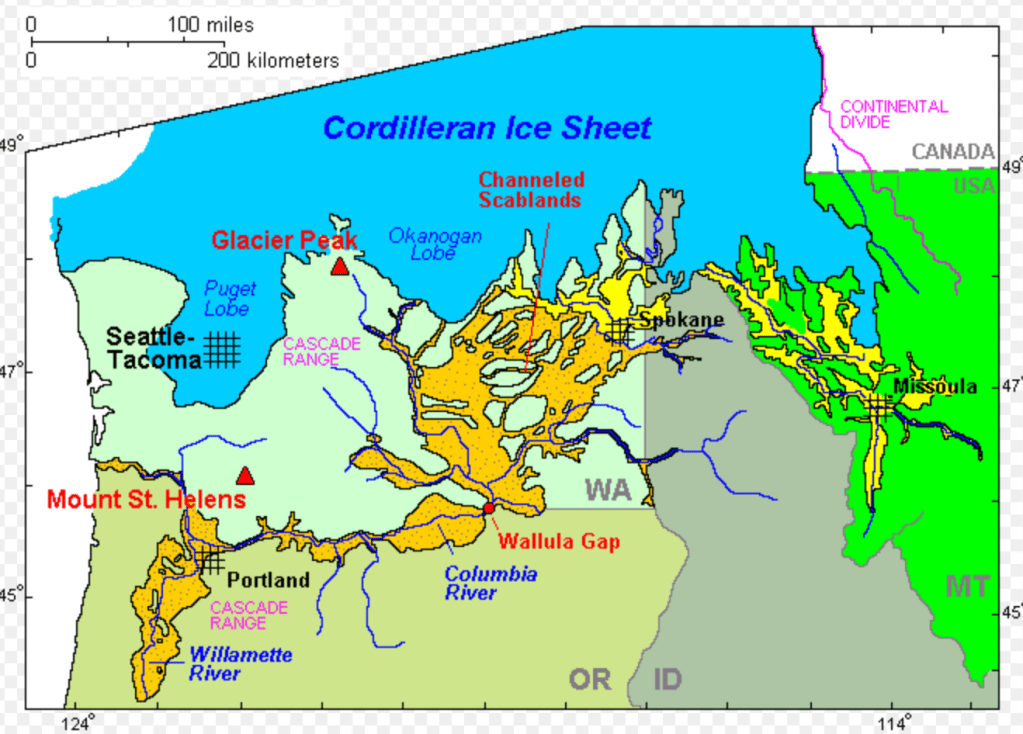
A screenshot of a satellite photo clearly shows where all of this silt came from – the Palouse topsoils that were washed away from eastern WA west and southwest of Spokane WA, now named the Channeled Scablands.
Where did the Palouse topsoils come from you may wonder. Volcanic ash that blew east from Mts. Rainier, St. Helens, Adams and Hood.
As I once again begin to familiarize myself with the WordPress software functions of copy, paste, edit, etc., these entries in early June 2025 are my Alaska pre trip practice sessions. Bear with me. I am practicing getting photos edited, copied and pasted, finding historical information about locations on the web, copying text, maps and all the other effort it takes to prepare a blog. It isn’t easy learning.
A memorable day from January 2014 follows.
Saturday, January 11, 2014
Pneumonia, the Dr. said…
Posted 1/11/14
Guess that diagnosis explains a few things.
Like the incessant cough, the sweats, the ineffective OTC meds, my weakness and mental confusion.
Weakness and mental confusion are not good attributes for a traveler. Even worse when you are in a foreign country.
Still in Chiang Rai on 1/11, arrived here on 1/2 from Mae Sai after the week in Myanmar. After two earlier visits to the Hospital and being given a handful of over the counter meds that seemed to do little to help my symptoms, I finally made the third trip to the hospital yesterday, 1/10.
I was SICK. Really sick.
Told the nice, young, fluent in English female MD that “I do not have a cold. This is my third visit to the ER.” After getting a chest x-ray, the Dr. told me I had pneumonia and recommended admission. What ever it takes, I said. So I self admitted with the help of Jiab and Waew.
Still have month left to travel before returning to the wet, cold and dark of PDX, so need to get healthy again.
Went through the admission process, then I was provided the “pick a room type book.”
Room choices were: Shared room with 4 beds, shared w/3, shared w/2 – all basic or deluxe, then to the private rooms – private basic, private standard, private superior, private exceptional. I chose the Private Superior w/ 27″ flat screen, cable, sofa, chair, all Nursing services, 3 meals. $47.00/ day, inclusive.
Cheaper than a night at a Best Western Hotel or a Motel 6 in the U.S. When was last time you stayed in a $47.00 hotel in the US ??
Settled in, got out the iPod and the speaker, put some tunes on, watched tennis on the TV. Had a few antibiotic IV drips, a nebulizer treatment every 4 hours, slept soundly all night.
This AM the Doc visited and recommended another night. “What ever it takes and whatever you recommend” was my reply.
In the afternoon Waew stopped by with some fresh fruit – which has been about 80% of my diet the last 10 days. Thank goodness she stopped by with the fruit, as the hospital food is, well, hospital food and I cannot eat it.
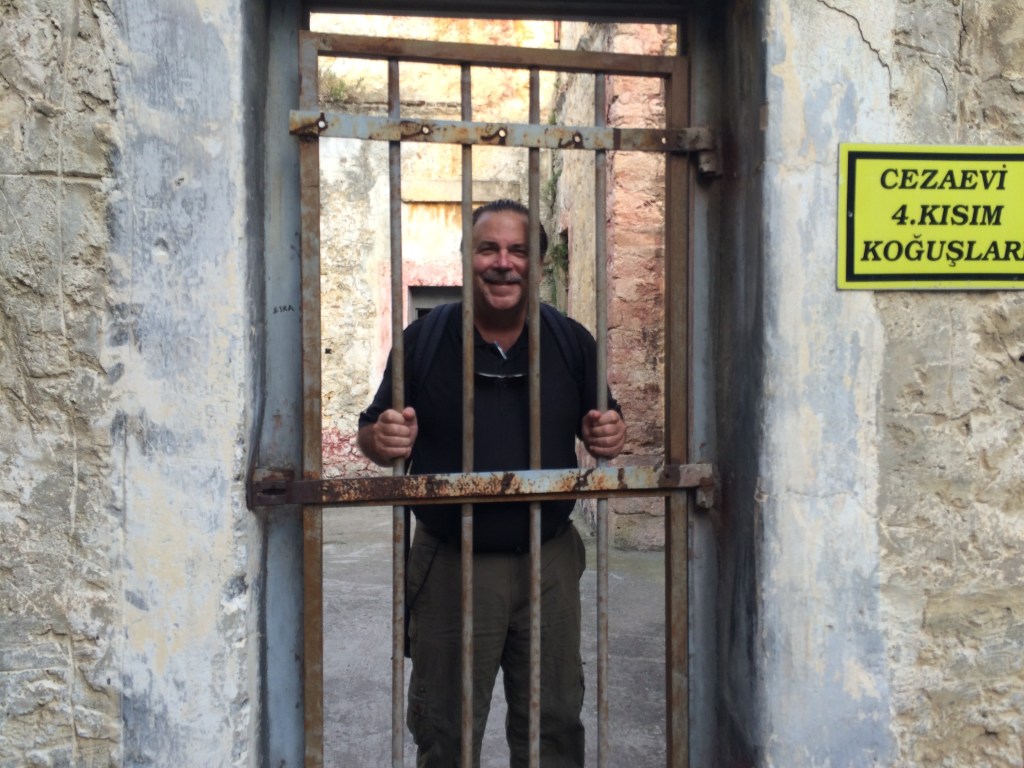
Out of the bed most of the day, sitting on the sofa. Pacing the room, prisoner style, to get some exercise.
Around 6 PM my acquaintances/new friends/travelers – also from PDX- Rondi & Andy – stopped by and we talked for an hour. They are leaving 1/13 to head to the the Lao border for a night then to take a 2 day slow boat down the Mekong to Luang Prabang on 1/14.
The Doc approved my release from the hospital tomorrow and an OK to resume traveling, so I am attempting a reservation on the slow boat Rondi and Andy are taking. Hopefully there will be an open slot for me to travel with them for several days to Luang Prabang.
Have an IV drip needle in the hand, taking a few pills. It is not that bad. Not all all that different than the room at Jiab’s and Waew’ Janispur Guest House, except the bed is worse and much harder and I have cute Nurses taking care of me.
Some of the Nurses are as mesmerizing as the Asian flight attendants were on the flight over.
No worries, this is just a schedule modification. Get cleaned out, dosed up, get packed, get moving to Laos, Luang Prabang and the Plain Of Jars in a few days, hopefully. Then get down to Angkor Wat in Cambodia.
Travel is all about new experiences. Take them as you can, where you can, when you can, if you can.
This is a blog entry from 10/28/14 with some of my pictures during one of my solo traveler Asia walkabouts.
We wanderers, ever seeking the lonelier way, begin no day where we have ended another day; and no sunrise finds us where sunset left us.” ― Khalil Gibran, The Prophet
Making notes before my overland (on foot) crossing from Nepal to Tibet.
“Worship Allah and associate nothing with Him, and to parents do good, and to relatives, orphans, the needy, the near neighbor, the neighbor farther away, the companion at your side, the traveler, and those whom your right hands possess (slaves). Indeed, Allah does not like those who are proud and boastful. [Al-Qur’an Surah Nisa 4:36]”
“Just as a painter paints, and a ponderer ponders, a writer writes, and a wanderer wanders.” ― Roman Payne
Ten real differences between travelers and tourists
1. Packing – travelers carry little and take away lots. Tourists carry lots and take away little.
2. Distance travelled can demonstrate a stark difference in approach. Travelers’ journeys can last a life time. Tourists’ journeys are a 7 day search for full English.
3. Tourists are all about the people they meet. Travelers are all about the people they are becoming.
4. Tourists’ holidays come to an end, traveler’s’ journeys never end. In some ways the effect of a place, the experience itself never pales into insignificance.
5. Tourists go to see something or cross off a bucket list, travelers go to be somewhere.
6. Tourists want to see places through their own culturally rose-tinted glasses. They don’t want to be surprised, they want to be entertained or amused. Even if it is to peer at locals living in relative poverty. Tourists want everything translated. They want ample deck chairs, happy hours at 5pm and a local ‘Nag’s Head’ – even in the heart of Bangkok. Travelers want to be educated about other lives, about themselves, their life and their place in the world.
7. Tourists colonise with their cultural imperialism or their religion. Travelers meld into the crowd and hope to learn something new that may challenge their preconceived notions of life and lifestyle.
8. Travelers learn more from the things that go wrong on their trip than from things that ‘go right’. Tourists sue.
9. Tourists follow maps and guides preferring to discover through someone else’s recommendations, travellers go off piste. Sometimes getting lost is the best way to discover something surprising that challenges you and your view of the world.
10. Tourists often cannot wait to go home and show off their suntan, travellers often never want to leave, or never want to stop traveling.
“There’s something profoundly intense and intoxicating about friendship found en route”.
It’s the bond that arises from being thrust into uncomfortable circumstances, and the vulnerability of trusting others to navigate those situations. It’s the exhilaration of meeting someone when we are our most alive selves, breathing new air, high on life-altering moments. It’s the discovery of the commonality of the world’s people and the attendant rejection of prejudices. It’s the humbling experience of being suspicious of a stranger who then extends a great kindness.
“A traveler enters the world into which he travels, but a tourist brings his own world with him and never sees the one he’s in.” ― Thomas H. Cook, The Crime of Julian Wells
The question I find myself asking is whether there is a difference to being a traveller and a tourist. If so, which is the more appealing? Which suits you as a person?
Travelers Tourists
Likes Dislikes Likes Dislikes
People
Tourist Attractions
Impressive Hotels
Bugs
Trading Stories
Buildings of note
Gift Shops
Beggars
Local Food
Cable TV
Organised Tours
Unheard of food
Cheap Local Clothes
Organised Tours
English Speakers
Carrying things
Speaking Local Lingo
Constantly Moving
Taking Photos
Wasting time
Hot Showers & Wi-Fi
Ignorant Tourists
Museums
Smelly Backpackers
The Appeal of Lifestyle Travel
Being a traveller is great if you want to immerse yourself in other cultures. While you have been brought up in an interesting country (or two), you are open to learning from people who technologically seem more primitive, yet when you delve deeper, appear more secure and happy.
The appeal of being a traveller is that you can soak up the mundane and day to day of other worlds, without the need to rush from site to site or tour to tour.
You know that all modern economies rely on cash flow to support cultures, be them 1st, 2nd or otherwise. Treating people with the same respect everywhere is paramount to you understanding this system. Your expectations are limited to expecting an experience, and being present to enjoying it.
Being a traveller appeals if you make yourself time rich and cash or credit rich too.



























 abackpackandadaysack
You must be logged in to post a comment.