Reminds me of my safari in Africa. Somebody forgot the corkscrew and for several days we had to live on nothing but food and water. W. C. Fields
Like all great travellers, I have seen more than I remember, and remember more than I have seen. Benjamin Disraeli
If all difficulties were known at the outset of a long journey, most of us would never start out at all. Dan Rather
To travel is to take a journey into yourself. Danny Kaye
More will be added…..come back again later…..
Uncategorized
I Am Off

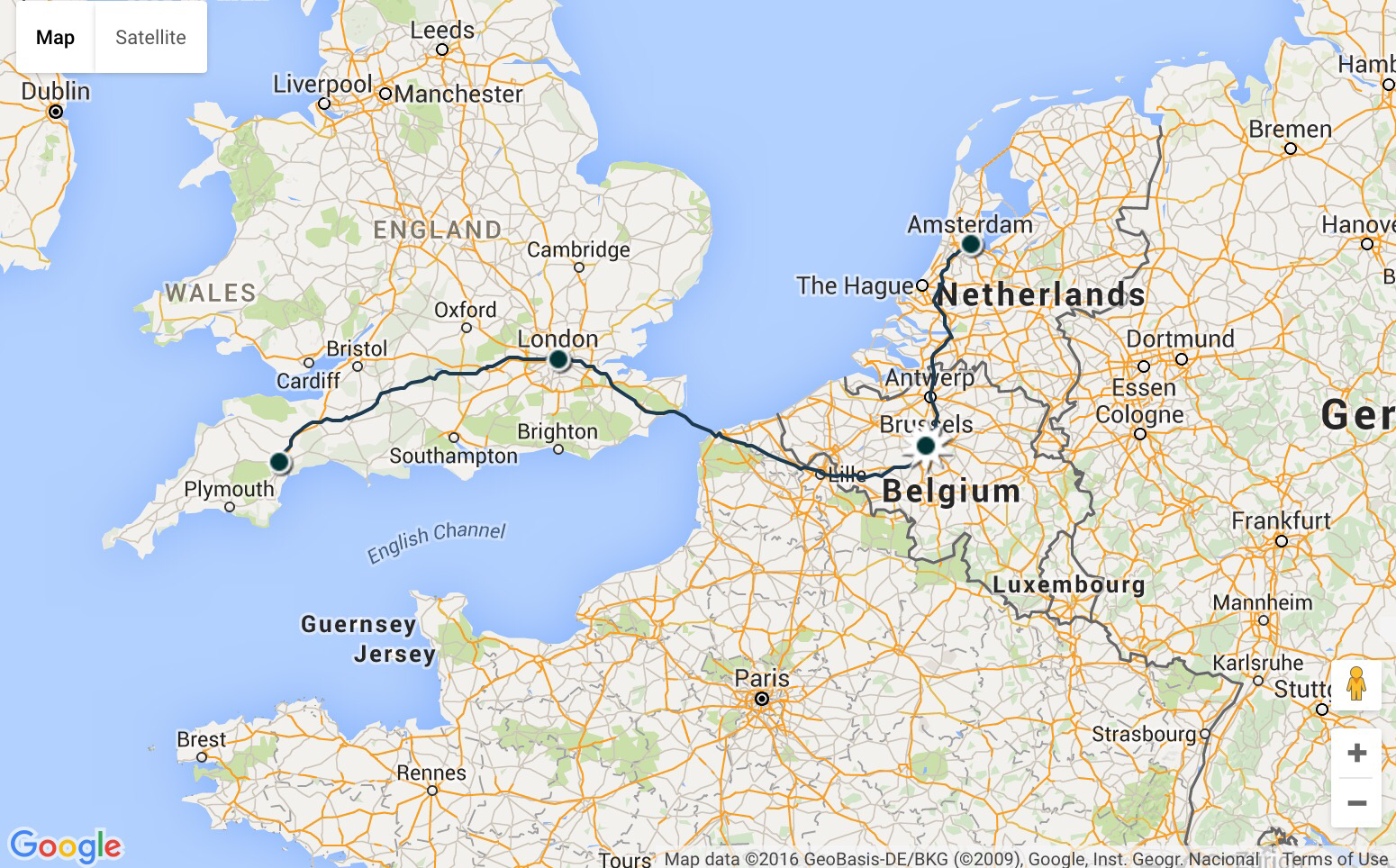
Off today from Amsterdam by train to visit my friend Robin Harford in Exeter, England. He is a bloke I met at the Bamboo Nest in northern Thailand two and a half years ago and we have stayed in contact since meeting. (Several weeks after meeting him, I caught pneumonia while traveling in eastern Myanmar and was then hospitalized in Chaing Rai).
Robin and I met up again in Luang Prabang and we had dinner with some other traveling companions and good friends, Andy and Rondi Leonard, who run the treking company iTrekNepal.
Robin is well known internationally as a “Forager” and he has written several books on the subject.
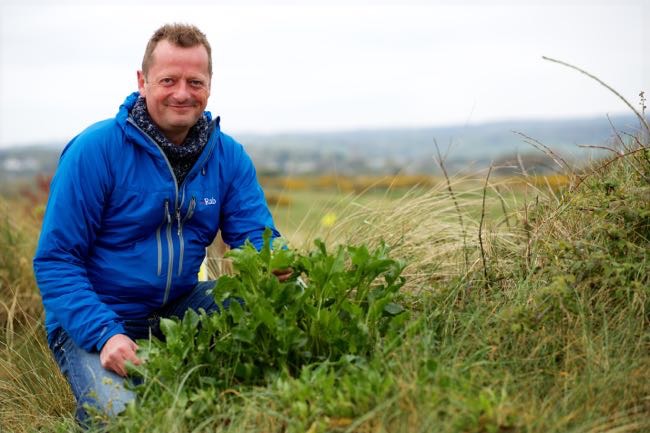
An interesting and intelligent fellow traveler, we comfortably converse like brothers for hours on end.
Pics

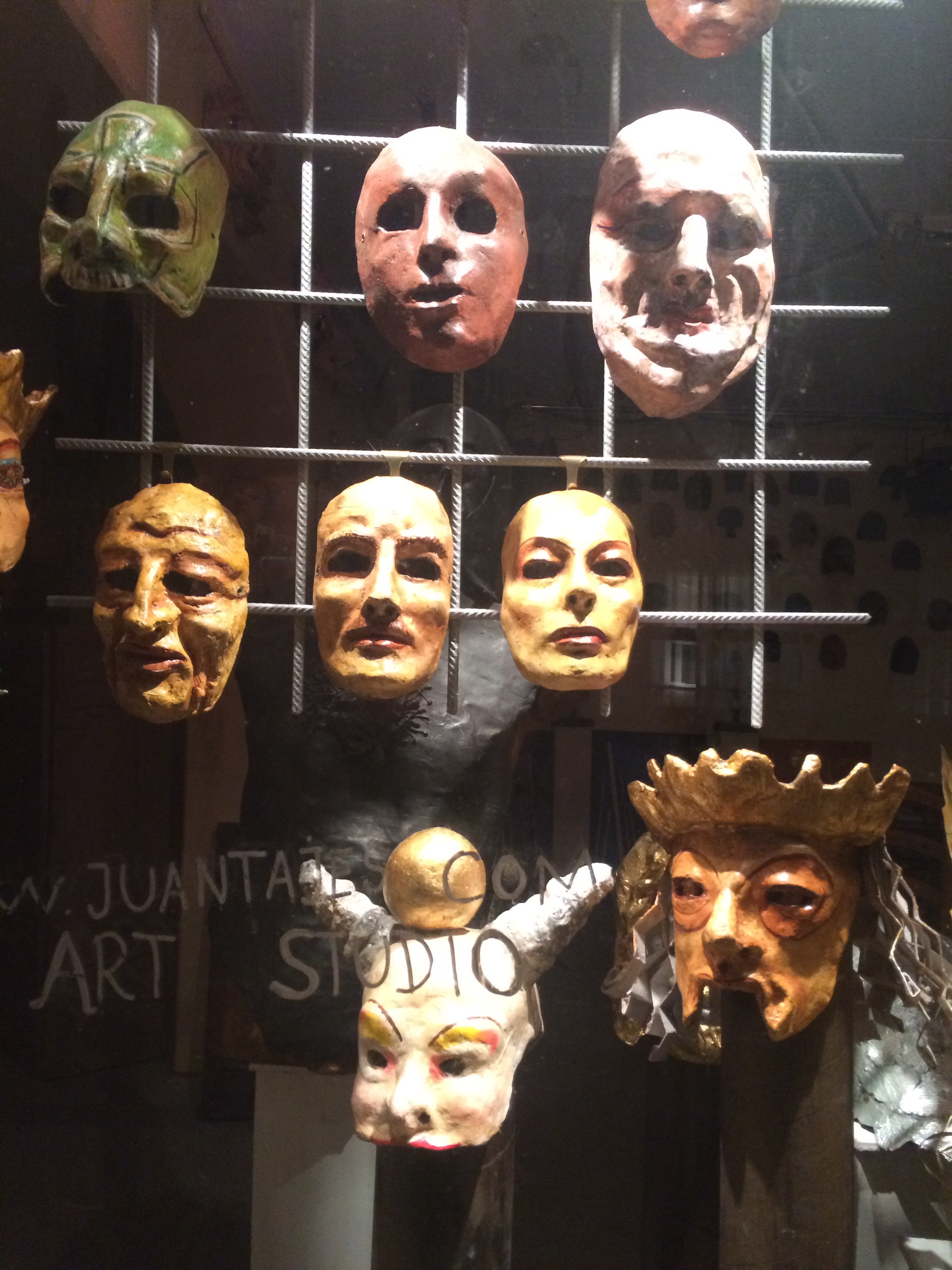

A shop window.
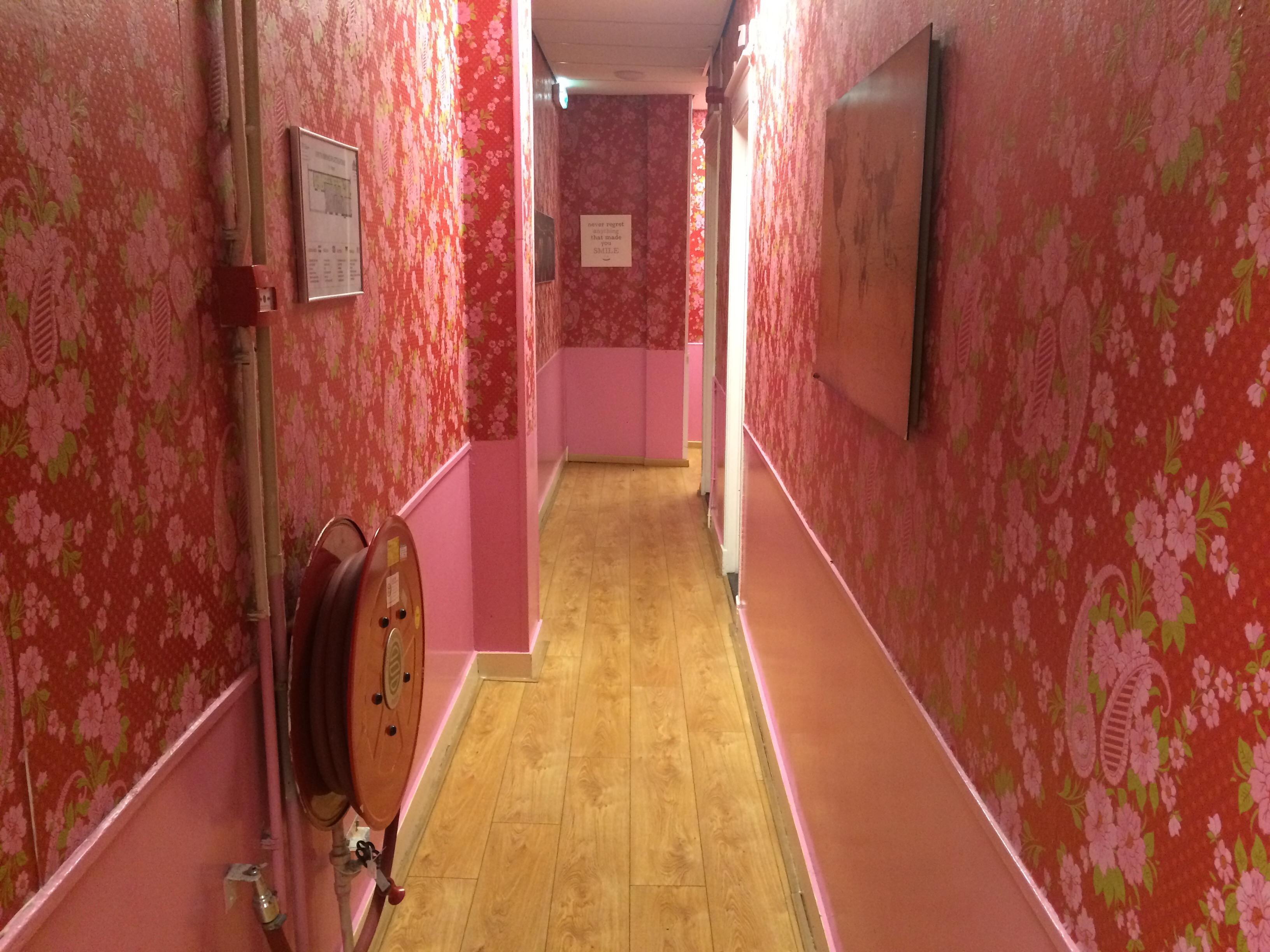
The second floor of the hostel looks like an old whore house.


People I Met
On Friday, June 17, I toured Sagrada Familia with Amir and Maraym. Very friendly travelers from Canada with passports from both Canada and Iran. Both born, raised and educated in Tehran, they recently quit their full time jobs to continue their educations. They were frugal travelers on a understandably tight, college student budget. But their next stop was Rome. I bought them coffee and we talked for an hour after walking Sagrada Familia for an hour.
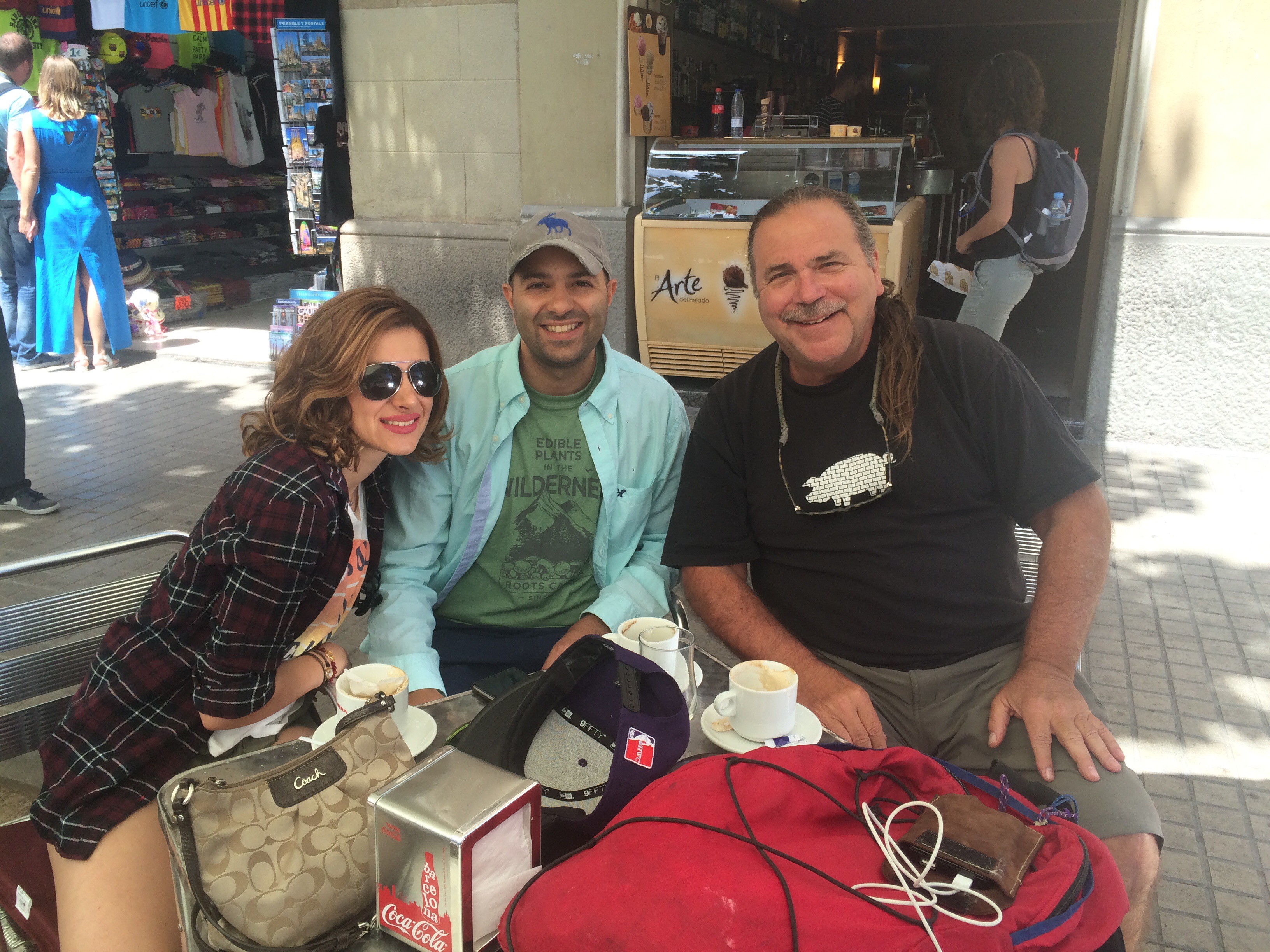
Amir has a BS in Chemical Engineering and is working on a MBA. He was in his mid thirties and has worked for several well known oil companies around the world. He has worked and traveled to many places in South America. Maraym was halfway through her Doctorate in Medical Genetics. She currently spends a large amount of time in a lab, performing research on a genetic disease that attacks children around ten years of age. They were interesting and very friendly fellow travelers, but time ran short.
I set off on the bus tour of Barcelona on a double decker bus.
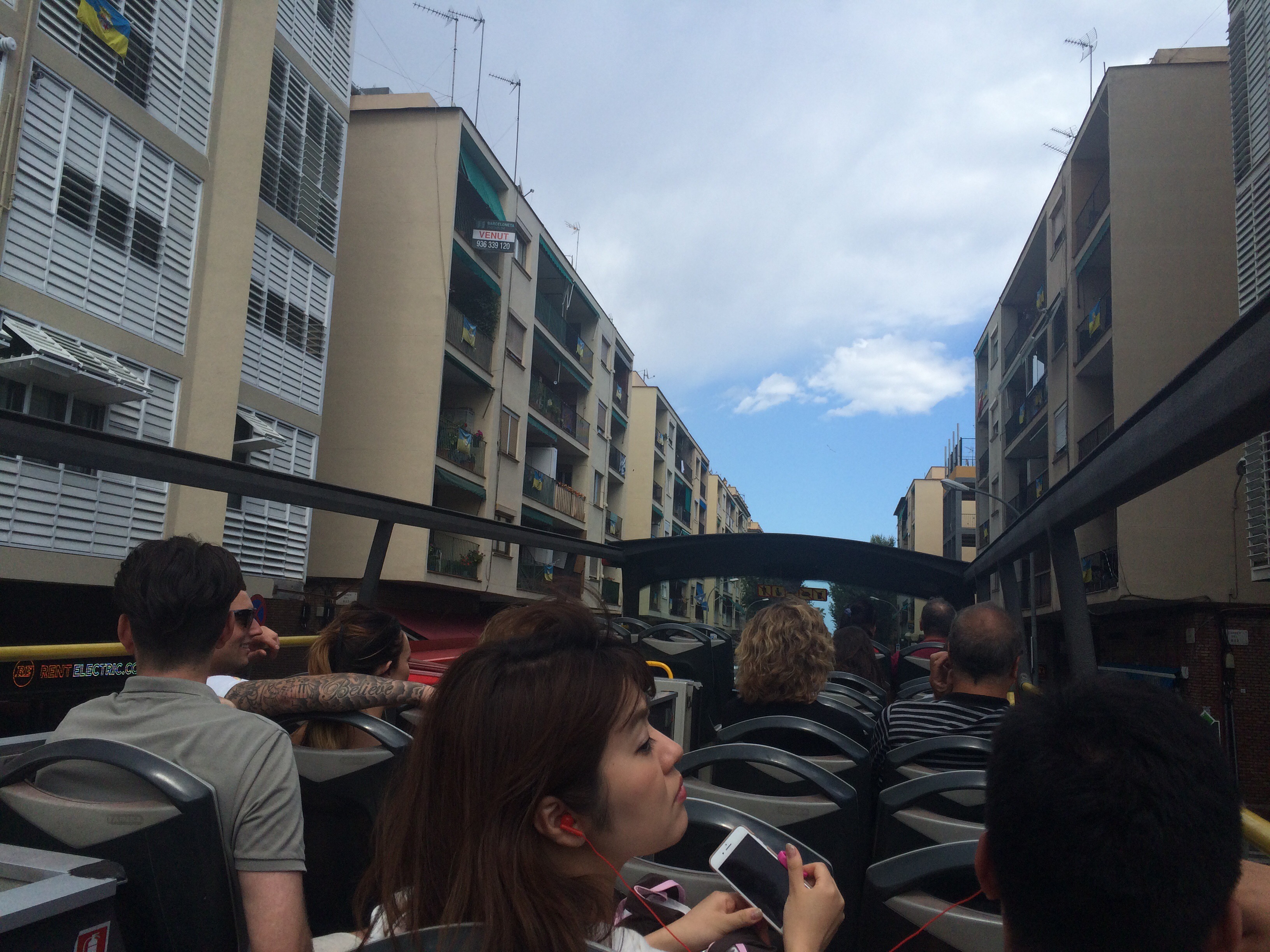
It started raining. Got off in the marina and looked at boats. Some were big.
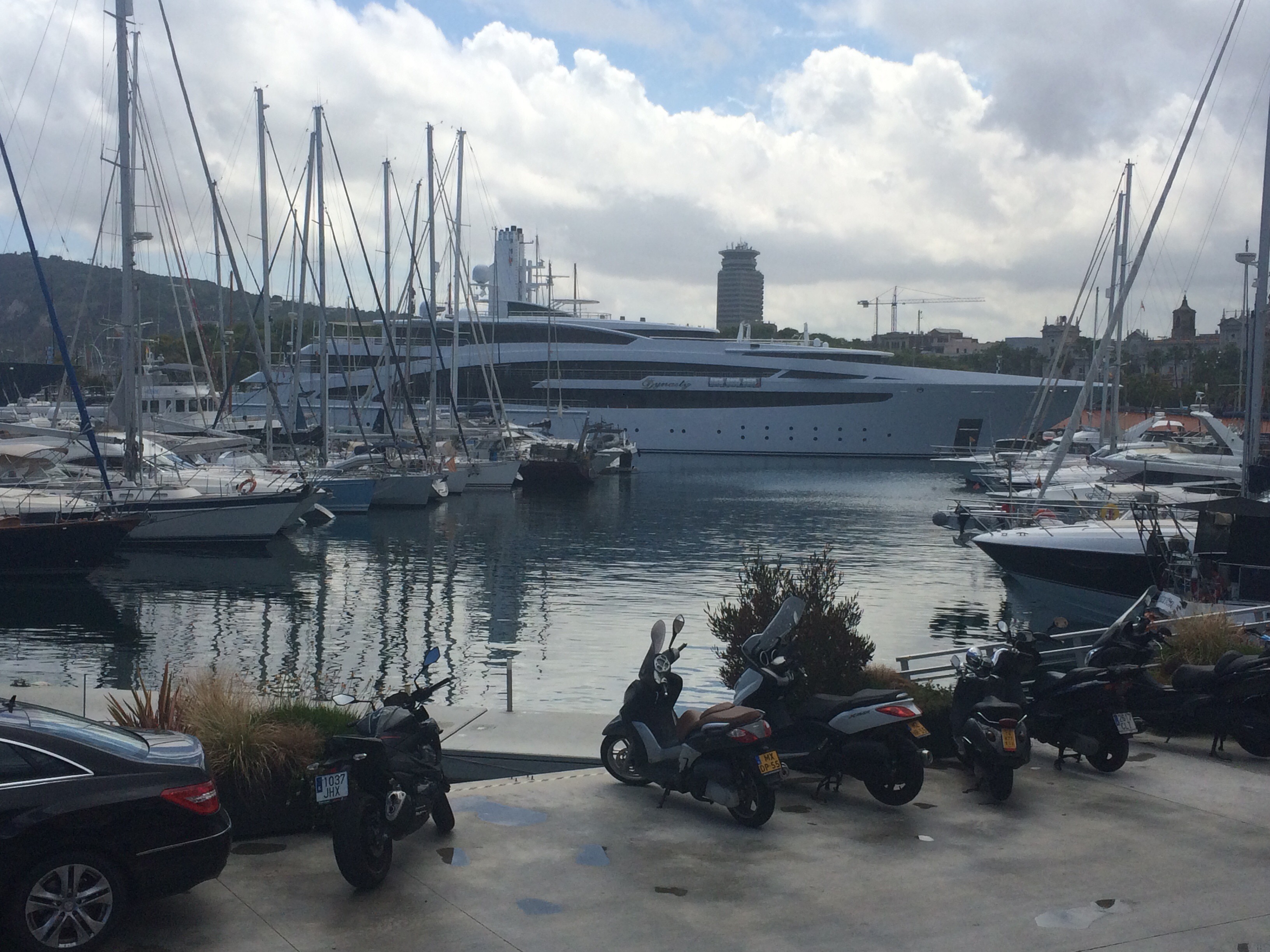
Got on and drove by the beach, etc., around the city. I became a tourist.


Later that day in the hostel’s outdoor deck area I met Francois, a 23 year old Parisian. He was currently studying for exams that will make him a judge in France. It is a much different process to become a judge in France vs the US. Judges are not elected or appointed. They are selected from individuals well educated in law that pass the examination. He said there are over 3000 applicants currently and about 20 people will get selected. I bought us several beers and dinner and we had an interesting and enjoyable conversation. I was five years older than his father and we talked personal finance, politics in the US (Trump) terrorism in europe and in the US, travel and more. We talked for two or three hours. He spoke perfect english. I have no doubt he will be ultimately selected to be a judge.
I asked him when first knew he wanted to be a judge. He said when he was 14.
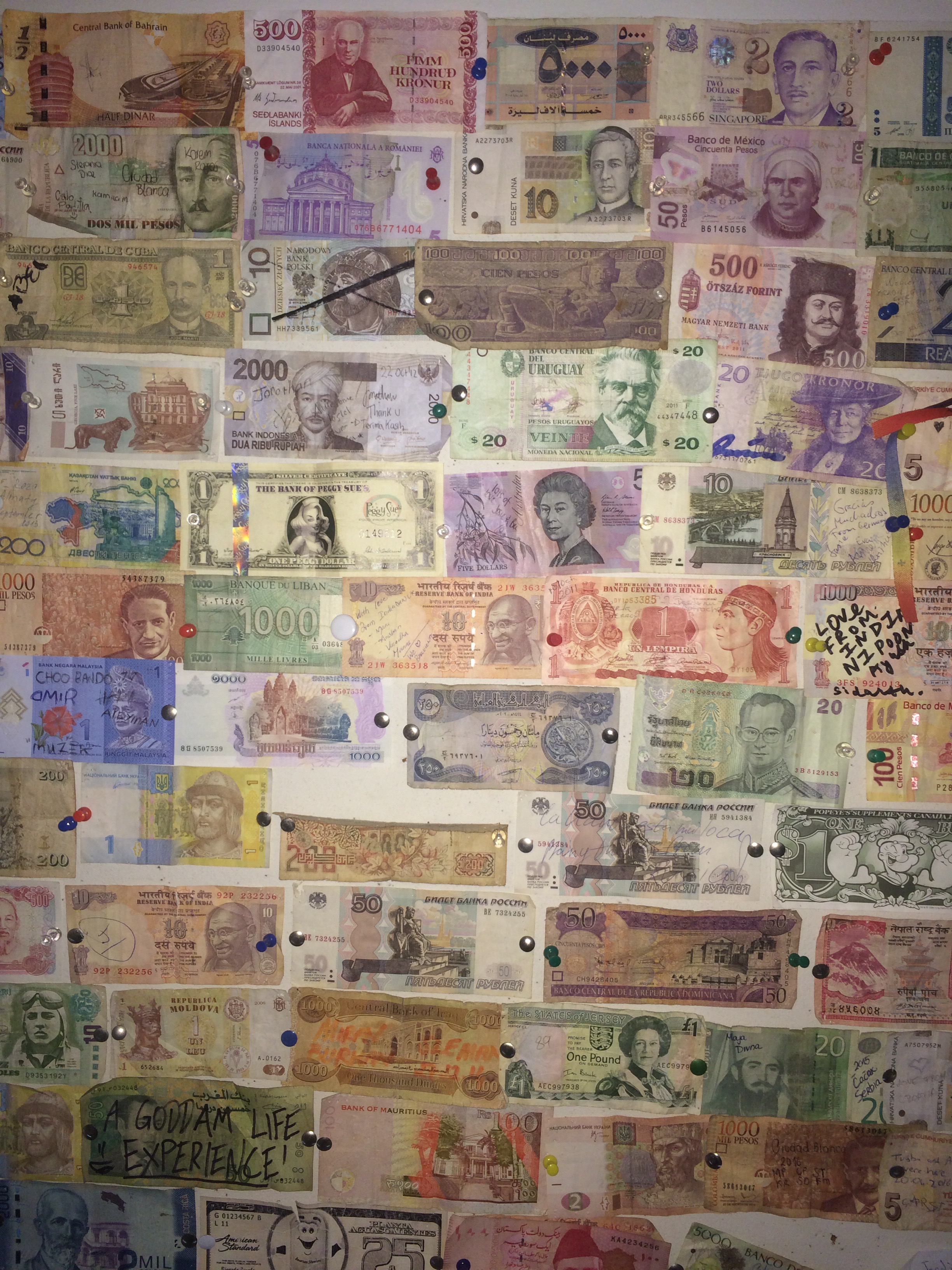 At the hostel
Left the hostel Saturday AM, walked two blocks to the Metro and rode far underground out to the airport. I went down 8 or 10 60 foot escalators. At the airport I checked my big bag and flew to Amsterdam in just over two hours. Took the train from the airport to the Central Train Station where I asked directions and bus numbers. Took Bus 172 about a mile to the museum district. Got off and walked two blocks to the hostel.
This is my second visit to Amsterdam.
Saturday night the prices in the hostel – and everywhere else for that matter – were high, so I booked a bed in dorm room with six beds. It was cramped with nowhere to place bags. In the room I met Cody a very interesting young man. He worked in the oil and gas industry on the eastern seaboard of Canada and was from Nova Scotia, a province I have visited four or five times. Frustrated after not getting a job he was promised, he took off traveling.

He had spent the last 6 months crewing on the above sailing yacht, over 100 feet long. He said that some of the yachts rented for as much as $300,000 a day and carried 4 or 6 guests. He talked about spending the recent winter in the Caribbean and the early summer in the Med. Cody ran off a list of ports of call.
To keep things balanced and in proper perspective, I asked him about the winters in Nova Scotia.

I offered to buy beers so we set put from the hostel. We drank a few beers, ate a light dinner, then set out for a coffee shop.
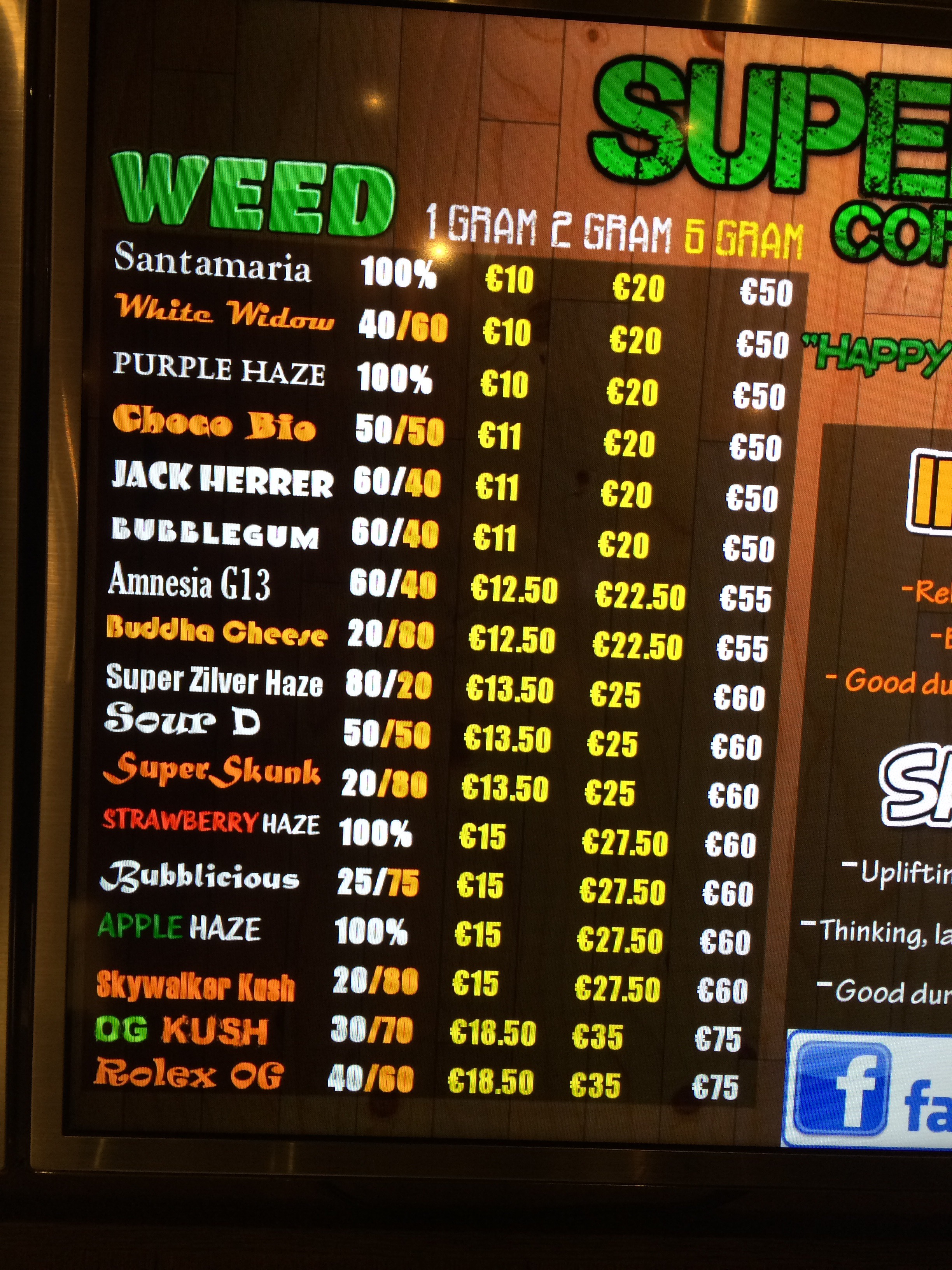
He bought a gram of weed for 14€ and we smoked a joint and talked. Then more beers in more bars. As we were walking out of one bar, there was a crowd of people and 4-5 policemen tending to a girl in her 20’s laying unconscious five feet away on the sidewalk. My first thought was some type of drug overdose. An ambulance arrived and took her away.
We got home about 1:30 AM and I had to first ascend the ladderlike stairs to the second floor then crawl into the upper bunk. It was avery crowded room after a night of drinking beer. Drunk but still able to think, I made a mental note. “Always ask for a lower bunk”.
Around 1 PM the following day I moved to a private room. I paid for all four beds in the room and have my own 1/2 bathroom and a window. A shared shower is at the end of the hall. It is nice to have the space and privacy and it is well worth the extra cost.
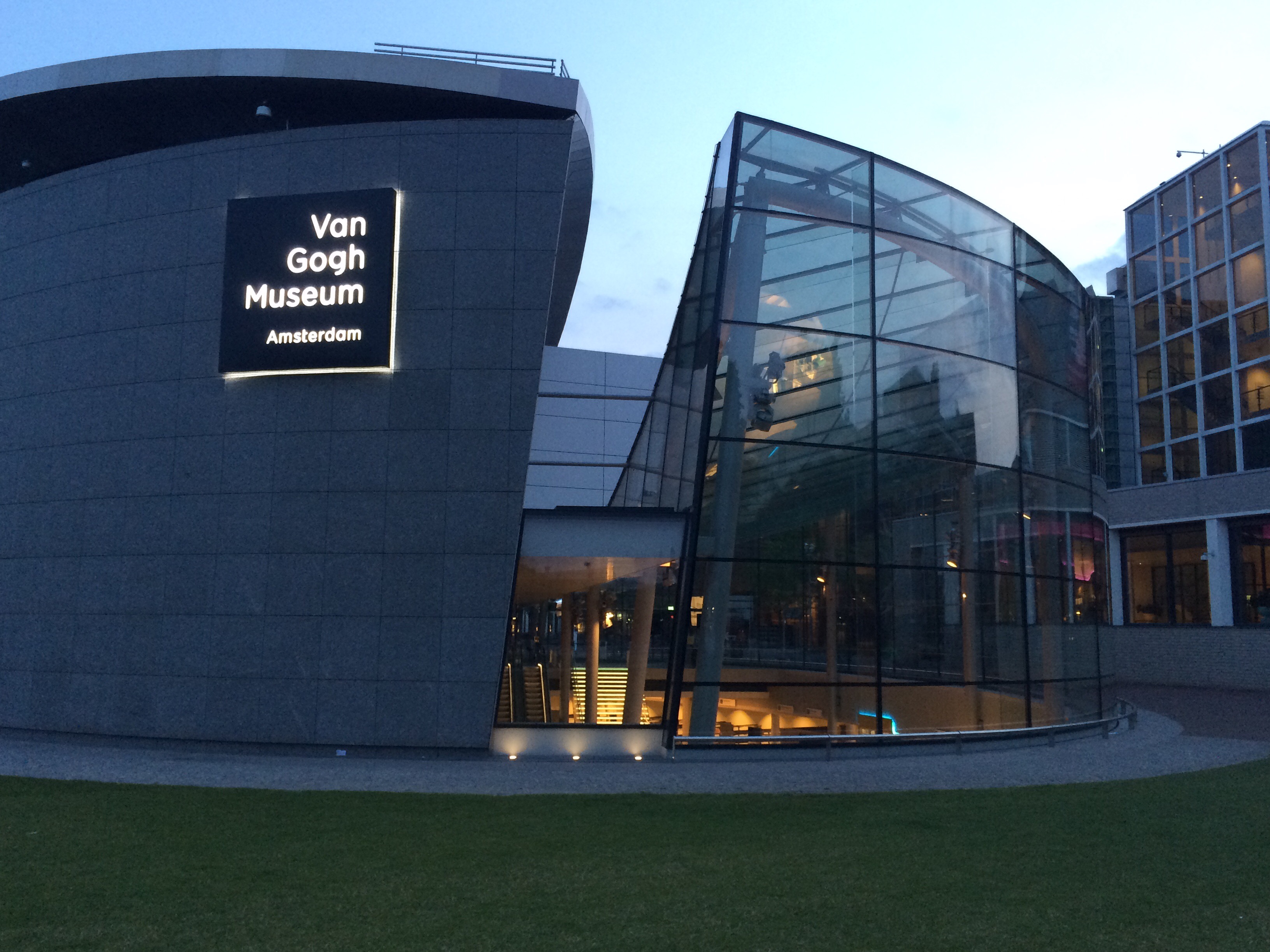
Yesterday, Sunday the 19th I walked around the outside of the Van Gogh Museum then down to the red light district, about 1.5 miles away.
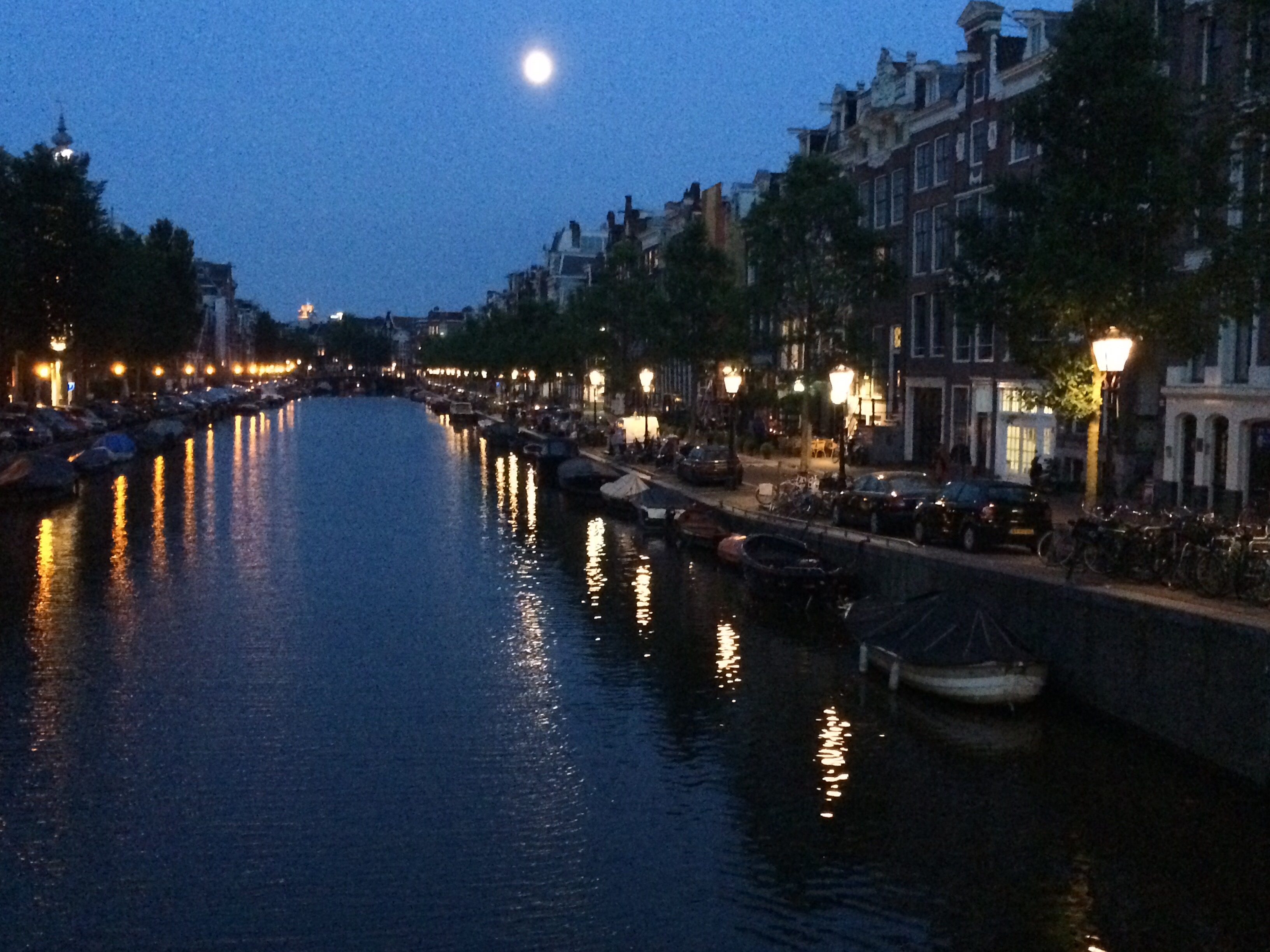
I set out walking after 10 PM and it was still dusk with a full moon rising. Amsterdam is such a neat city. Beautiful buildings, safe streets, busses, parks, benches, streetcars, bars, canals, bicycles, boats, restaurants, shops. All neat, clean, orderly, level and efficient. Great art museums and an easygoing atmosphere full of young people. Bicycles are parked everywhere.

I stopped for a beer and reflected on the chaos of Luxor versus the peace and quiet of Amsterdam late on a Sunday night. No horns, just streetcar and bicycle bells. Minimal vehicle traffic vs. a bumper car free for all. Live sex shows and prostitution vs the puritanical attitudes, dress, veils and hijabs. The fasting ritual of Ramadan vs the exceptional eateries, delis and pastry shops. Coffee shops selling pot, hash, mushrooms and bars everywhere vs the stigma attached to alcohol in Egypt.
I am glad to be here.
I had planned to ride Streetcar #5 back to the hostel, but they had stopped running for the night. So I walked back, through the canal ring, arriving to my private room about 1:30 AM.

Amsterdam World Heritage Site info:
Seventeenth-Century Canal Ring Area of Amsterdam inside the Singelgracht
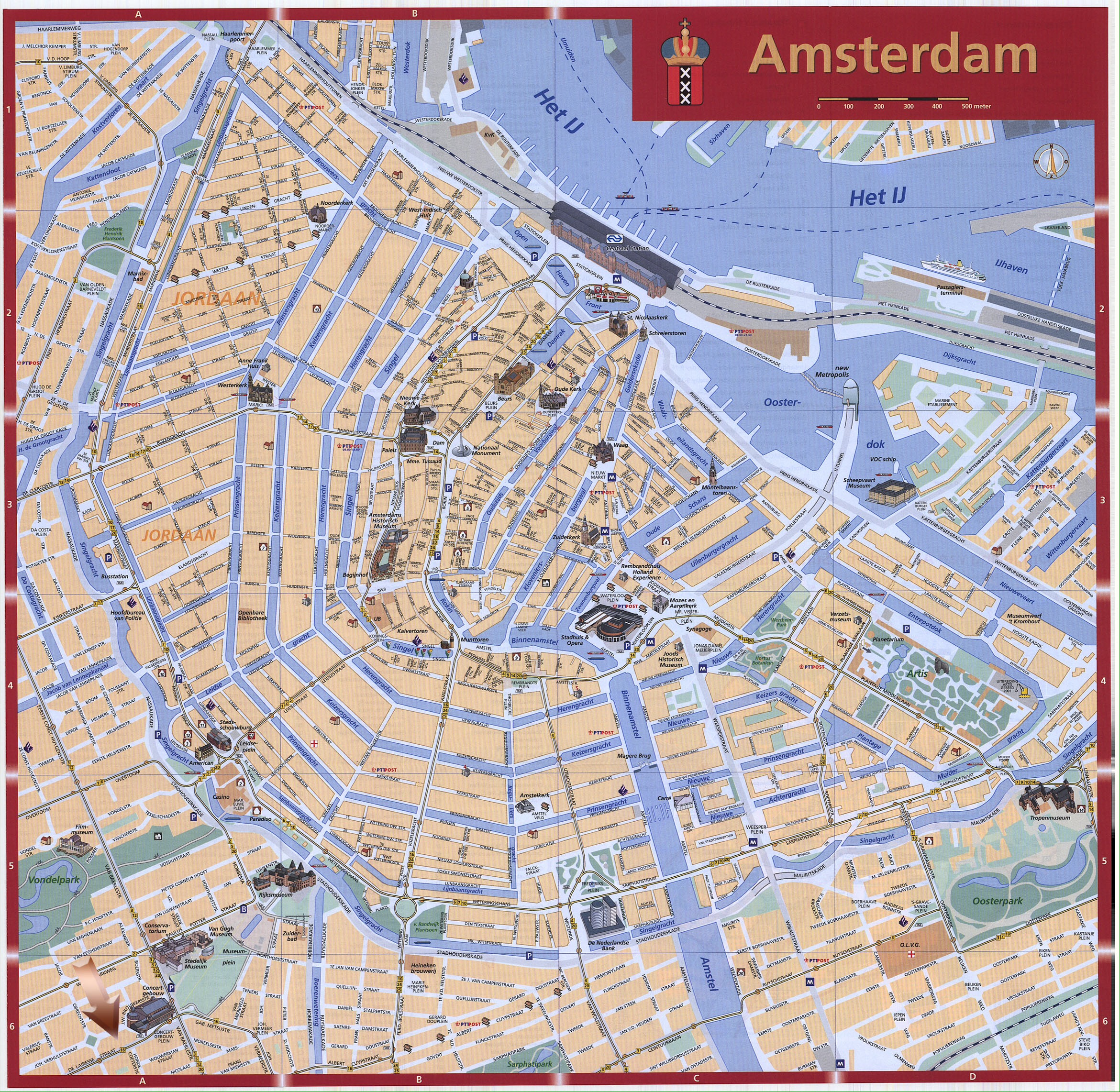
The historic urban ensemble of the canal district of Amsterdam was a project for a new ‘port city’ built at the end of the 16th and beginning of the 17th centuries. It comprises a network of canals to the west and south of the historic old town and the medieval port that encircled the old town and was accompanied by the repositioning inland of the city’s fortified boundaries, the Singelgracht. This was a long-term programme that involved extending the city by draining the swampland, using a system of canals in concentric arcs and filling in the intermediate spaces. These spaces allowed the development of a homogeneous urban ensemble including gabled houses and numerous monuments. This urban extension was the largest and most homogeneous of its time. It was a model of large-scale town planning, and served as a reference throughout the world until the 19th century.
Wiki:
Amsterdam, capital of the Netherlands, has more than one hundred kilometres of canals, about 90 islands and 1,500 bridges. The three main canals, Herengracht, Prinsengracht, and Keizersgracht, dug in the 17th century during the Dutch Golden Age, form concentric belts around the city, known as the Grachtengordel. Alongside the main canals are 1550 monumental buildings.[1] The 17th-century canal ring area, including the Prinsengracht, Keizersgracht, Herengracht and Jordaan, were placed on the UNESCO World Heritage List in 2010,[2] contributing to Amsterdam’s fame as the “Venice of the North”.[3][4]
Huhhhh?? Wha’chu Sayin’?
Those dots do not connect.
Following is a quote from the article in the Washington Post, (link above) dated June 16, 2016.
“McCain answered the question about the gun debate by citing Obama’s culpability for the attack through his foreign policy: “Barack Obama is directly responsible for it, because when he pulled everybody out of Iraq, al-Qaeda went to Syria, became ISIS, and ISIS is what it is today thanks to Barack Obama’s failures”.
Let me see I can help clarify and decode this for ya’ll. Please follow along. It will only take a minute.
The reporter’s question was about the current debate in Congress regarding allowing assault weapons to be purchased by individuals on the ‘No Fly List”. (Republicans are against any changes to any gun laws).
The 79 year old Honorable John McCain’s answer to the gun law question was that Obama was “directly responsible ” for the massacre in Orlando?
That is like answering the question “How was the weather during your visit to Denver?” by saying “We ordered pork chops and they were delicious!!”
So McCain thinks Obama is directly responsible for what happened in Orlando? Because Obama pulled US troops out of Iraq?
Huh? WTF? Wait just a minute. The agreement to remove US troops from Iraq was an agreement made by GW Bush, not Obama!
Wiki says:
The U.S.–Iraq Status of Forces Agreement (official name: Agreement Between the United States of America and the Republic of Iraq On the Withdrawal of United States Forces from Iraq and the Organization of Their Activities during Their Temporary Presence in Iraq) was a status of forces agreement (SOFA) between Iraq and the United States, signed by President George W. Bush in 2008. It established that U.S. combat forces would withdraw from Iraqi cities by June 30, 2009, and all U.S. combat forces will be completely out of Iraq by December 31, 2011.
Next, The Honorable Mr. McCain says that when the US troops left Iraq, al-Qaeda went to Syria.
OK, so we left Iraq and so did al-Qaeda. So, is McCain a’sayin’ that if US troops had stayed in Iraq, al-Qaeda would have also stayed in Iraq and we would not have ISIS?
What does US troops staying in Iraq or leaving Iraq have to do with al-Qaeda going to Syria, and morphing into ISIS, I ask?
That makes as much sense as saying, “If we pull all the policemen out of New York city, crime will go up in Philadelphia”.
The moral to the story? Listen closely to what politicians say and then use your brain.
They seldom do the latter.
Maybe Trump should pick Palin for his VP like McCain did.
I betch’a she could explain everything clearly.
Wink, wink.
La Sagrada Familia
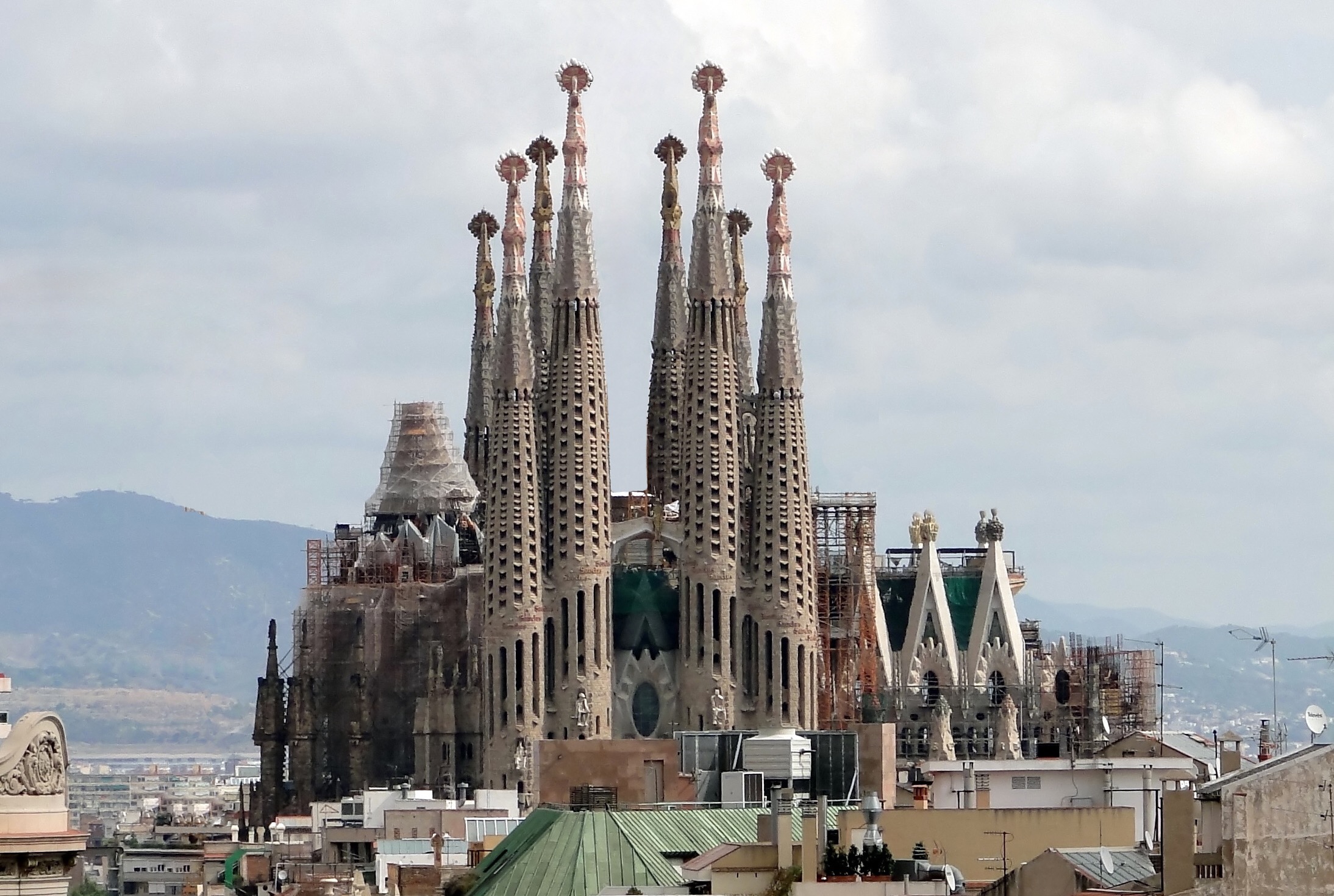
In recent times, there is no one at all
Who can approach Antonio Gaudi
He started a new cathedral, in Barcelona
It is called La Sagrada Familia or the Holy Family
The sad thing is they could try to finish it
But I don’t think they will do it
Who knows where the road may lead us, only a fool would say
Who knows if we’ll meet along the way
Follow the brightest star as far as the brave may dare
What will we find when we get there?
La Sagrada Familia, we pray the storm will soon be over
La Sagrada Familia, for the lion and the lamb
Who knows where the winds may blow us, only a fool would say
Who knows if we’ll ever reach the shore
Follow a rising sun with eyes that may only stare
What kind of fire will burn us there? What kind of fire?
Only a fool would say
La Sagrada Familia, the wind has changed the storm is over
La Sagrada Familia, for the lion and the lamb
La Sagrada Familia, we thank the lord the danger’s over
La Sagrada Familia, there’s peace throughout the land
Under clear blue skies our voices rise in songs of glory
And for all those years our eyes and ears were filled with tears
Who knows where the world may turn us, only a fool would say
Who knows what the fates may have in store
Follow the light of truth as far as our eyes can see
How should we know where that may be? How should we know?
Then the angry skies, the battle cries, the sounds of glory
And for all those years our eyes and ears were filled with tears
Who knows where the road may lead us, only a fool would say
Who knows what’s been lost along the way
Look for the promised land in all of the dreams we share
How will we know when we are there? How will we know?
Only a fool would say
La Sagrada Familia, the war is won the battle’s over
La Sagrada Familia, for the lion and the lamb
La Sagrada Familia, we thank the lord the danger’s over
La Sagrada Familia, behold the mighty hand
La Sagrada Familia, the night is gone the waiting’s over
La Sagrada Familia, there’s peace throughout the land
Until the next time, until the next time
La Sagrada Familia
SONGWRITERS:
PARSONS, ALAN / WOOLFSON, ERIC
From the album ‘Gaudi’, by The Alan Parsons Project
Wiki says:
The Basílica i Temple Expiatori de la Sagrada Família (Catalan pronunciation: [səˈɣɾaðə fəˈmiɫiə]; English: Basilica and Expiatory Church of the Holy Family) is a large Roman Catholic church in Barcelona, designed by Spanish architect Antoni Gaudí (1852–1926). Although incomplete, the church is a UNESCO World Heritage Site,[5] and in November 2010 Pope Benedict XVI consecrated and proclaimed it a minor basilica,[6][7][8] as distinct from a cathedral, which must be the seat of a bishop.
Construction of Sagrada Família commenced in 1882 and Gaudí became involved in 1883,[5] taking over the project and transforming it with his architectural and engineering style, combining Gothic and curvilinear Art Nouveau forms. Gaudí devoted his last years to the project, and at the time of his death at age 73 in 1926, less than a quarter of the project was complete.[9]
Sagrada Família’s construction progressed slowly, as it relied on private donations and was interrupted by the Spanish Civil War, only to resume intermittent progress in the 1950s. Construction passed the midpoint in 2010 with some of the project’s greatest challenges remaining[9] and an anticipated completion date of 2026, the centenary of Gaudí’s death.
The basílica has a long history of dividing the citizens of Barcelona: over the initial possibility it might compete with Barcelona’s cathedral, over Gaudí’s design itself,[10] over the possibility that work after Gaudí’s death disregarded his design,[10] and the 2007 proposal to build an underground tunnel of Spain’s high-speed rail link to France which could disturb its stability.[11] Describing Sagrada Família, art critic Rainer Zerbst said, “It is probably impossible to find a church building anything like it in the entire history of art”[12] and Paul Goldberger called it, “The most extraordinary personal interpretation of Gothic architecture since the Middle Ages.”[13]
6/15/2016
Departed the hostel in Granada at 6:00 AM, caught a cab and left the Granada train station on a bus at 6:45. Departed on the train from Antequera at 9:02 and arrived in Barcelona around 2:30. Took the Metro and after 6 stations departed and walked 4 blocks to the hostel. Private room, shared bath and kitchen for about $35.00 a night.
It was my first time on a high speed train. Zipping through the countryside of Spain at 300 km/hr or 180 MPH, the only thought going through my head was that a crash would be unsurvivable. We went north, then just to the south of Madrid, passing through the heart of Spain. There were more olive orchards, lots of tunnels. There was plenty of agriculture but very few houses. Where do all the farmers live?

I had a window seat – or took it actually – no one challenged me on my seat assignment. My ticket was never checked by anyone. It was a beautiful day, with billowy cumulus clouds and a bright blue sky for most of the trip through the scenic Spanish countryside. It reminded me of the central valley of California. According to the map on the phone, a direct route was 460 miles but with the route taking us up near Madrid, I would not be surprised if we did not travel well over 700 miles.
Rather than take the train from here to London it appears it will be cheaper and much faster to fly. So I think I will make a diversion and take an afternoon flight to Amsterdam and spend a few days walking around and taking pictures. Missed the Anne Frank house on my previous visit and I have already traveled to Amsterdam by train 15 years ago. Amsterdam will be a nice bookend to the time in Egypt. On one end super liberal and on the other end super conservative.
More Pics
June 14, 2016
Wiki says :
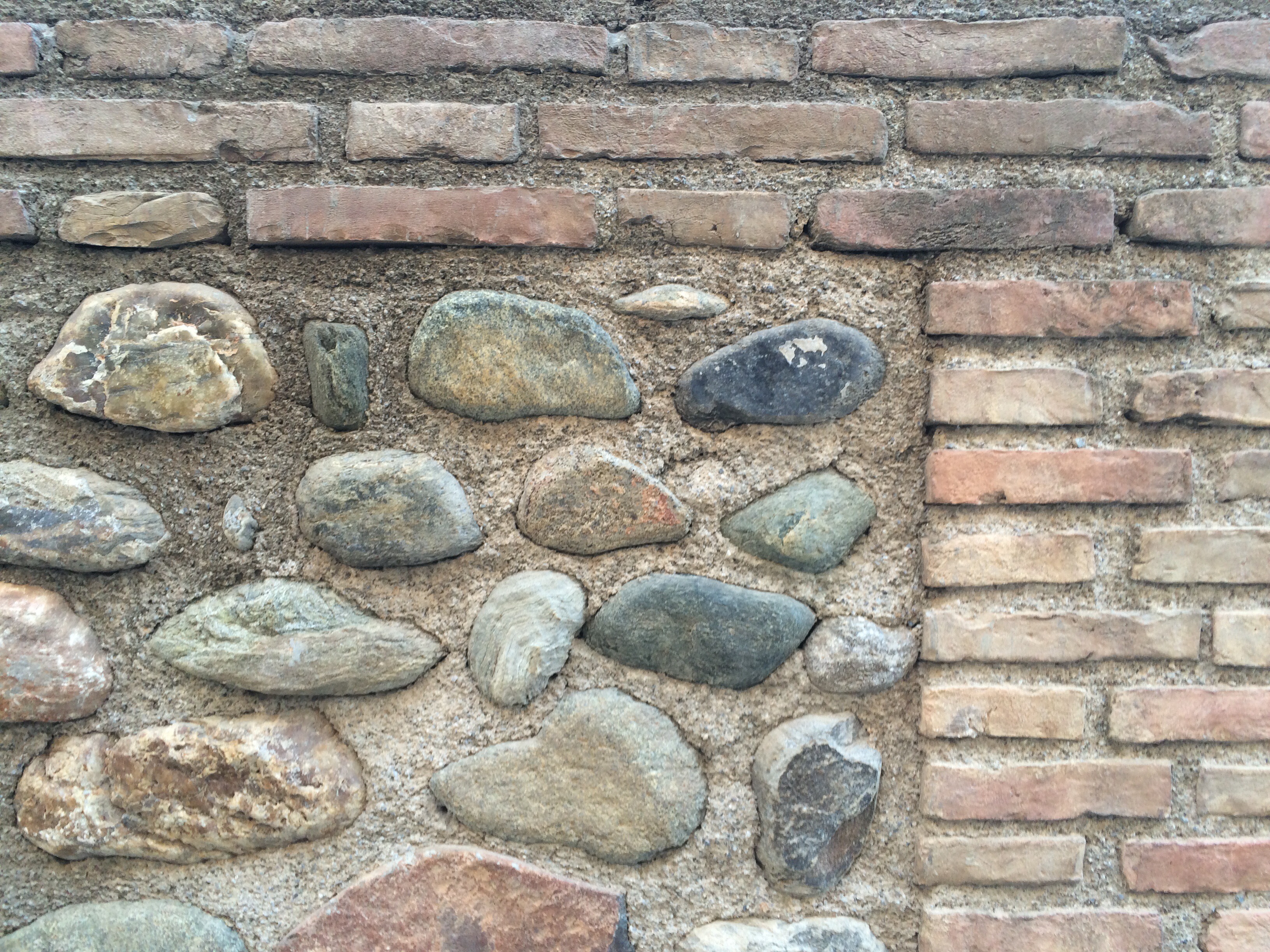
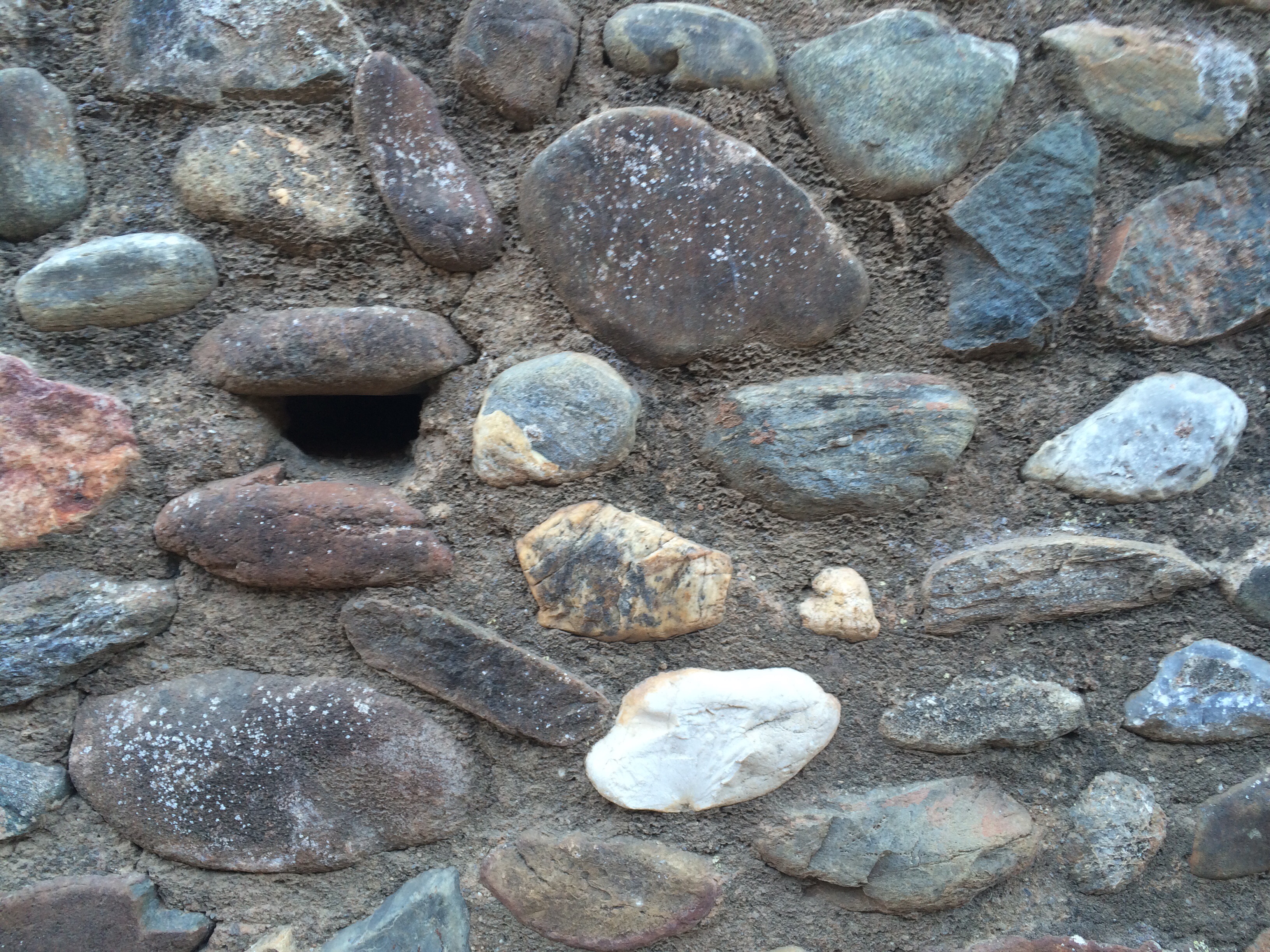
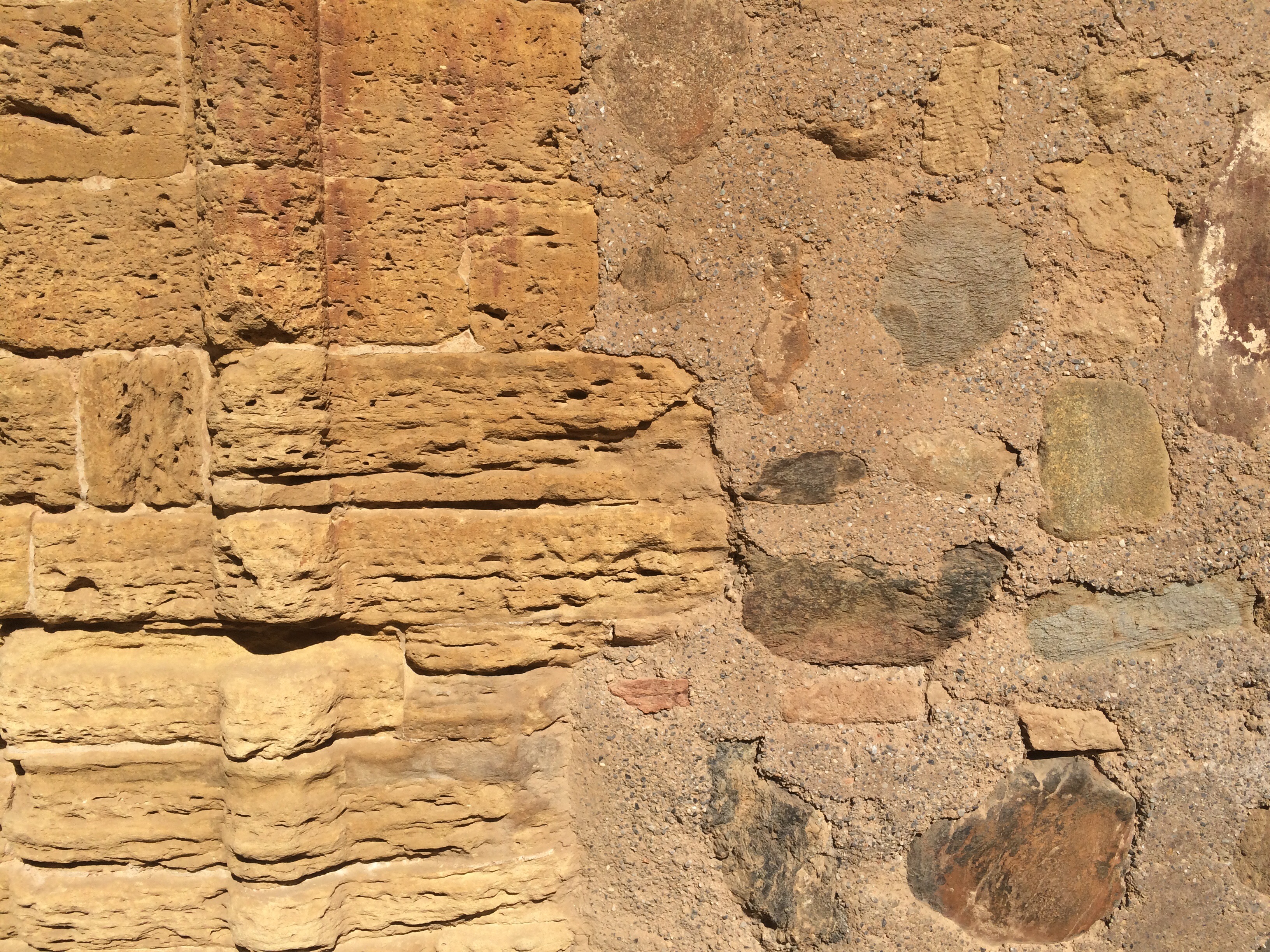
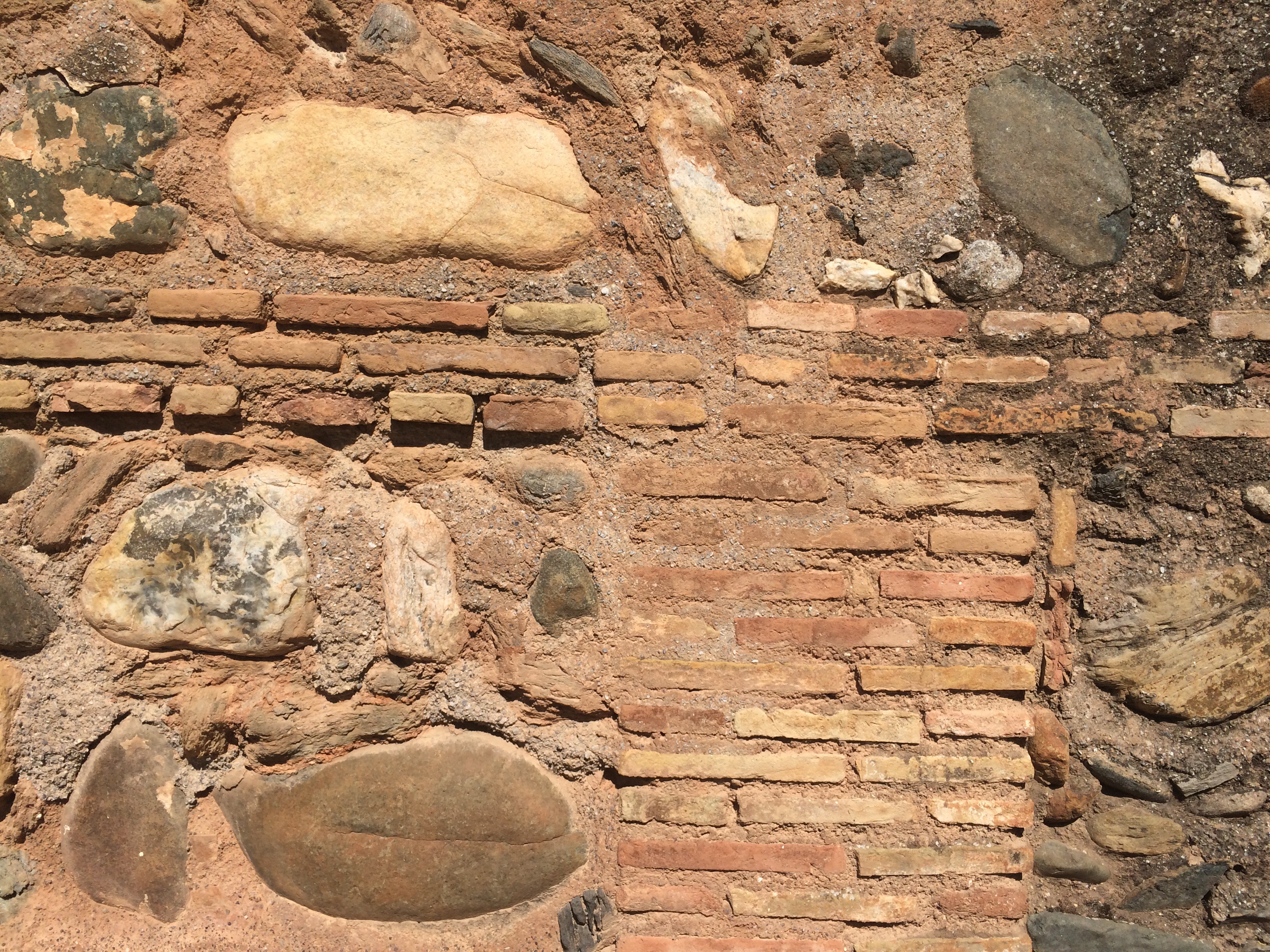
The Alhambra
A UNESCO World Heritage Site
Alhambra, Generalife and Albayzín, Granada
The Alhambra (/ælˈhæmbrə/; Spanish: [aˈlambɾa]; Arabic: الْحَمْرَاء [ʔælħæmˈɾˠɑːʔ], Al-Ḥamrā, lit. “The Red One”),[Note 1][Note 2] the complete Arabic form of which was Calat Alhamra,[Note 3] is a palace and fortress complex located in Granada, Andalusia, Spain. It was originally constructed as a small fortress in AD 889 on the remains of Roman fortifications and then largely ignored until its ruins were renovated and rebuilt in the mid-13th century by the Moorish emir Mohammed ben Al-Ahmar of the Emirate of Granada, who built its current palace and walls. It was converted into a royal palace in 1333 by Yusuf I, Sultan of Granada.[1] After the conclusion of the Christian Reconquista in 1492, the site became the Royal Court of Ferdinand and Isabella (where Christopher Columbus received royal endorsement for his expedition) and the palaces were partially altered to Renaissance tastes. In 1526 Charles I & V commissioned a new Renaissance palace better befitting of the Holy Roman Emperor in the revolutionary Mannerist style influenced by Humanist philosophy in direct juxtaposition with the Nasrid Andalusian architecture, but which was ultimately never completed due to Morisco rebellions in Granada.
Alhambra’s late flowering of Islamic palaces were built for the last Muslim emirs in Spain during the decline of the Nasrid dynasty who were increasingly subject to the Christian Kings of Castile. After being allowed to fall into disrepair for centuries, the buildings occupied by squatters, Alhambra was rediscovered following the defeat of Napoleon, who had conducted retaliatory destruction of the site, first by British intellectuals and then by other north European Romantic travelers. It is now one of Spain’s major tourist attractions, exhibiting the country’s most significant and well known Islamic architecture, together with 16th-century and later Christian building and garden interventions. The Alhambra is a UNESCO World Heritage Site and the inspiration for many songs and stories.[2]
Moorish poets described it as “a pearl set in emeralds,” an allusion to the colour of its buildings and the woods around them.[3] The palace complex was designed with the mountainous site in mind and many forms of technology were considered. The park (Alameda de la Alhambra), which is overgrown with wildflowers and grass in the spring, was planted by the Moors with roses, oranges, and myrtles; its most characteristic feature, however, is the dense wood of English elms brought by the Duke of Wellington in 1812. The park has a multitude of nightingales and is usually filled with the sound of running water from several fountains and cascades. These are supplied through a conduit 8 km (5.0 mi) long, which is connected with the Darro at the monastery of Jesus del Valle above Granada.[4]
Despite long neglect, willful vandalism, and some ill-judged restoration, the Alhambra endures as an atypical example of Muslim art in its final European stages, relatively uninfluenced by the direct Byzantine influences found in the Mezquita of Córdoba. The majority of the palace buildings are quadrangular in plan, with all the rooms opening on to a central court, and the whole reached its present size simply by the gradual addition of new quadrangles, designed on the same principle, though varying in dimensions, and connected with each other by smaller rooms and passages. Alhambra was extended by the different Muslim rulers who lived in the complex. However, each new section that was added followed the consistent theme of “paradise on earth”. Column arcades, fountains with running water, and reflecting pools were used to add to the aesthetic and functional complexity. In every case, the exterior was left plain and austere. Sun and wind were freely admitted. Blue, red, and a golden yellow, all somewhat faded through lapse of time and exposure, are the colors chiefly employed.[4]
The decoration consists, as a rule, of Arabic inscriptions that are manipulated into geometrical patterns set onto an arabesque setting. Painted tiles are largely used as panelling for the walls.[4] Much of the architectural ornament is carved stucco (plaster) rather than stone. The palace complex is designed in the Mudéjar style, which is characteristic of western elements reinterpreted into Islamic forms and widely popular during the Reconquista, the reconquest of the Iberian Peninsula from the Muslims by the Christian kingdoms.


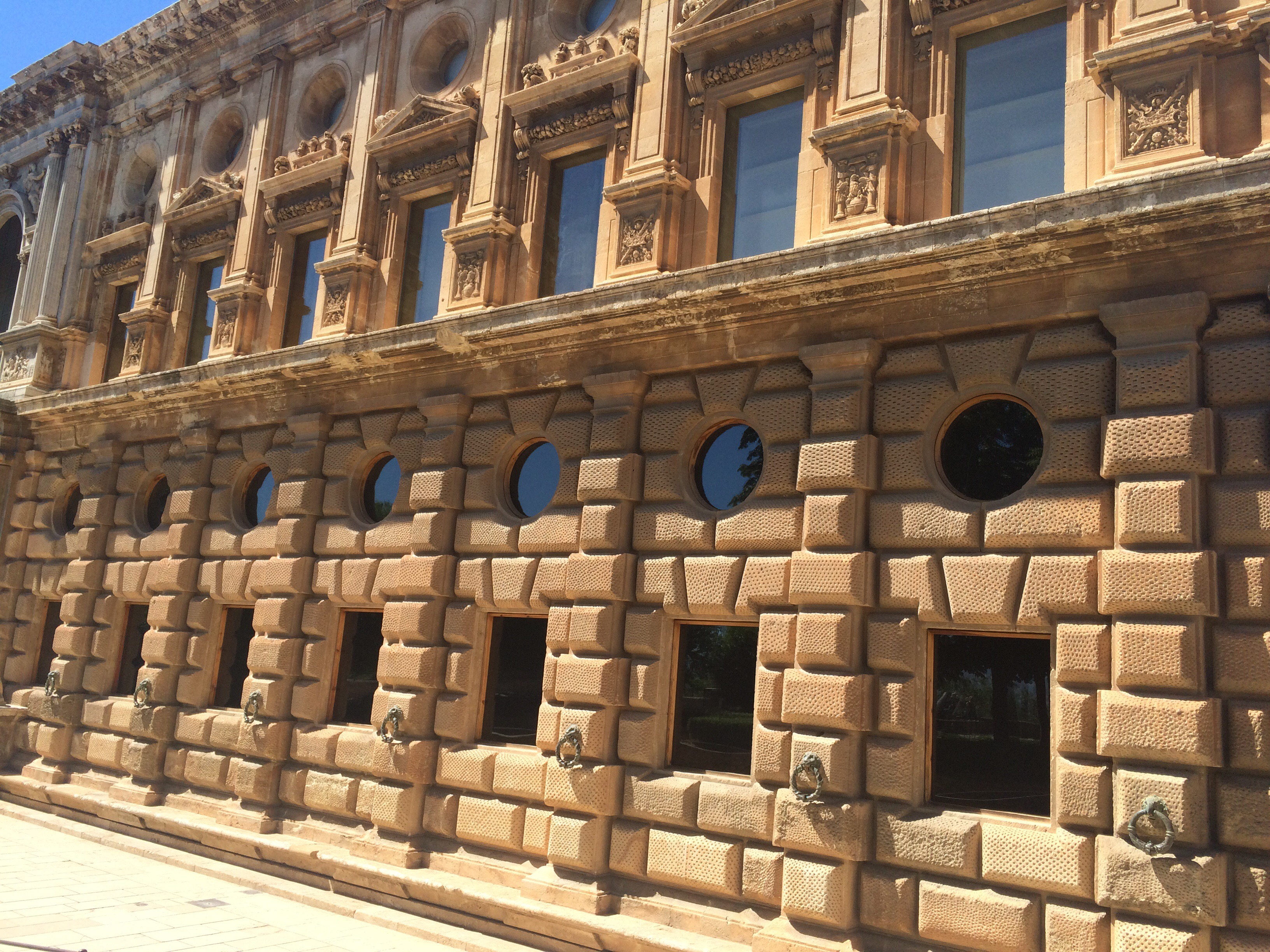
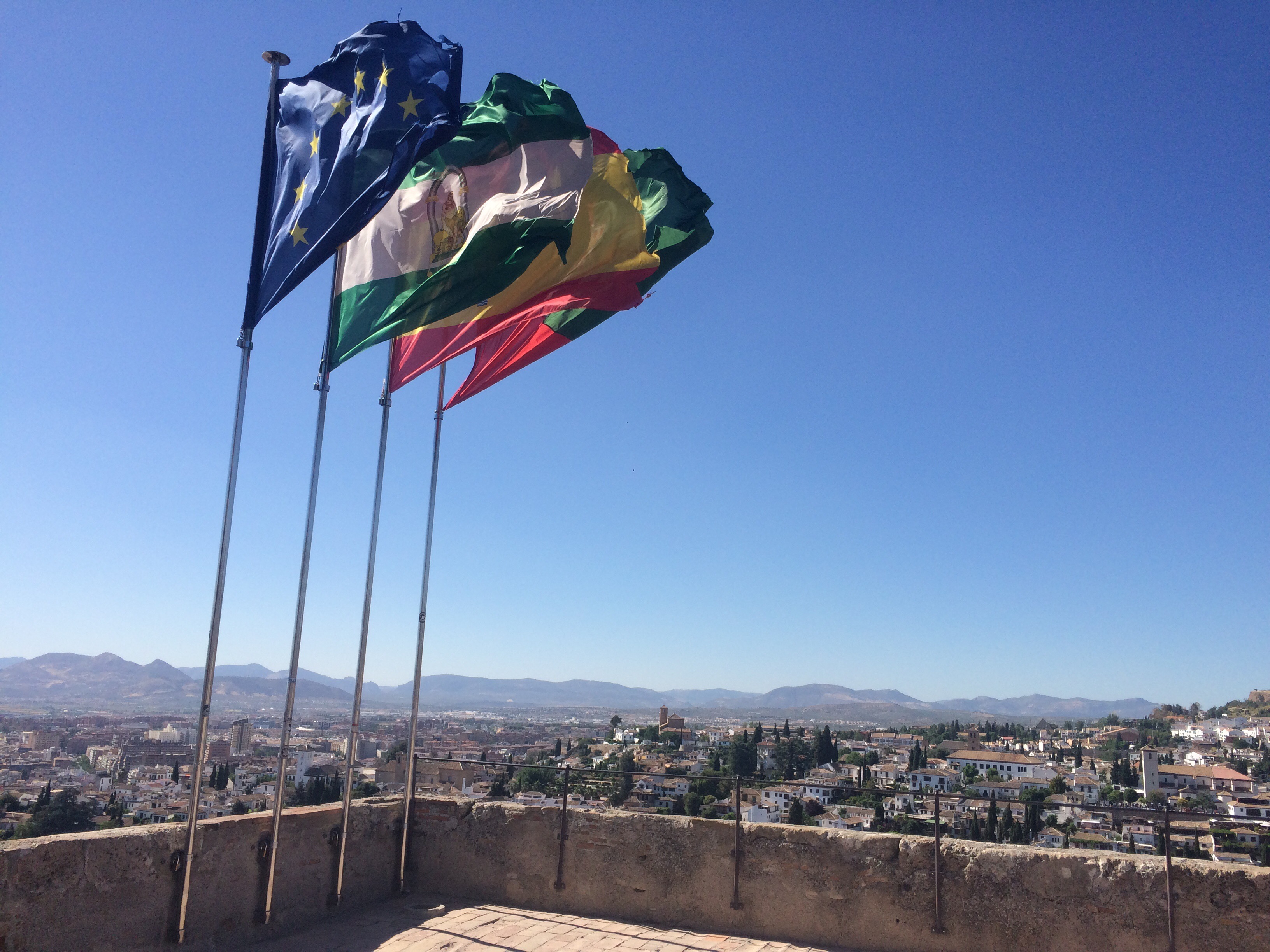
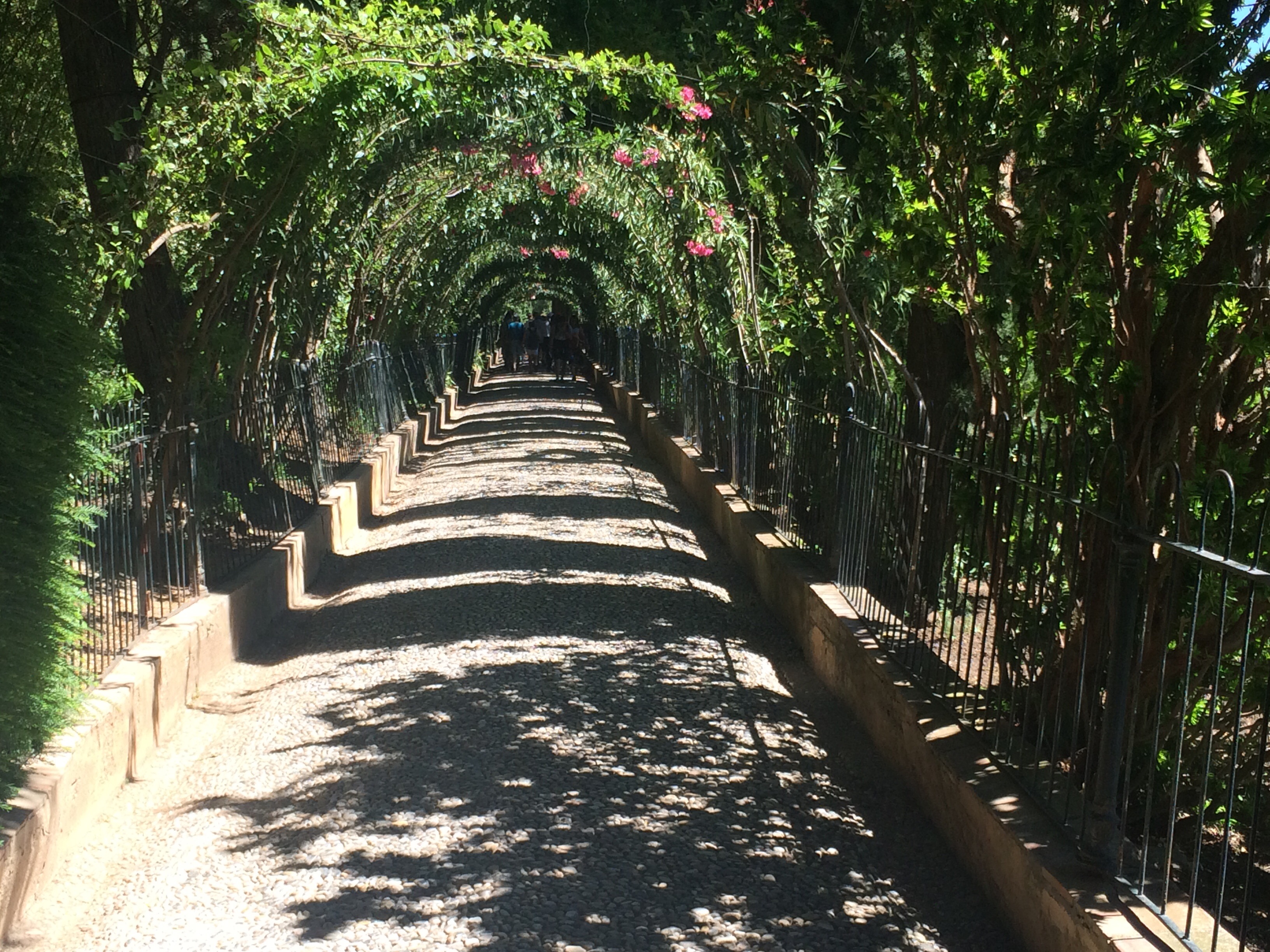


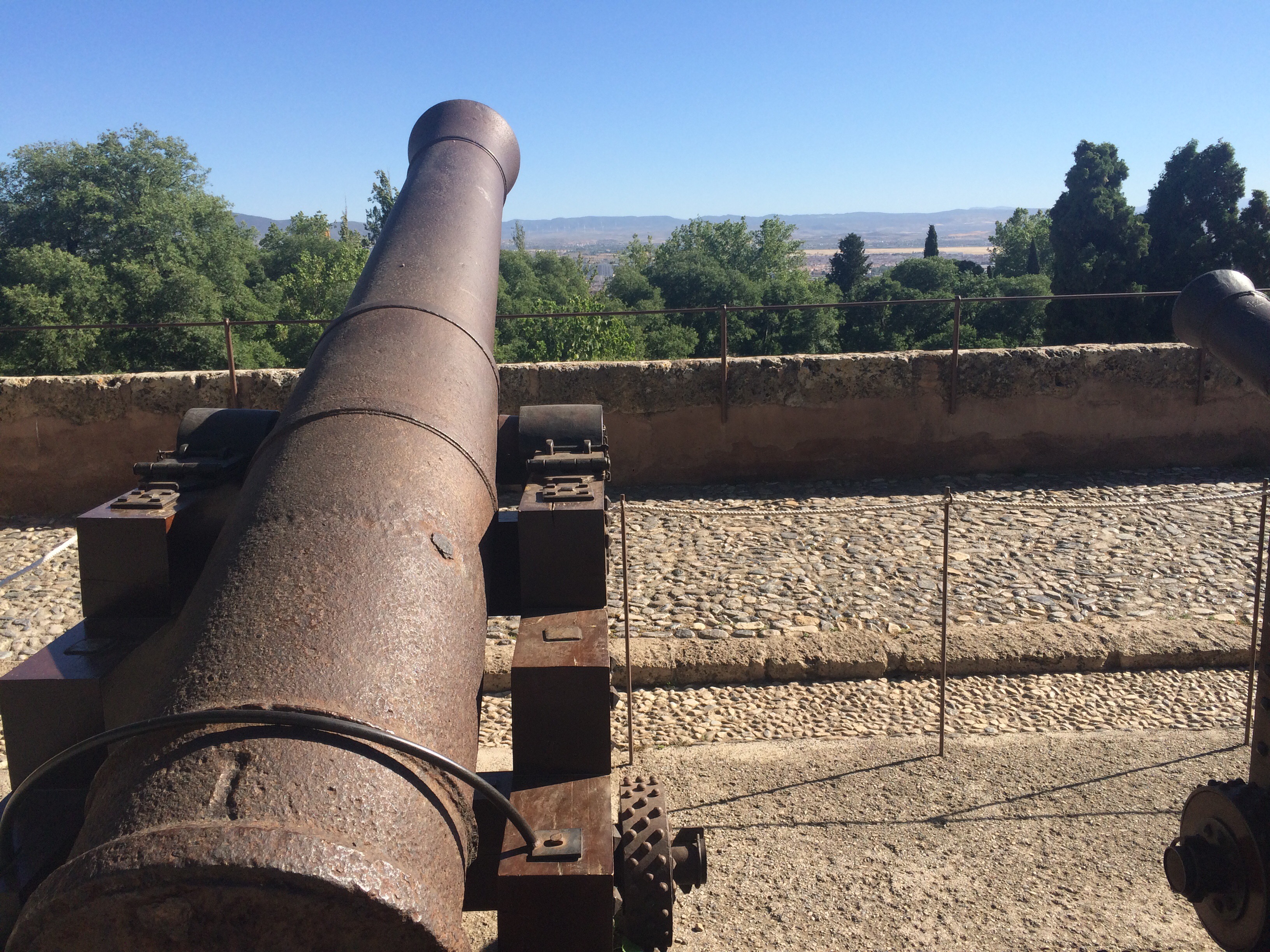
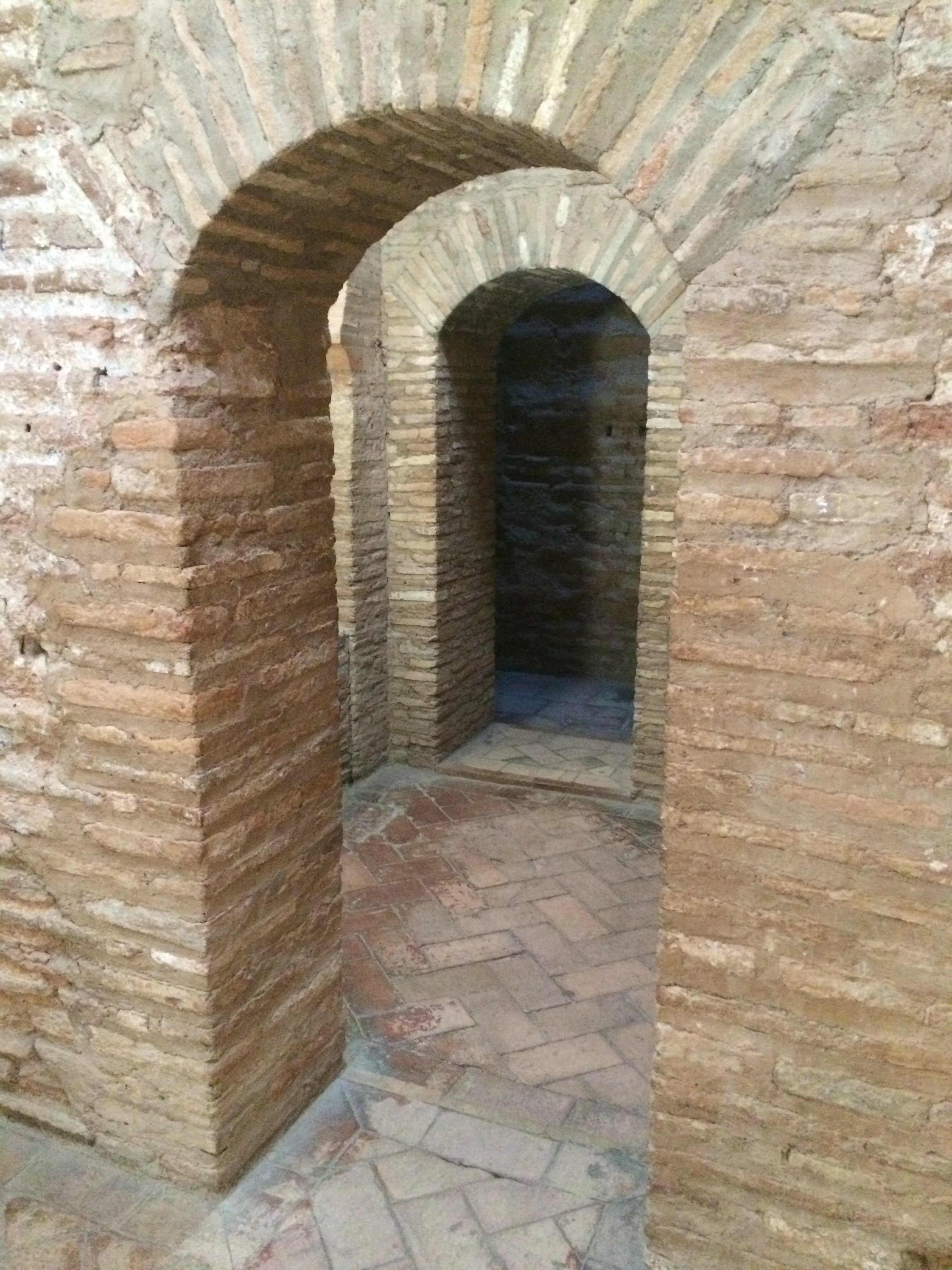
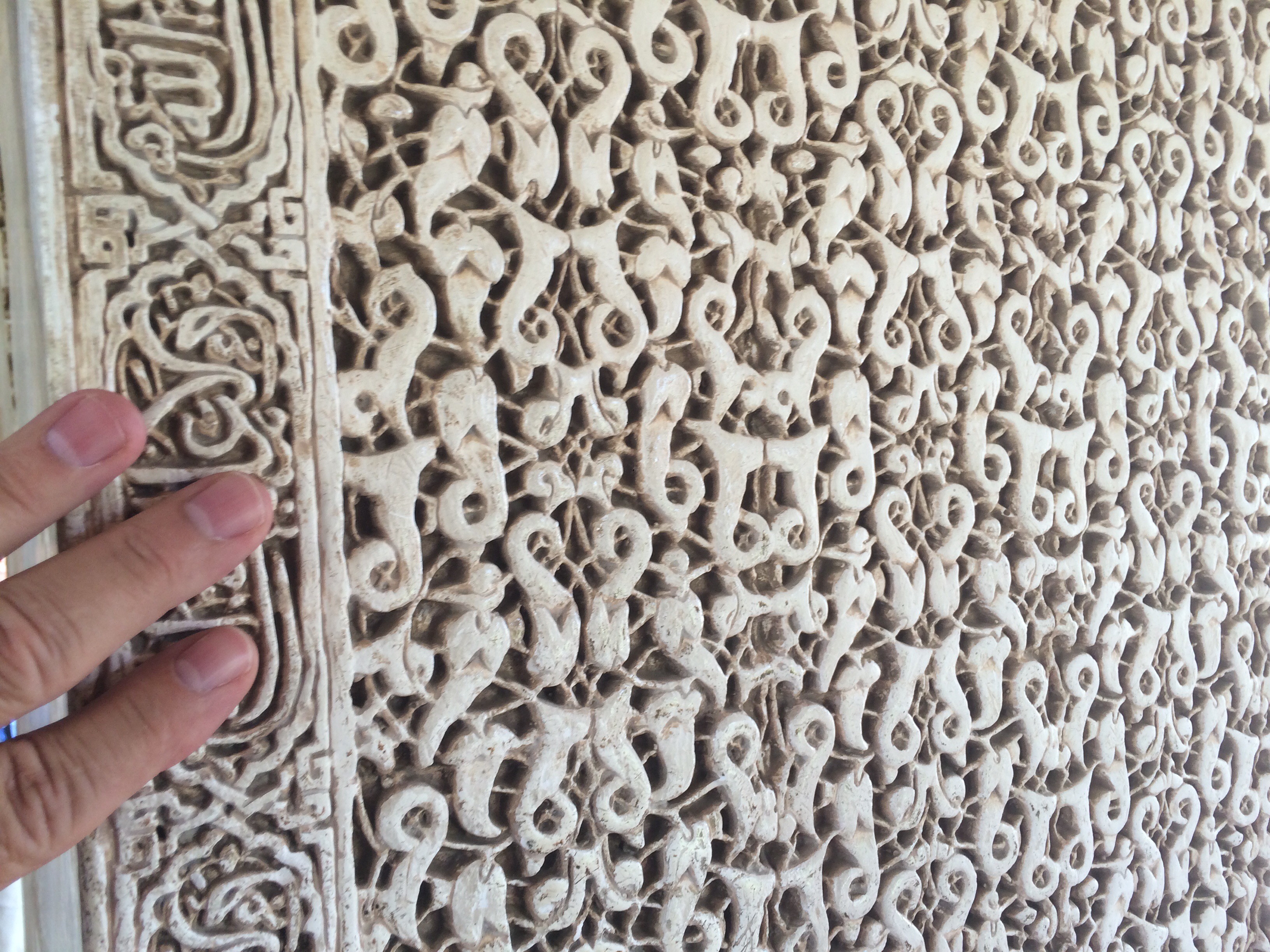

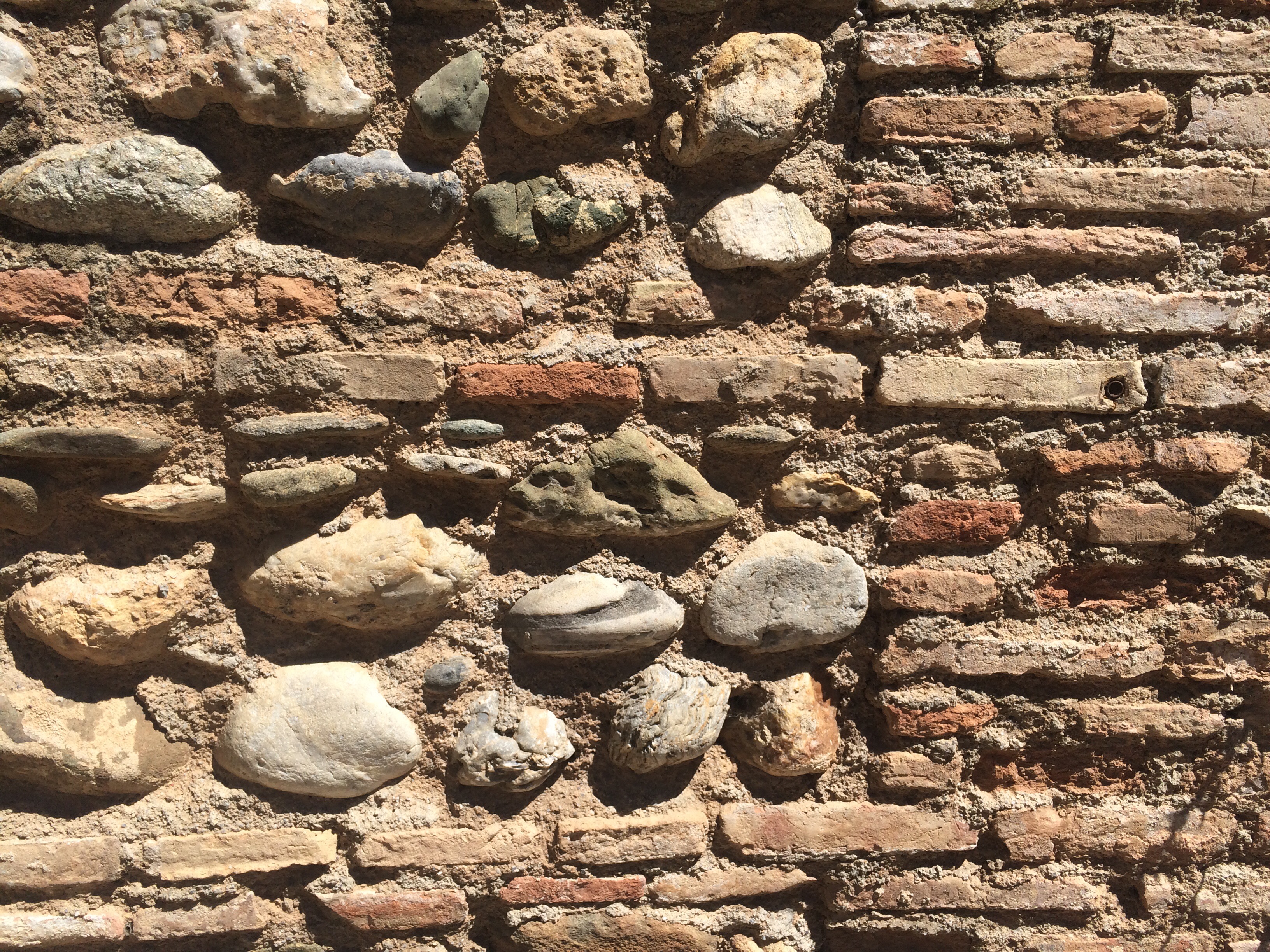
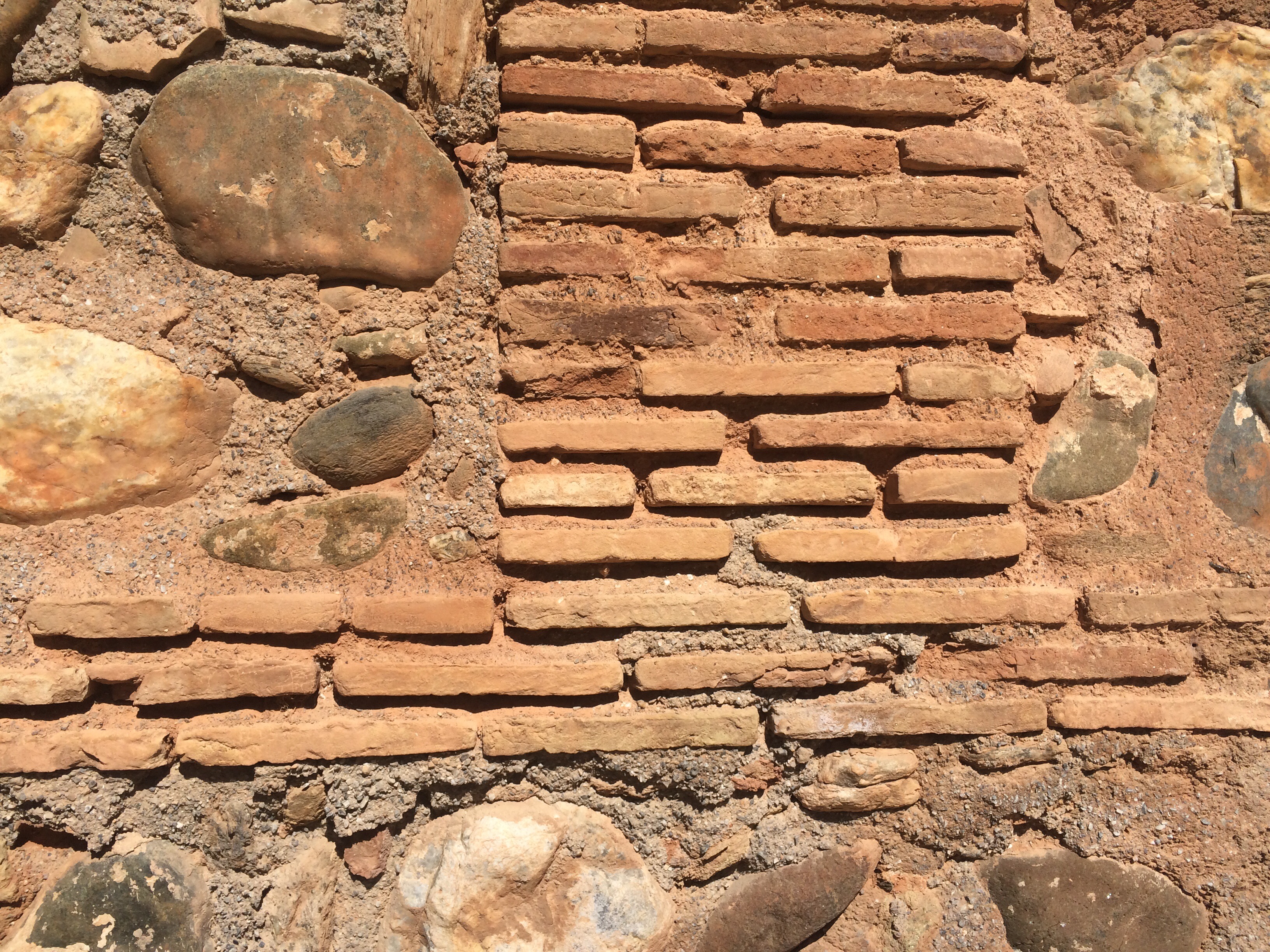
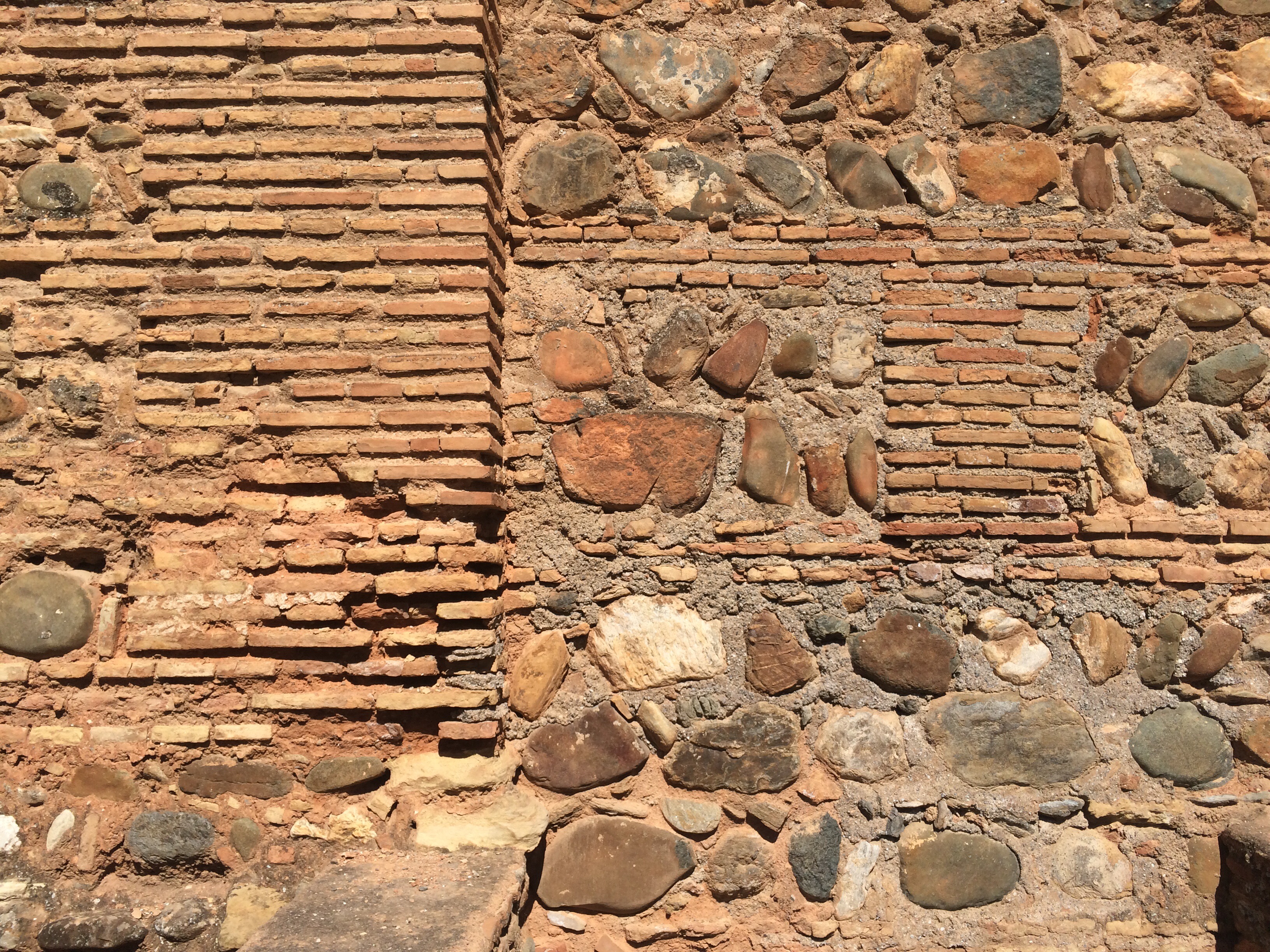
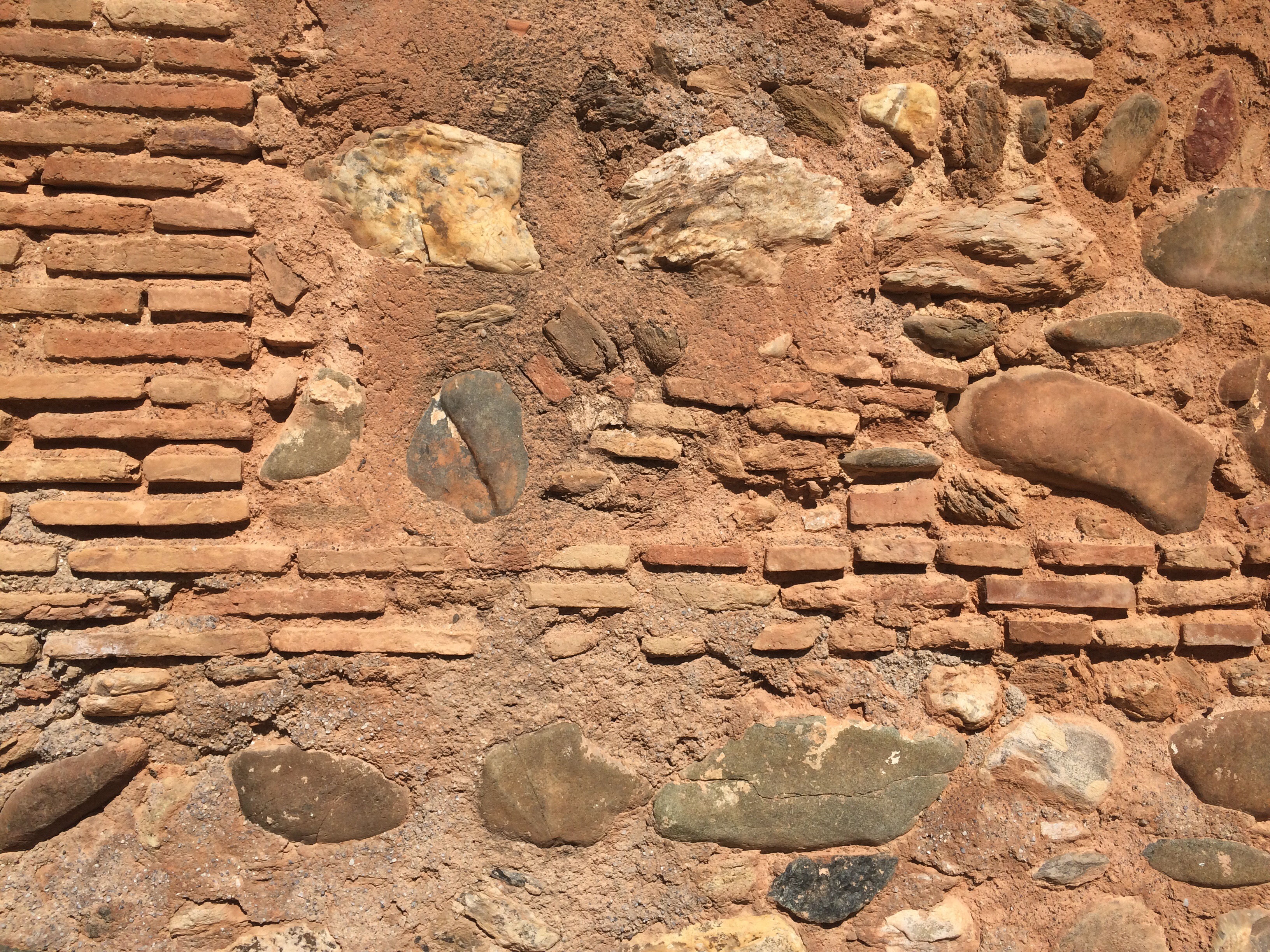
Pics
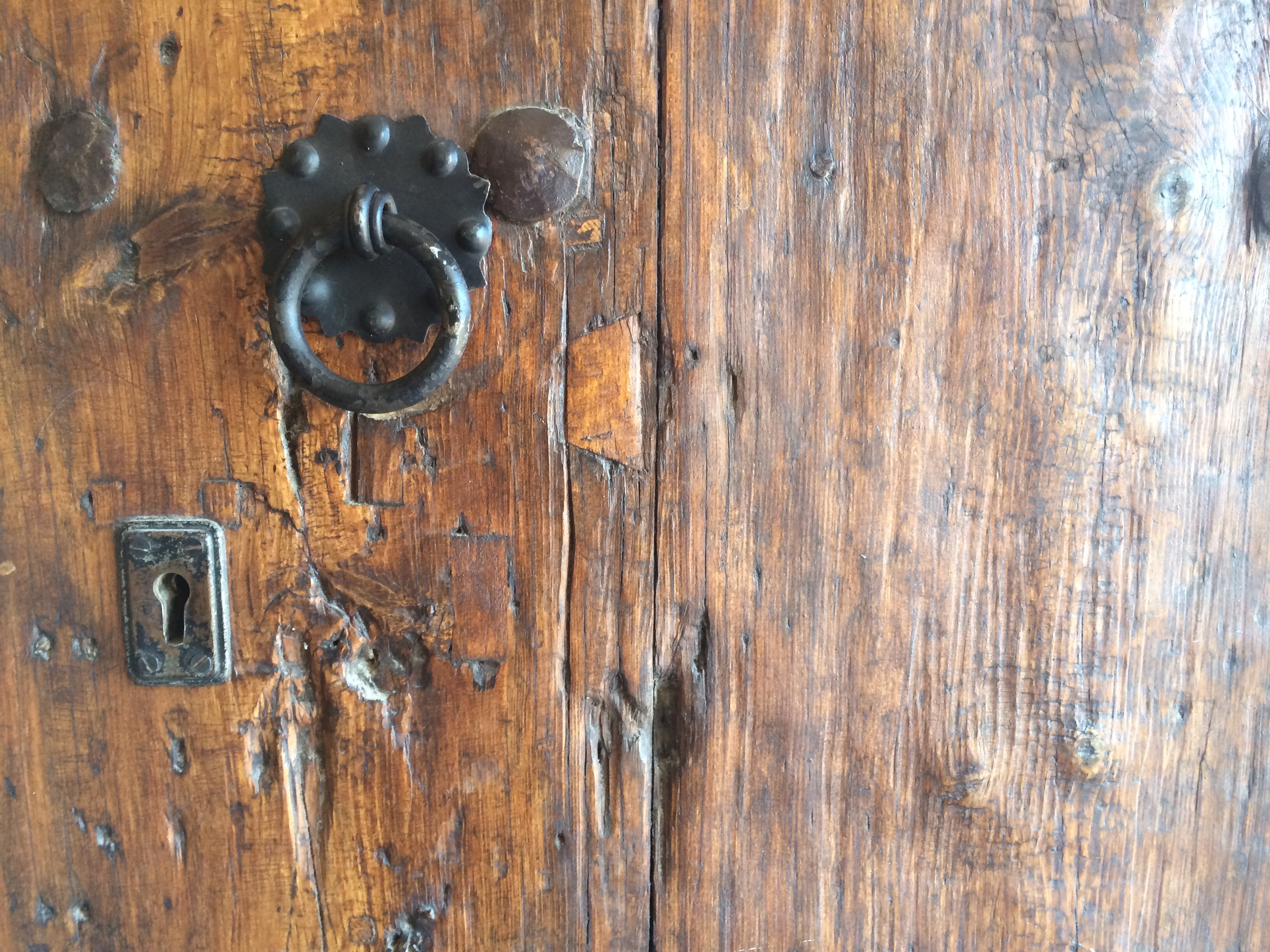

A Kind Man
June 13, 2016. Posted June 14 at 10:30 PM
Left Algeciras yesterday, 06/12/13, on the train bound for Granada. Considered going to Seville but it took me further away from my primary destination in Spain, Barcelona. Both cities are World Heritage Sites, but I opted for moving closer to a planned destination.

It was a Sunday, taxi fares were higher and I was told that there was a railway strike, but all went well. I had a window seat. At Antequera everyone departed the train and we boarded a nice bus for the remaining 100 km to Granada. They are working on the tracks to link Granada to the high speed train system and the station is closed. Either method of travel, it was enjoyable, beautiful and very scenic.
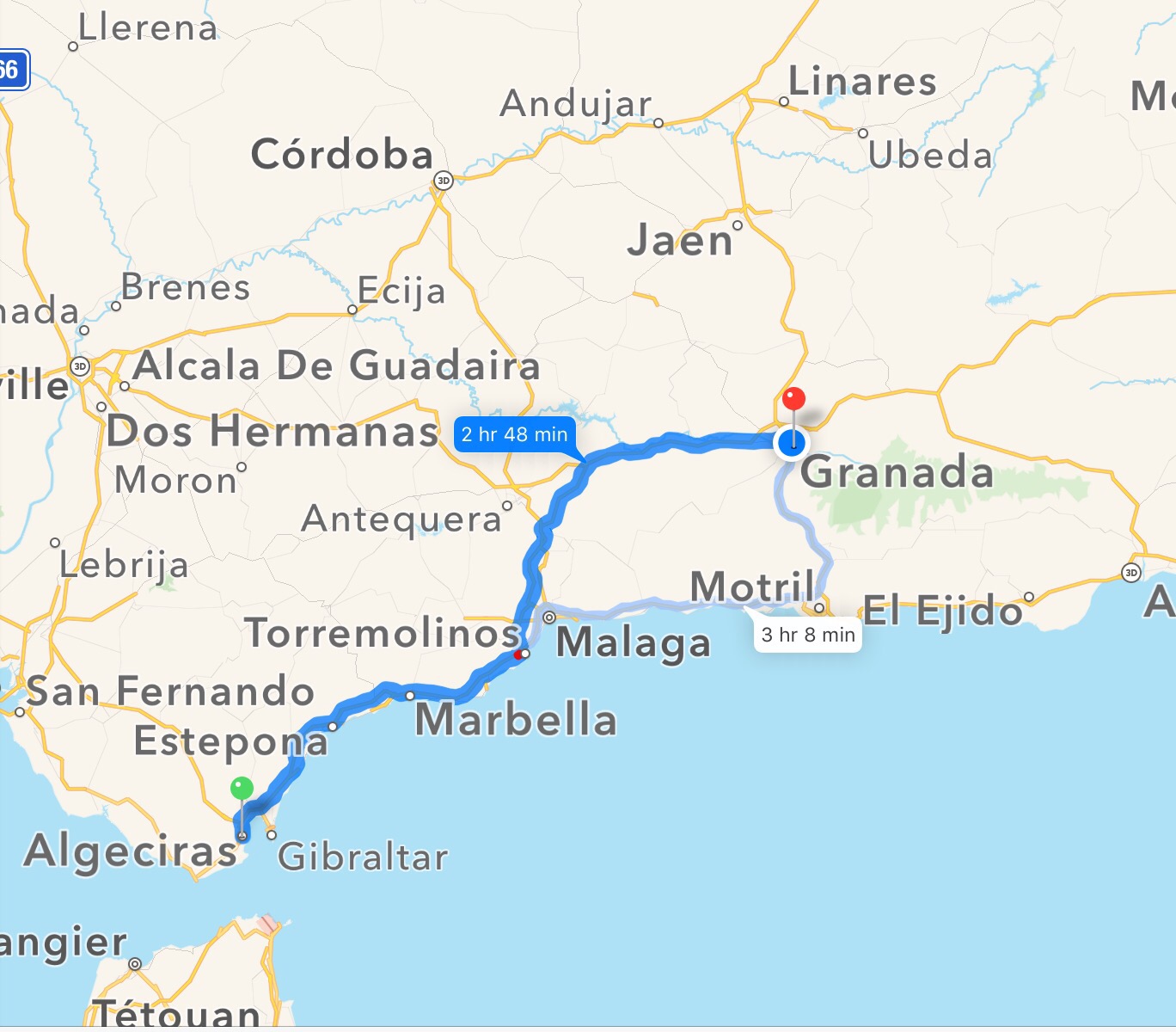
There were many groves or orchards of olive trees and farms dotted the wide open valleys. I was unable to purchase a Spanish SIM card and my tMobile chip did not work, so I was stuck without access to the inet and the ability to book a room for my arrival in Granada. Another hot pack arrival, just like my arrival in Algeciras.
The bus arrived and I looked around then returned to the train station and asked a few questions in basic Spanish. Hiked 6 blocks with my bags and checked into a 4 star hotel, paying more than I wanted and receiving more than I needed. After a quick repack into my smaller walking day sack, I set out for the old town and the central square.
Granada is not only a tourist town; it is a college town and college age chicks are walking around everywhere in very short shorts with tight or low cut tops – with a touch of 1970’s hippie clothes. Even the older MILFs are dressed to kill. I could tell that I was in Europe. I watched as prepubscent girls walked with their parents, in skin tight clothing, unabashhedly displaying their camel toe. After 7 weeks in Muslim countries it was a welcome sight for sore eyes. It was like the women were walking around naked.
I thought about a song………..
I Like Big Tits
Every time I try to call it quits
Here come some tits, that’s a big 10-4
(That’s a big 10-4, big Dick)
Uh huh
What it is
I like big tits, uh huh
Tits
Well they come in twos
Hard to choose
Your favorite tit
Uh huh
I like tits for dinner, or a noon-time snack
I like tits for lunch, a big tit attack
I like tits for breakfast
Egg Benedict tits
What it is
They’re where it’s at
Tits
They give me shivers when they bounce around
Buckled up or hanging on the ground
I like big tits
Uh huh
Tits
Says it all for me
Tits
I’m a tit man
(I like big tits)
Written by Joe Walsh
Wikitravel says:
History
Granada has been continuously inhabited by humans for at least 2500 years, originating as an Ibero-Celtic settlement prior to the establishment of a Greek colony in the area. Under Ancient Roman rule Granada developed as an economic centre of Roman Hispania, with the construction of aqueducts, roads, and other infrastructure. With the fall of the Roman Empire the city was ruled by the Visigoths before being reconquered by the Byzantine Empire, all the time being maintained as a strategic military and economic hub for the region.
The Moorish conquest of 711 brought Islamic rule to the Iberian Peninsula and Granada was quickly established as one of the main cities of Al-Andalus, the Muslim name for the region. New agricultural practices were introduced as the old Roman infrastructure was put to use for irrigation, leading to a major expansion of the city as it grew from the river valley up to the hills currently occupied by the Alhambra and the Albayzín, with a major Jewish settlement, the Realejo, existing within the town. Following the fall of Córdoba in 1236 to the Christian Reconquista, the city became the capital of the Emirate of Granada, and for the next 250 years Granada stood as the heart of a powerful and self-sufficient kingdom with the construction of the royal palace and fortress, the Alhambra.
Skirmishes continued between the Emirate of Granada and the Crown of Castile, and in the late 15th century the Christian Reconquista set its sights on Granada. Following a military campaign led by King Ferdinand II of Aragon and Queen Isabella I of Castile, which included a siege of the walled town, King Boabdil of Granada was ultimately forced to surrender the town in 1492, bringing an end to Moorish rule in the Iberian peninsula and marking the end of the Reconquista.
The fall of Granada came at a crucial moment for Christian Spain, as it was that same year that Christopher Columbus made his first voyage to the Americas, bringing back reports of the wealth and resources that could be gained there. Flushed with the success of the Reconquista, Spaniards conquered much of the Americas and brought great wealth to the new Spanish Empire. In the case of Granada, the Christians soon forced the existing Jewish and Muslim residents to convert and began making significant changes to the appearance of the city in an attempt to hide its Muslim character, including replacing the city’s primary mosque with the massive Cathedral and constructing a large Christian palace in the heart of the Alhambra. Persecution against the Muslims and Jews took its toll, and over time the city began to suffer economically as these populations abandoned their homes in the area.
Granada remained a largely medieval-style city well into the 19th century, going through many economic slumps and seeing much of its architectural heritage destroyed. However, the last half of the 19th century saw Granada incorporated into the national rail network and the first stirrings of tourism thanks to reports of sites like the Alhambra to a global audience. However, the Spanish Civil War of the 1930s sunk Granada’s economy, and it persisted largely as a bureaucratic and university town until the late 20th century, when the city underwent a massive period of modernization and development which brought new business and visitors to the city. Today you can still see this modernization in the reconstruction of old buildings in the city centre and expansion of the town along the edges of the city.
I say: I had several beers and a pizza in the city square. Many touristas – I could tell by how they were dressed.
In the AM walked the six blocks back to the train station and bought a senior rail pass for $6.00. It gives me between 25% and 40% off on train travel in Spain. Booked my ticket for 6/15 from Granada to Barcelona and saved $30.00 with the discount. Walked back to the hotel, booked a hostel here in Granada for two nights then one near the train station in Barcelona for three nights and took a shower.
Left the room at noon and had a few beers, passing time, then took a taxi at 2 PM to the hostel. About $40.00 a night cheaper than the hotel and it is just perfect. Private room, clean, TV, inet, private bath, and it even includes a towel, TP, soap and shampoo!!! Amenities!!!
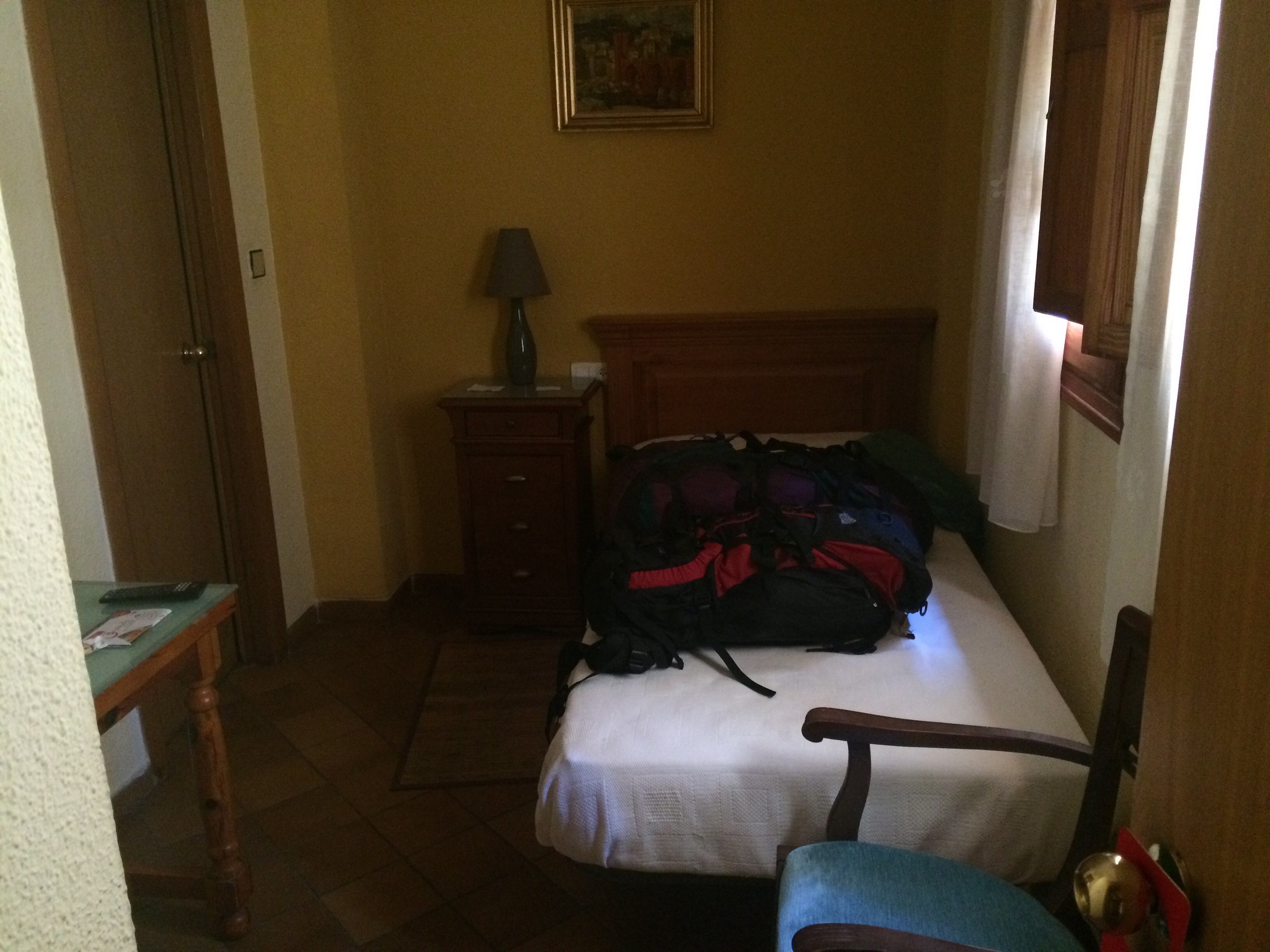
Then walked around to look for a SIM card for my phone, as my US tMobile card does not seem to work. Lacking a phone with access to the inet is a major handicap when traveling. All the stores were closed for the afternoon siesta until 5 PM, so walked back to my room and organized my stuff.
After 5:00 PM I set out on foot again and bought a Spanish SIM card with 1.5 GB of data. The salesman said my tMobile SIM was damaged and would need to be replaced upon my return to the US.
Bought oranges, dried nectarines and nuts in a grocery store for the train ride to Barcelona.
Dropped all my food off and set out for the city square. Gawked at women, had some more beer and after each round received a small plate of free food called tapas. First was a small salad with olives, onions, tomatoes and a slice of cooked potato in olive oil, then a delicious type of hard boiled egg and with the third round, a half dozen fried smelt sized fish on a bed of lettuce. I had 3 beers and dinner, left a 20% tip, all for $10.00.
Wandered back to the room, using my iPhone map as a guide. Iwould have been lost without a functioning phone.
Watching TV in a foreign country is sometimes somewhat disconcerting – imagine watching Arnold, Snoop Dog or Tom Selek dubbed in Spanish. It is even harder to conceptualize Homer, Lisa and Bart Simpson speaking Arabic. But I saw it.
It saddens me to read the news in the US online or watch BBC news. The Orlando shooting was all over BBC news. The violence in America, primarily due to easy access to assault weapons by crazy people and bad guys disgusts me. Congress can’t even agree (due to Republicans) to stop gun sales to people on the no fly list! Even Homer Simpson would say “Duh”. I am also angered by the vitriolic rhetoric spewed by Trump against Muslims. It makes me feel safer in a Muslim country like Morocco than in America.
Less than a week ago a Muslim Imam, Aziz, invited me into his 1200 year old home to share with with him and his family the first meal after the start of Ramadan, a solemn occasion.
He also wanted to introduce me to his unmarried sister, because she needed a husband and he believed I had a good heart and was a kind man…….
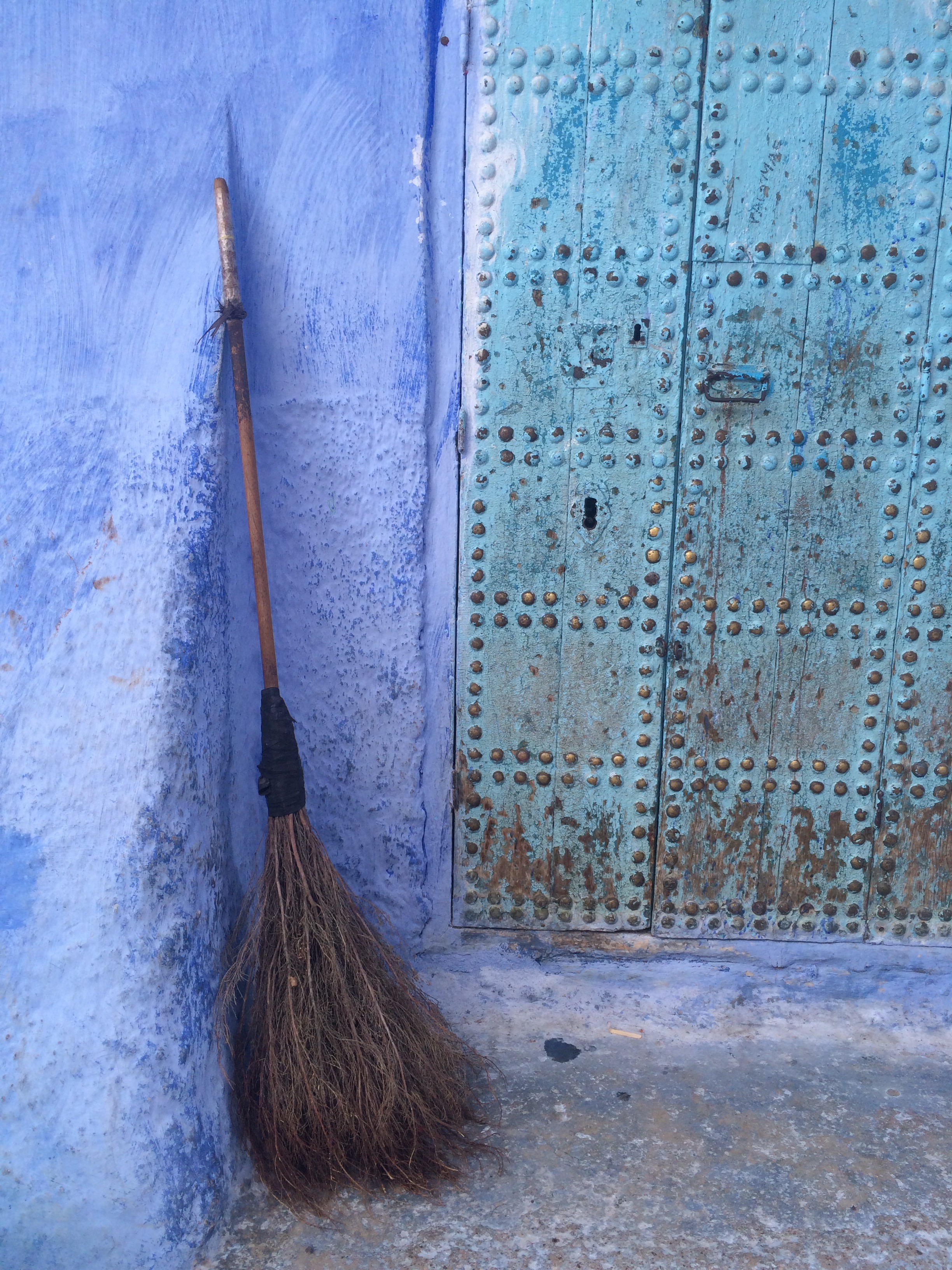
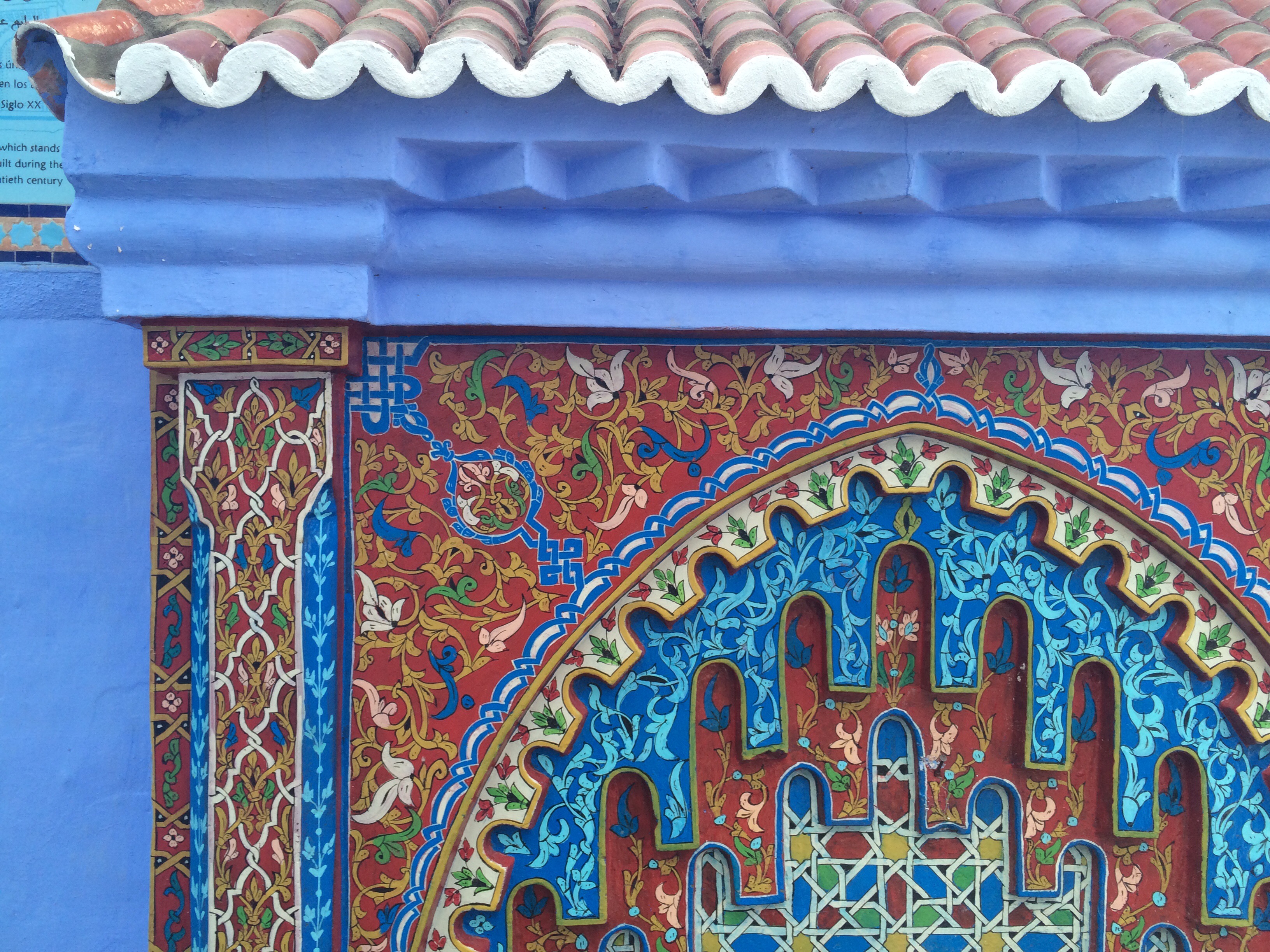
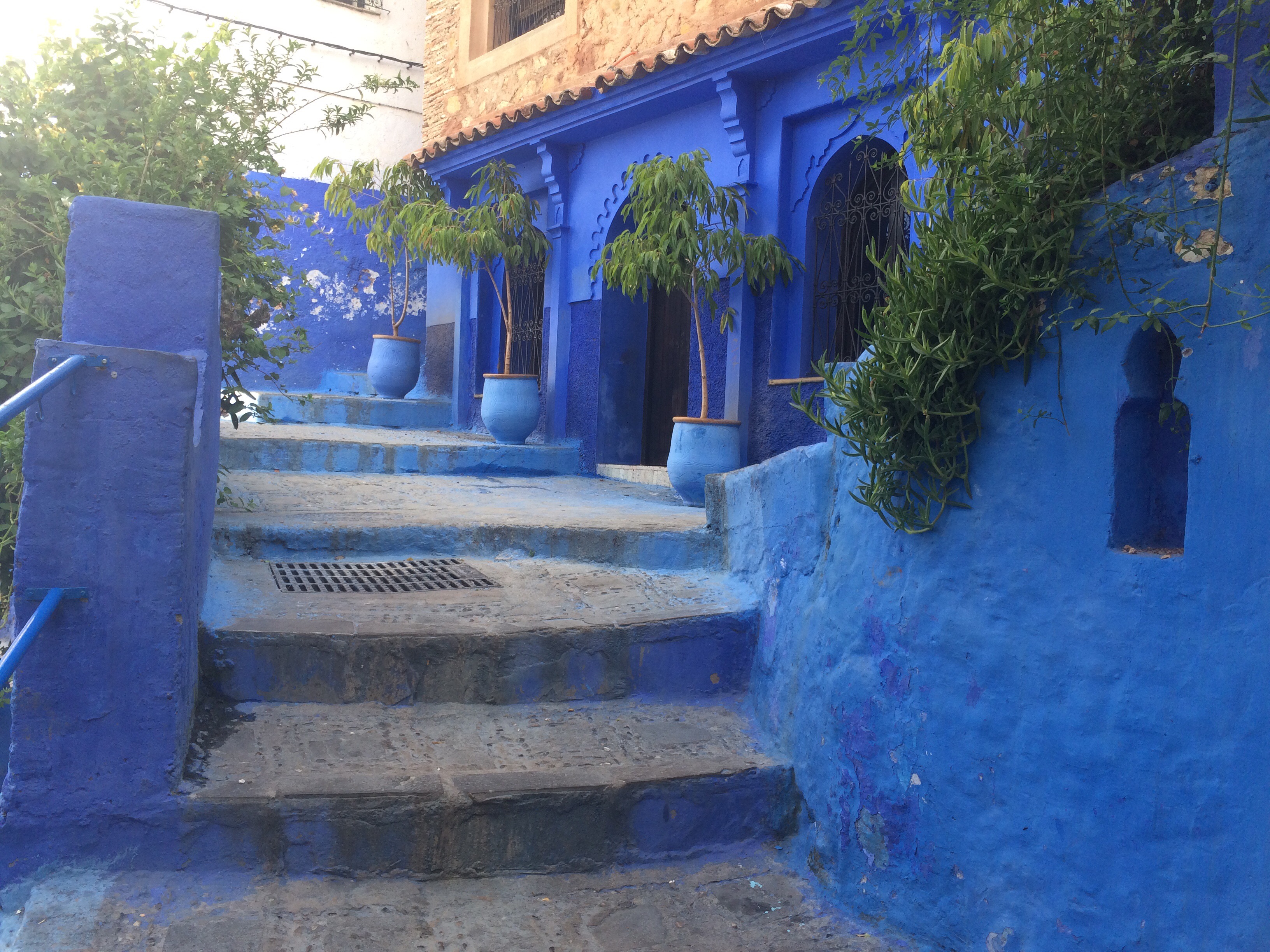
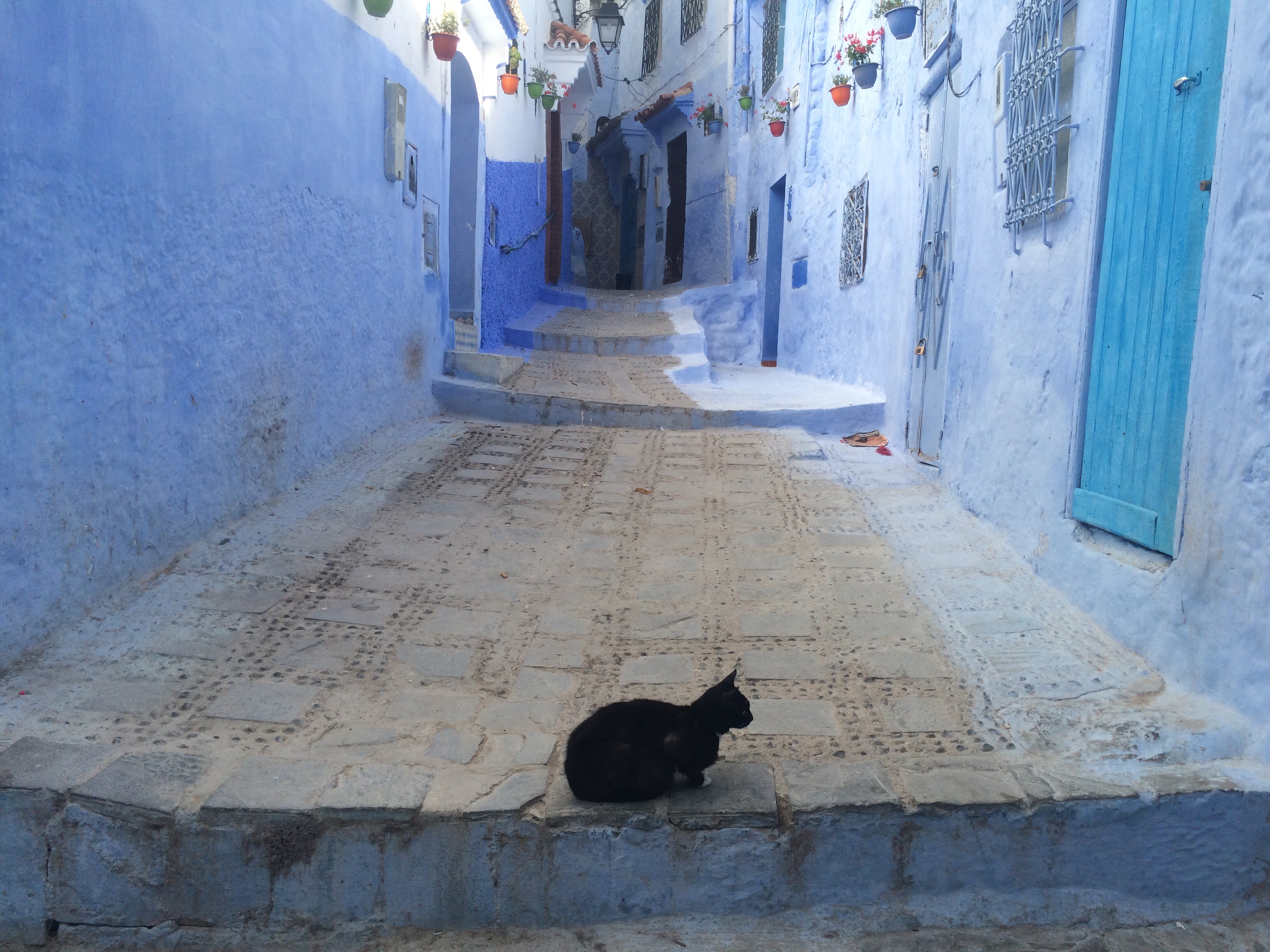
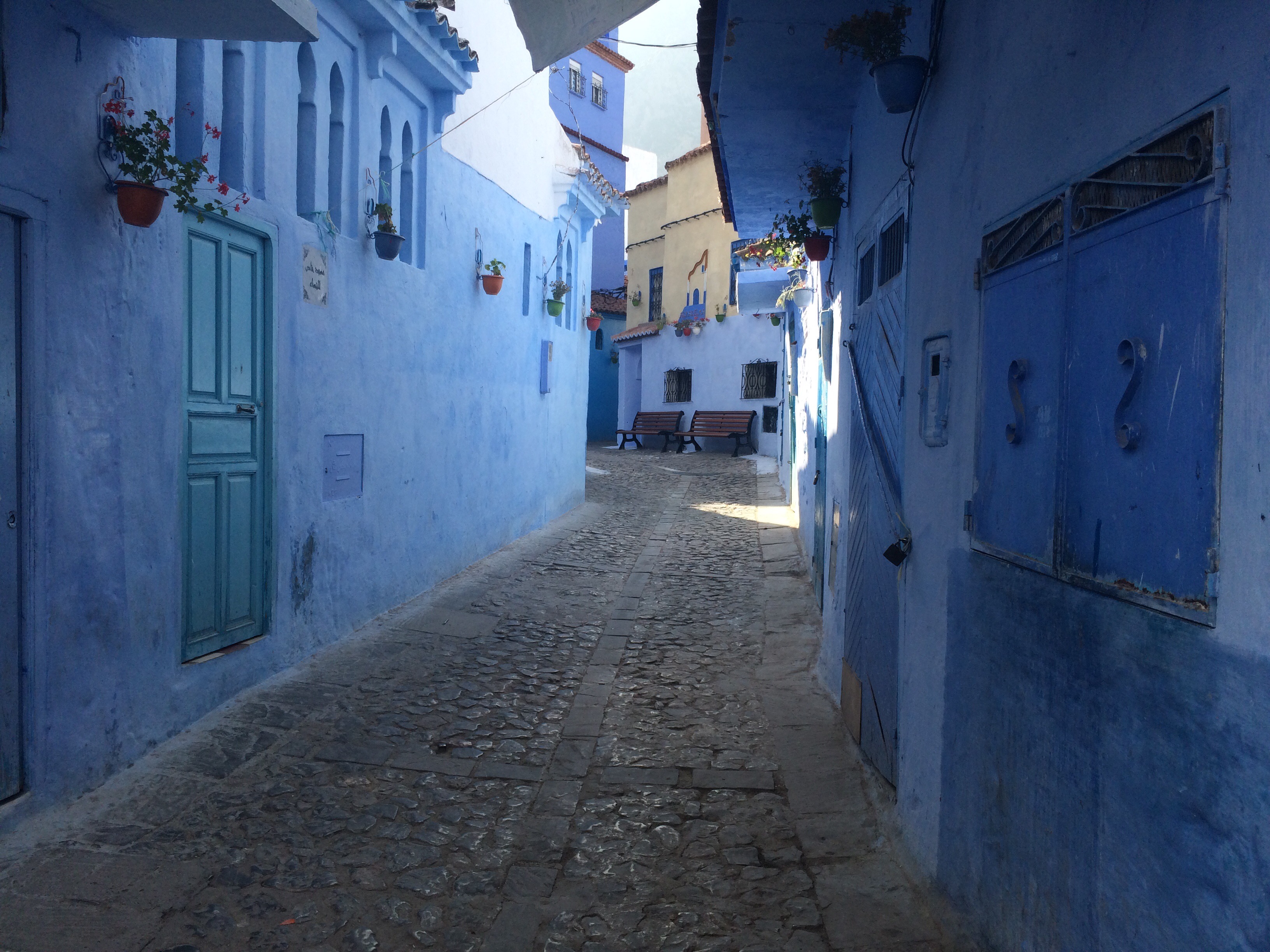
Chechaouen Pics




 abackpackandadaysack
You must be logged in to post a comment.