U.S. State Department Message

Received this email message today:
Security Message for U.S. Citizens: EUROPE TRAVEL ALERT 

As part of the State Department’s continuous efforts to provide Americans traveling abroad with information about relevant events, we are alerting U.S. citizens to the risk of potential terrorist attacks throughout Europe, targeting major events, tourist sites, restaurants, commercial centers and transportation. The large number of tourists visiting Europe in the summer months will present greater targets for terrorists planning attacks in public locations, especially at large events. This Travel Alert expires August 31, 2016.

France will host the European Soccer Championship from June 10 – July 10. Euro Cup stadiums, fan zones, and unaffiliated entertainment venues broadcasting the tournaments in France and across Europe represent potential targets for terrorists, as do other large-scale sporting events and public gathering places throughout Europe. France has extended its state of emergency through July 26 to cover the period of the soccer championship, as well as the Tour de France cycling race which will be held from July 2 – 24.  

The Catholic Church’s World Youth Day event is expected to draw up to 2.5 million visitors to Krakow, Poland, between July 26 and July 31. U.S. citizens should be aware that local infrastructure may be strained due to the large number of visitors. Poland will impose border controls at all of its national borders from July 4 to August 2, and visitors to Poland during this period should be prepared to show their passport and undergo stricter security screening throughout Poland. More information to help prepare for travel to World Youth Day can be found at https://pl.usembassy.gov/world-youth-day-2016/ and https://travel.state.gov/content/passports/en/go/youthday.html.

U.S. citizens should: 

· Exercise vigilance when in public places or using mass transportation.

· Be aware of immediate surroundings and avoid crowded places.

· Follow the instructions of local authorities, especially in an emergency.

· Monitor media and local event information sources and factor updated information into your travel plans and activities.

· Be prepared for additional security screening and unexpected disruptions.  

· Stay in touch with your family, have a plan if you are separated and ensure they know how to reach you in the event of an emergency.

European authorities continue to take steps to assure public safety and disrupt terrorist plots. We work closely with our allies and will continue to share information with our European partners that will help identify and counter terrorist threats.

I say:  Oh well, more of the SOS. 

Please, stay safely on your sofa, watching CNN.
Down The Road

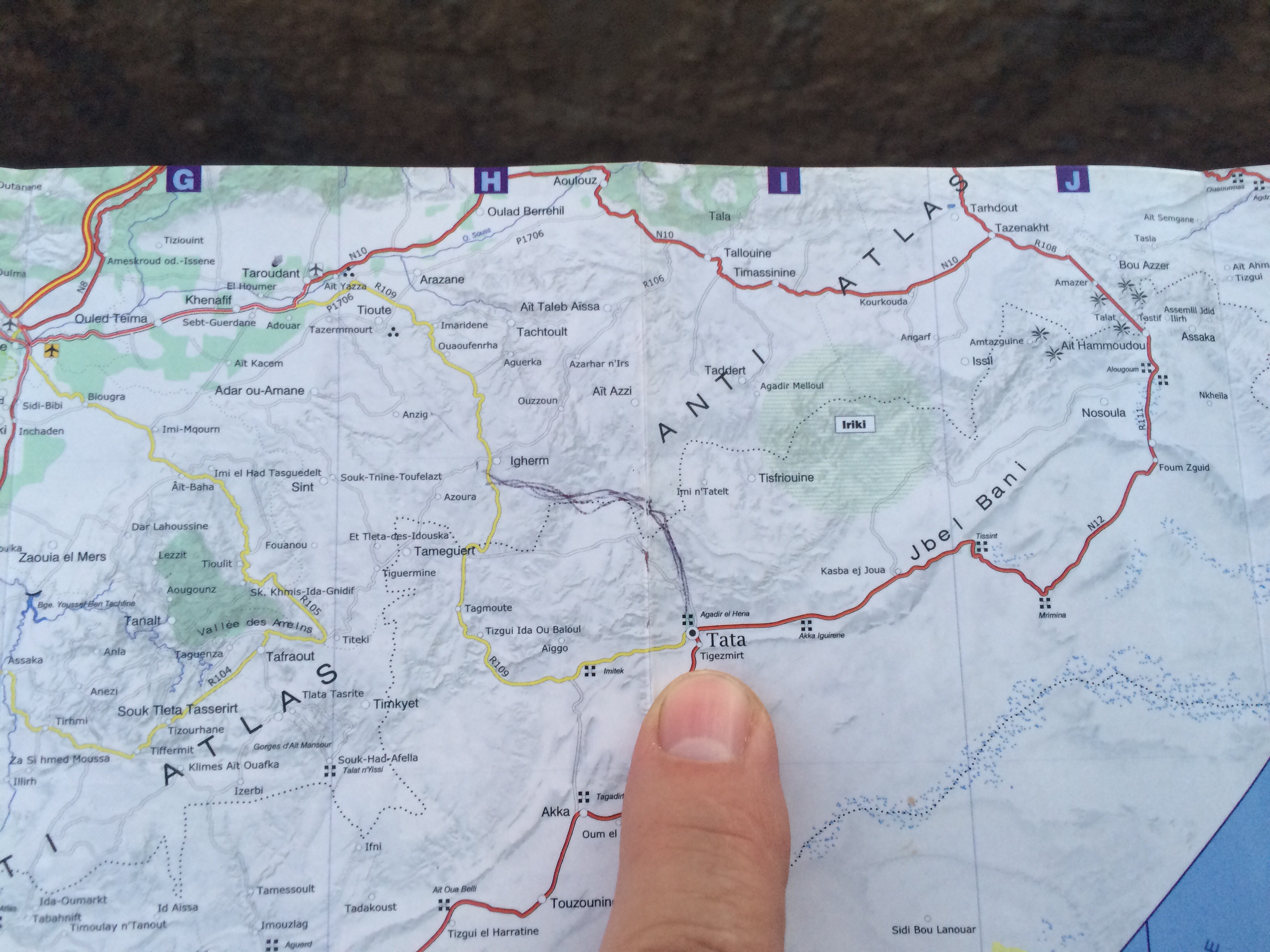
I left Tata early, around 6:30 AM.  

Wiki says, and it is accurate:

Tata (in Berber : ⵟⴰⵟⴰṬaṭa) is a town in south-western Morocco with a population of 15,192 according to the country’s 2004 census. It is the largest town in Tata Province.[1] It is situated on a desert plain of the Sahara Desert, southeast of Agadir and Taroudannt, close to the Algerian border and the mountain range Anti-Atlas at the foot of Jebel Bani. Tata lies on the N12 highway between to the north-east of the regional capital Guelmim and to the south of the neighboring region of Drâa-Tafilalet. It is also near to Algeria, although due to the remoteness of the area there is no border crossing.

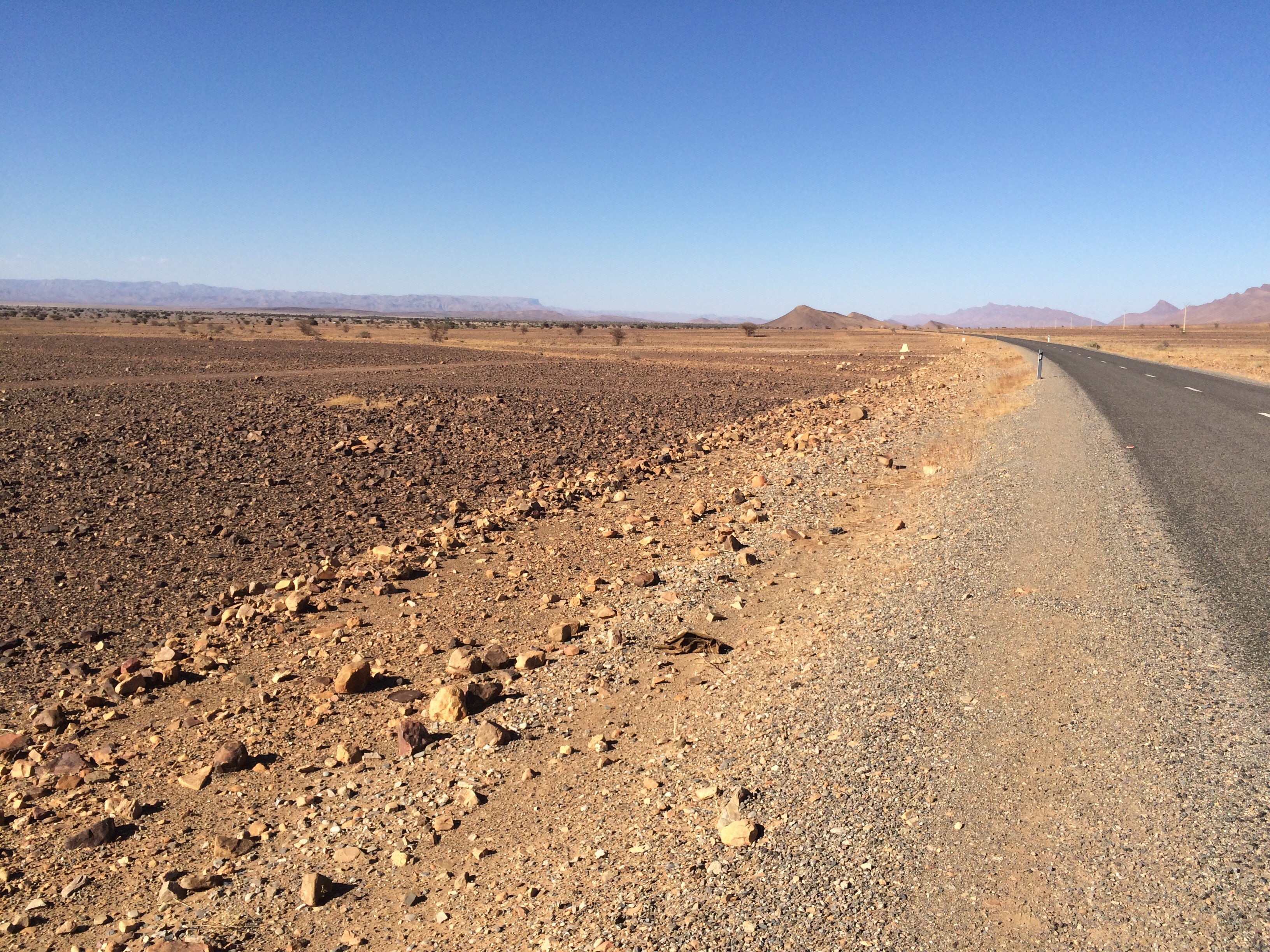
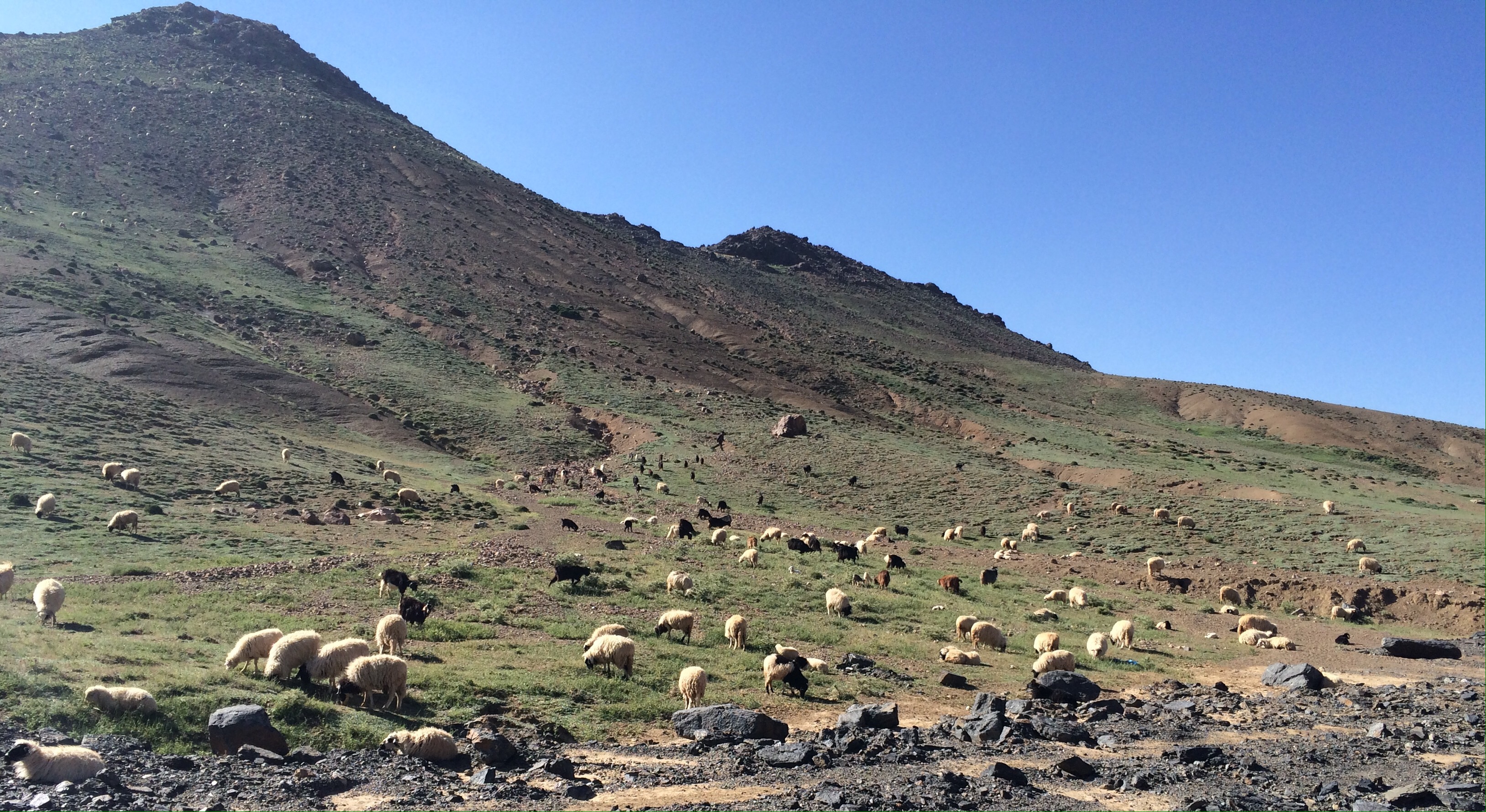
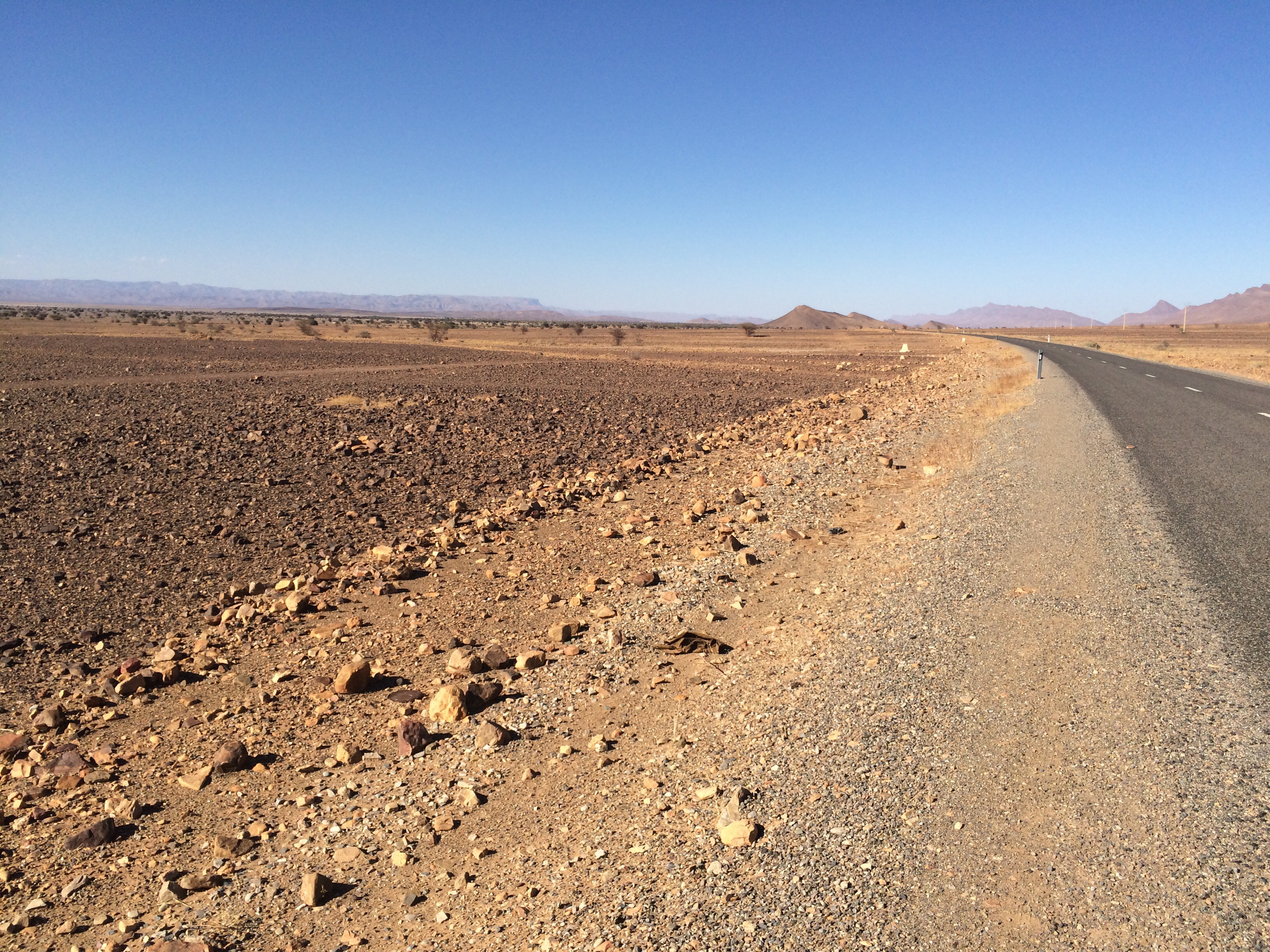
I say:  It is desert and it is remote.  Very remote.  Perfect, I say, versus the hustle and bustle of Casa and Marrakech.  In the occasional oasis towns I was more likely to see a woman walking alongside a donkey that was hauling alfalfa or olives than another vehicle.  No tour busses out here, not even the 4WD excursions for intrepid travelers.  Many wild burros or jackasses, once in a while I would see a herd of goats and a shepherd.  But mostly nothing.  

I thought about the dependability of the car, how much emergency cash I had, who and even if someome could repair the car out here. Even the most basic parts would be 100+ miles away.  

I sighed.  “I will make it safely, inshallah”.


Nice road, usually, traveling about 50-60 MPH.  Then hairpin turns in mountains that required shifting into first gear.  Just desert and an occasional oasis.  But mostly it was wild, rocky desert with no one around except near the oasis. Otherwise, nobody.  There were times I did not encounter an oncoming vehicle for 30 minutes.

Ahead I saw a cloud of dust, then two moving animals.  Wild burros.  They were sparring, one dominating the other.  I slowed because if I hit one and damaged the rental car, I would be SOL in the middle of nowhere. No repair shops, no tow trucks.  Nothing but rock and a ribbon of a road.


The burros did not see me as I slowed to a stop.  One was chasing the other directly towards me.  They did not see me until they were 30 feet from my windshield.  Suddenly the one being chased skidded to a abrupt stop on the pavement and wheeled around to face the persurer.  Both were up on their hind legs as they jousted – biting, kicking.  One had numerous open wound bite marks on it’s neck and definately looked as though it had lost more than one battle.  

Further along I saw a wild camel, then another, but is was mostly wild burros.  And lots of rock.  There were places in the mountains where there were thousands of wild olive trees.  Palm trees filled the valleys where there was an oasis.  

With the ipod on shuffle and he cheap car stereo blasting, the following song popped up.  I replayed it four times, added it to my favorites playlist and continued to drive.

Well, It’s Down The Road I Go


And I got those worried

Lonesome homesick Jones

Way on down the road

Well, it’s down the road I go

Well, I got the blues

From way down in New Orleans

Way on down the road

And I got to be so far away

Oh, don’t you see

All our memories, dreams and reflections

That keep haunting me

Well, it’s down the road I go

And I hear those gypsy voices

Calling me way on down the road

Well, I got to be

So far away in my memory

Dreams and reflections come on

Keep on back haunting me

Well, it’s down the road I go

Well, I got the blues

From down in New Orleans

Way on down the road

Well, it’s down the road I go

Well, I’ve got the worried

Lonesome homesick Jones

Way on down the road

Way on down the road

Oh, down the road

Way on down the road baby come on

Way on down the road

Trying to find my way back home

Trying to find my way back home

Further on down the road

Trying to find my way back home

Further on down the road

Down the road of peace

Down the road of peace

Down the road of peace, baby

VAN MORRISON

The News

I get all the news I need from Google News.  No radio and no TV for the last week.  Lucky me.  Unfortunate you.

Good News:

Back home, far, far away, there are Americans that think with their brains, not just with robotic allegiance to party affiliation.  I read the following on CNN:

“I would support a random name in the phone book” over Trump, said Philip Zelikow, a University of Virginia history professor who was a State Department official in the George W. Bush administration.
Retired Army Col. Peter Mansoor plans to vote for Hillary Clinton for president this year, but not because the longtime Republican and former top aide to then-Gen. David Petraeus has had a political conversion. He just thinks Republican Donald Trump is too dangerous to be president.  

“It will be the first Democratic presidential candidate I’ve voted for in my adult life,” said Mansoor, a professor of military history at Ohio State University.

 
The bad news:

  • Millions of Americans are not as smart as Zelikow and Mansoor.
  • I departed PDX 4/23, so I have been on walkabout for 38 days or so.  I will soon be approaching the midpoint of my walkabout.
  • Things will start getting more expensive as I enter Spain, France and the UK.


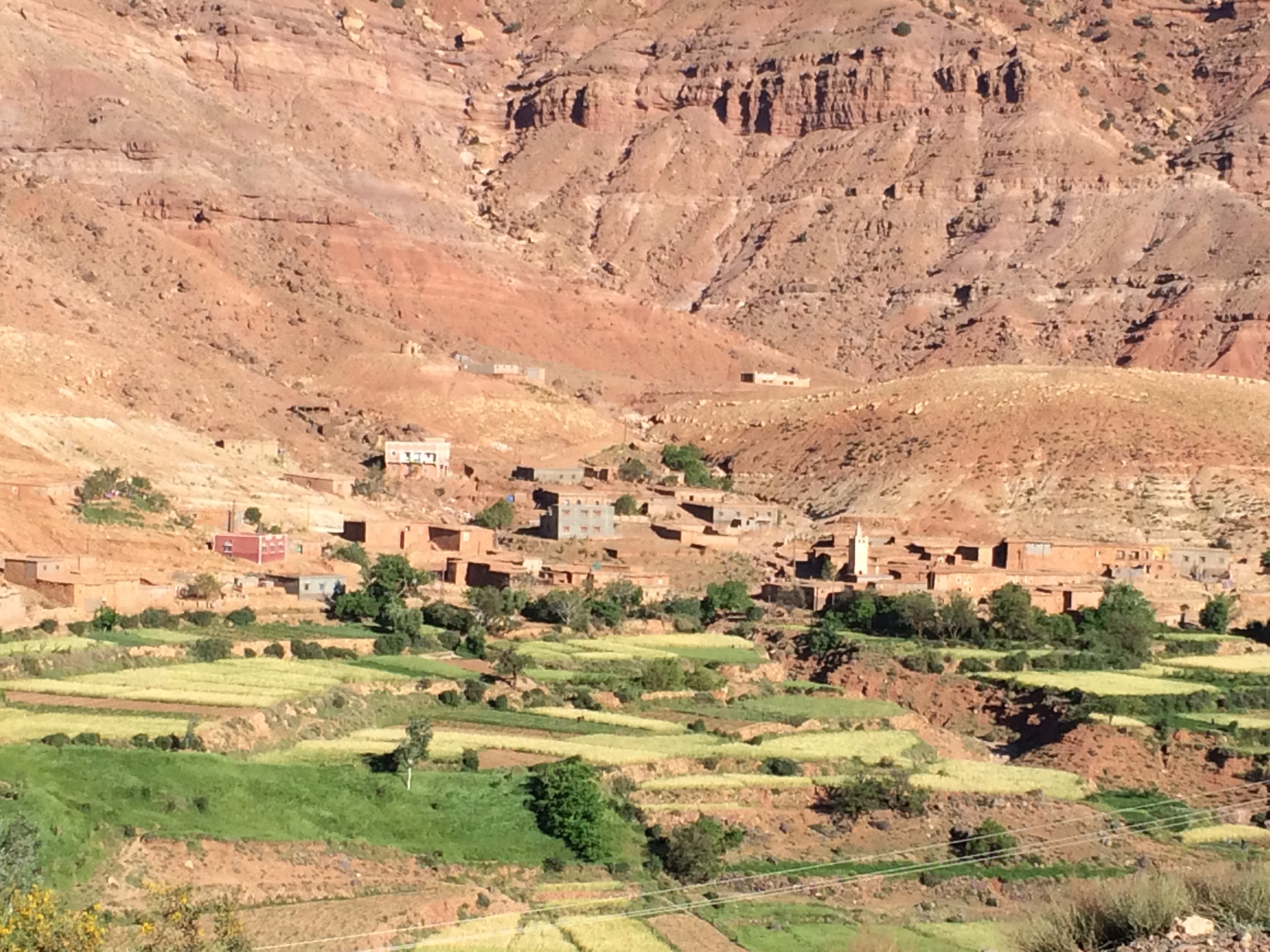
    From Tata to Essaouira.  Was in the middle of nowhere.

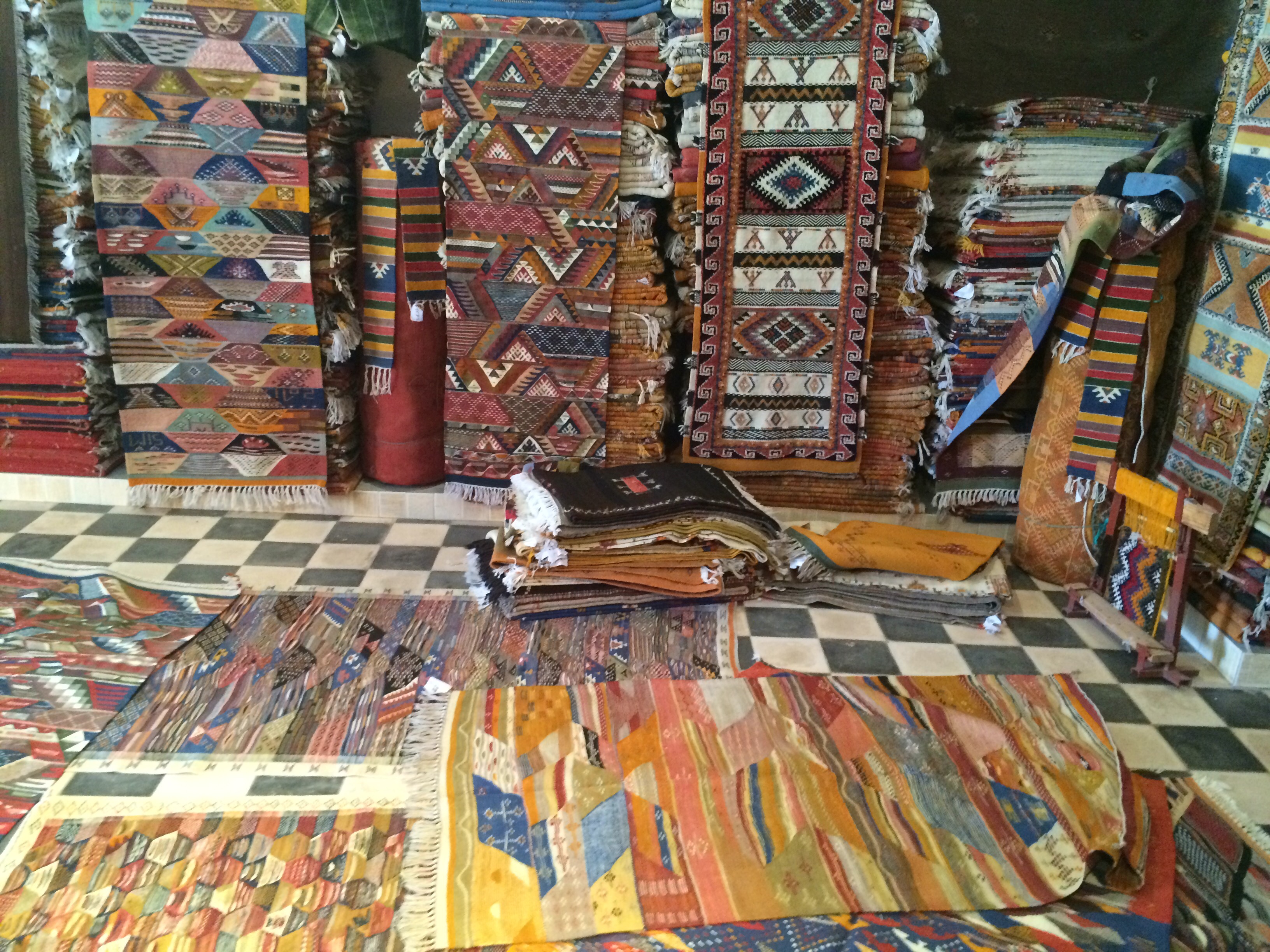
    Still another rug shop.

    Goats climbing an olive tree for a meal.  At least a dozen were in the tree.  They climbed around the tree like spiders.

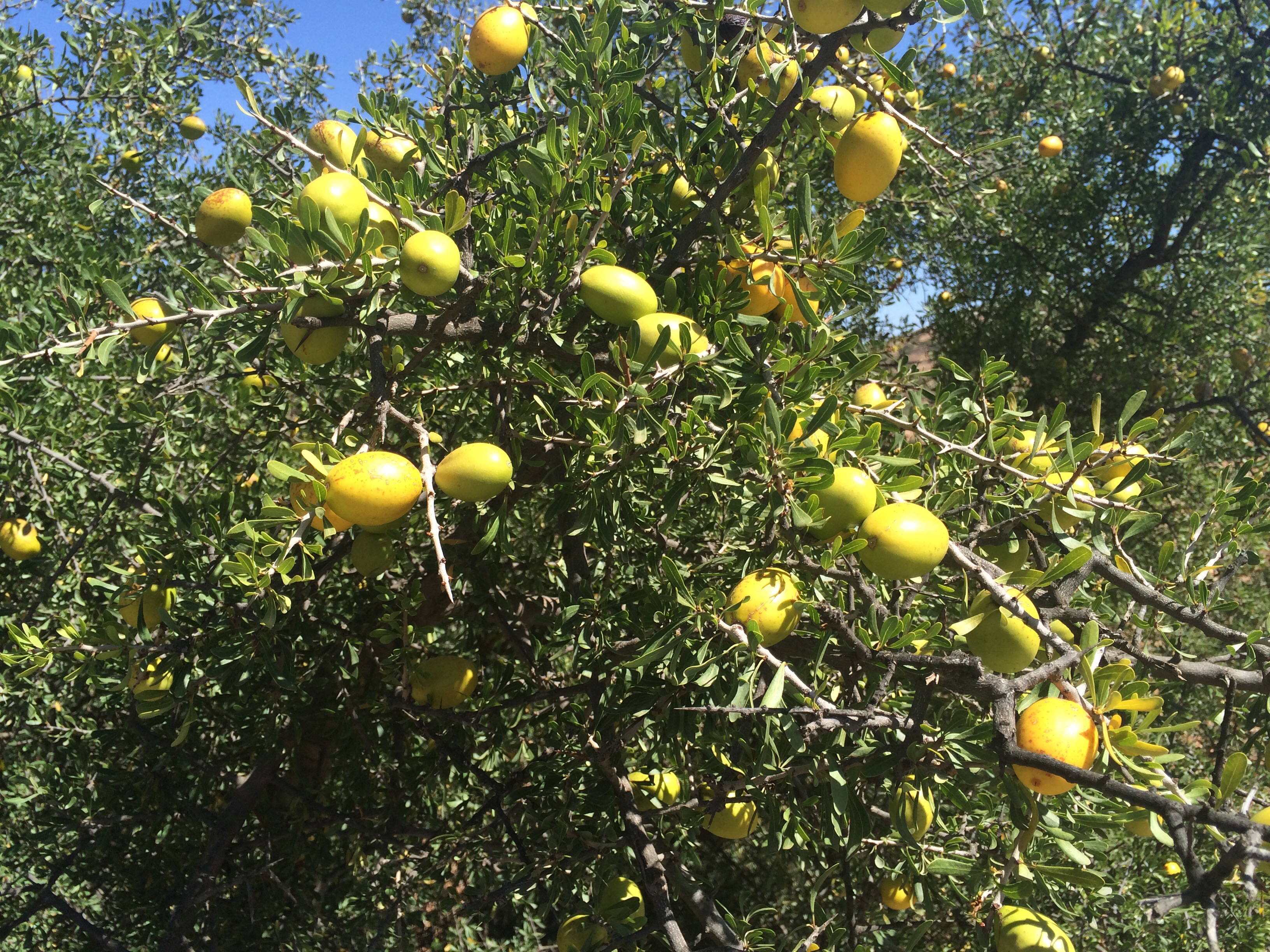
    Wild olive trees were everywhere.


    Middle of nowhere.


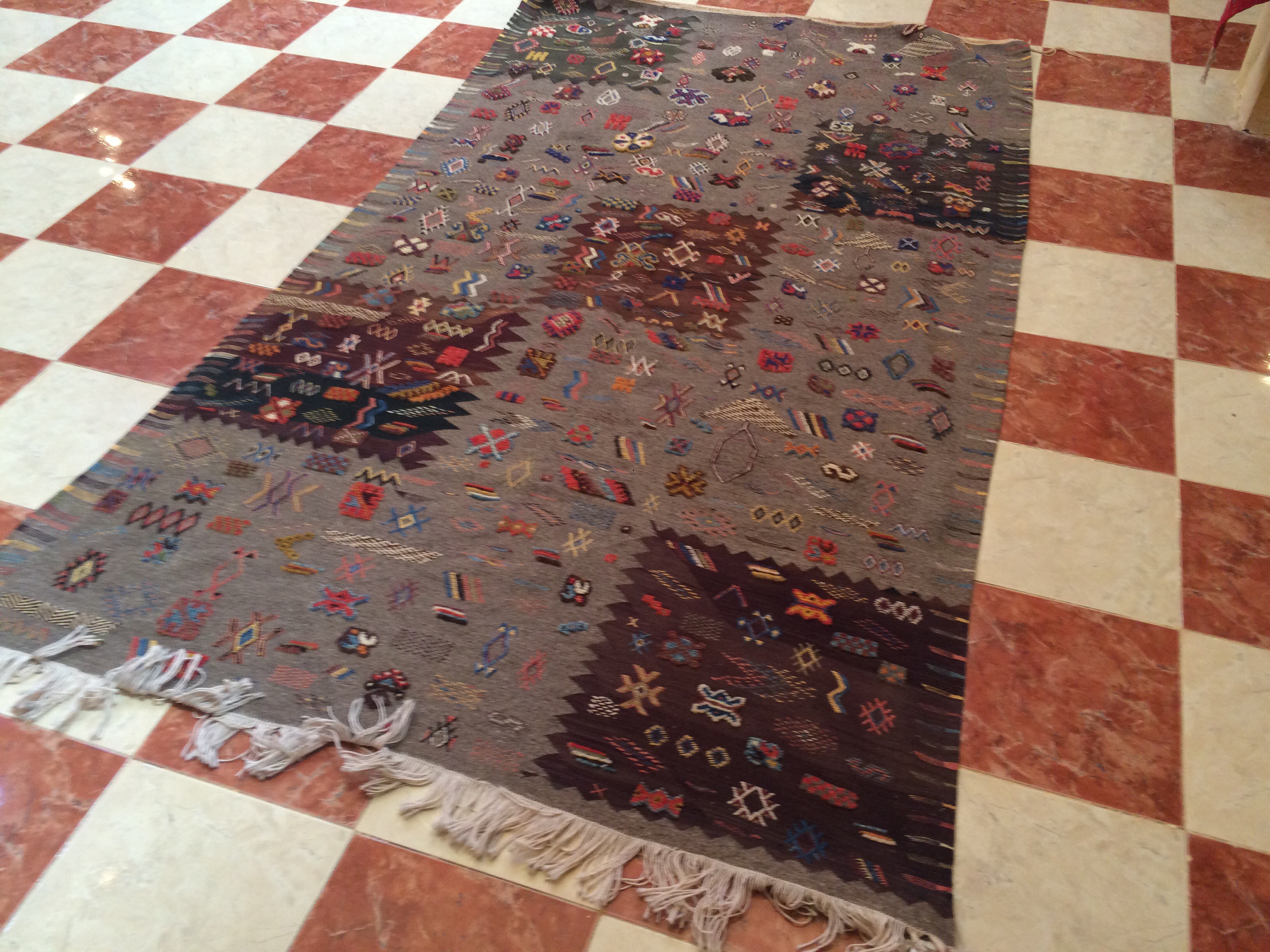
    My second rug.  Handmade, natural wool and dyes.  Took months to make.  Intricate.

    Inslallah Did Not Work

    Posted June 1.  Written several days earlier.

    Abdoul met me 15 minutes after I called him this morning.  He said shiping locations were closed today, so my ishallah regarding shipping yesterday did not work.

    Plan B.  Rent a car and take a road trip.   Escape the city and head for the mountains and the desert.

    Guided tours run about $120 per day + dinner + tips.  Easily $150.00 a day, sitting in a bus, van or a 4WD with people you do not know,speaking languages you do not understand and stopping when the guide gets some baksheesh.

    Saw several dozen busses, about 2o vans and dozens of 4WD tourista vehicles today on the way to Ourazazate. All looked full.  Lots of touristas exploring Morocco.

    A bus load of Japanese were reboarding their bus, luckily, when I stopped at at Berber rest stop for a beer.  It was one of the few bar signs I saw all day.  Had a Casablanca for 40 Dirham.  The Berbers were proud of their beer.

    Traffic in Marakesch was a nightmare until I was about 10 kilometers away from Marakesch.  Then up and into the Atlas Mountains.  Top of the pass was just over 7000 feet and it was comfortably cool.  Lots of road work from either a new road or a landslide.  You could tell that when it rained, it poured and there was serious flooding that would block the road in dozens of places with rock and water several feet deep.  Reminded me of the Baja and Death Valley.  Deserts that get heavy rainfall.  When it rains, it pours.  The road would be impassable and covered with feet of water and rock during rainstorms.

    Bought two geodes.  Berber men and boys were selling geodes along the roadside in the middle of nowhere and there were many roadside stands selling them.  When a man about 50 years old shook hands with me after my purchase, his hand felt as rough as the geode I just bought.  He literally begged me to buy it from him for 50 Durham.

    Only saw one carpet shop, but did not stop.

    For those interested in the package tours, I found this online:

    You are headed to the African nation of Morocco. Your Moroccan tour operator has told you about visiting Berber villages. You have heard all about the Berber craftsmen, their knowledge of the land, some of their indestructible history and maybe a bit more. Or perhaps you’ve never heard of them at all. Just who are these Berber people? A Moroccan pre-Arab culture has ruled unperturbed and unconquered for hundreds of years. Let’s take a look at this amazing people.

    Who are the Morocco Berbers?Morocco Berber History

    Believe it or not, Berber history goes back to prehistoric times. They’ve been around for at least 4000 years or maybe more. Calling themselves Amazigh, the proud raiders, they fought against the Romans, Arab, and French invaders. Even though the Romans and others have tried to colonize the Berber people, they have managed to preserve their own language and culture and in reality were never beaten!

    Berber language is primarily oral in nature, although they have had their own writing system for more than 2500 years. Sometimes hard to find, the writing can be seen catalogued in the small museums throughout the south.

    About Morocco Berbers

    A light skinned people, they have been called by many names: Libyans by the ancient Greeks, Numbians, and Africans by the Romans and Moors by medieval Europe. In fact, it was the Arabs who came up with the Berber name. Islam came to the Berbers in the ninth and tenth centuries. Prior to then, most Berbers across Africa were Christian or Jewish. Two great Islamic Berber dynasties, Almoravids and Almohads, ruled large parts of Spain and northwest Africa.

    Today, most of the twenty-seven million Moroccans are either Berbers, Arabs, or Moors (people of Berber/Arab decent). Their ancestors became the Almoravids and Almohads that built the mighty Moorish empire that ruled Spain, Portugal and Northern African.

    Most of today’s Berbers live in the mountains of Morocco while the Arabs and Moors live in the cities, though it is very common these days to see Berbers running, owning and operating small shops and other commerce endeavors.

    The west has characterized Berbers as nomads using camels to cross the Sahara desert. Most today are farmers of the mountains and valleys in Morocco. They were traders in the earlier days. Berber’s long recorded influence affected commerce by establishing trading routes between the West African and the Sub-Saharan region. They transported goods from beyond the Sahara desert to the Northern Moroccan cities. Merchants were considered in a higher class than the farmers, however, through history the roles have mostly been reversed.

    Morocco Berbers

    Different tribes of Berbers inhabit different regions in Morocco. Drawa Berbers are found in the Draa Valley. The Dades live in the North East, The Mesgita, Seddrat and Zeri tribes are along the rives of the North West. Moroccan Rif region is home to the Ghomara.

    Talk to your Moroccan tour guide and operator and find your self on a vacation of your dreams. A Moroccan adventure will take you from the modern cities on the coast to Berber villages high in the Atlas or Rif Mountains.
    You can go trekking or visit during one of the many festivals to see age-old Berber customs being practiced in today’s world. Stay in a modern riad or an ancient Kasbah. It matters not where you go in this magical land as you will find the adventure of a life time. You can customize your tour to suit your interests and needs. Book your Morocco tour and begin your adventure today

    After researching car rental prices and reading a few blogs and the US State Department webpages on Morocco, I chose a self guided tour over a package tour.